CM Sawant Hoists Tiranga in Sankhali on Independence Day
Synopsis
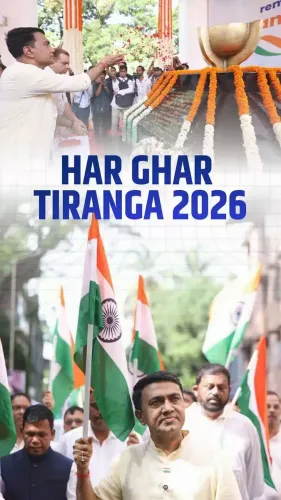
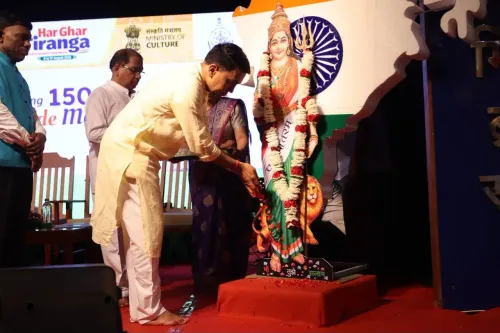
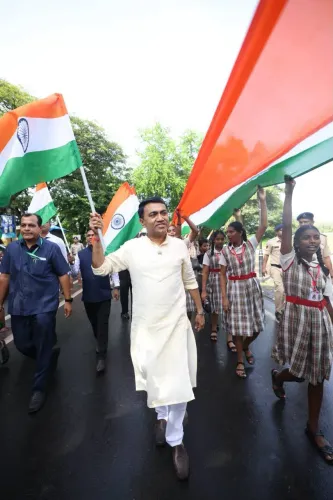
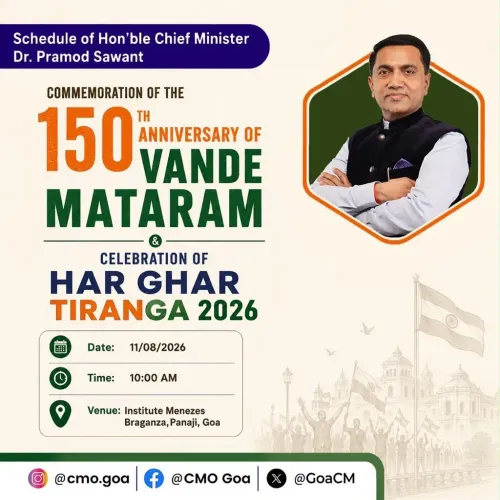
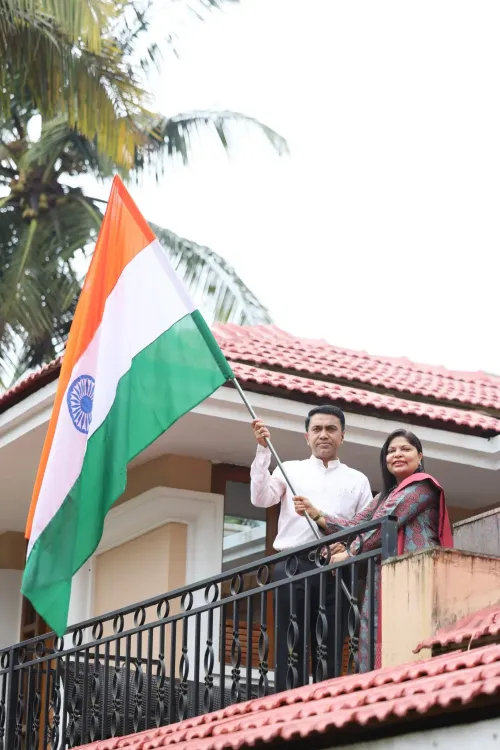
Goa Chief Minister Pramod Sawant hoisted the Tricolour at his Sankhali residence on 13 August 2026 under the Har Ghar Tiranga campaign, marking India's 80th Independence Day and the 150th anniversary of Vande Mataram.
Key Takeaways
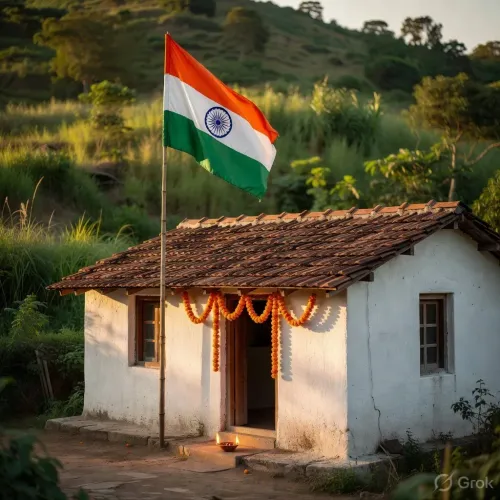
Goa Chief Minister Pramod Sawant hoisted the Tricolour at his personal residence in Sankhali on 13 August 2026 .
The occasion marks India's 80th Independence Day , observed on 15 August 2026 .
The flag-hoisting also commemorates the 150th Anniversary of Vande Mataram , composed by Bankim Chandra Chattopadhyay in 1876 .
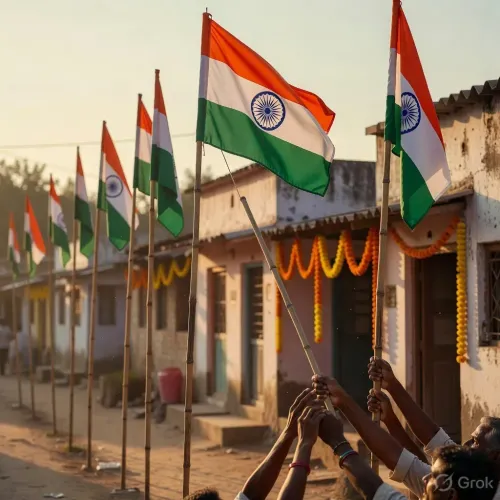
Sawant participated in the Har Ghar Tiranga campaign, a Government of India initiative encouraging citizens to fly the national flag at home.
Goa's own liberation from Portuguese rule came in 1961 , giving Independence Day a layered significance in the state.
Two milestones converged on one flagpole. Goa Chief Minister Pramod Sawant hoisted the Tricolour at his residence in Sankhali on 13 August 2026, marking both the 80th Independence Day of India and the 150th Anniversary of Vande Mataram — a rare double commemoration that framed a personal act of patriotism within a century-and-a-half of national memory.
Sankhali salutes two anniversaries at once
Sankhali, a town in North Goa's Bicholim taluka, served as the backdrop for the Chief Minister's flag-hoisting under the national #HarGharTiranga ('a Tricolour at every home') campaign — a Government of India initiative that calls on citizens to fly the national flag at their homes in the run-up to Independence Day. Sawant's participation from his personal residence, rather than an official venue, underscores the campaign's emphasis on the act being civic and personal, not merely ceremonial.Vande Mataram at 150 — a song that outlasted empires
The 150th Anniversary of Vande Mataram gives this year's Independence Day a distinct cultural weight. Composed by Bankim Chandra Chattopadhyay in 1876, the hymn became a rallying cry of the independence movement before India achieved freedom in 1947. Its anniversary falling alongside the 80th Independence Day makes 2026 an unusually layered year for national commemoration — a convergence that Sawant's post explicitly acknowledges. For Goa, the symbolism carries an additional layer: the state was liberated from Portuguese rule only in 1961, a full 14 years after the rest of India. Every Independence Day in Goa is, in a quiet sense, a double reckoning with freedom.Point of View
Not just a state function. Anchoring the gesture to the 150th anniversary of Vande Mataram signals an effort to layer cultural nationalism onto a routine civic ritual, broadening its symbolic register ahead of Independence Day. For a BJP chief minister, invoking Vande Mataram — a song with deep roots in the Hindu nationalist tradition — is also a familiar ideological touchstone. In Goa specifically, where liberation came 14 years after 1947, such commemorations carry a locally resonant subtext about the completeness of India's freedom story.
NationPress
13 Aug 2026
Frequently Asked Questions
Why did CM Pramod Sawant hoist the flag at his residence in Sankhali?
Sawant hoisted the Tricolour at his Sankhali home as part of the Har Ghar Tiranga campaign, which encourages citizens and public figures to fly the national flag at their residences ahead of Independence Day.
What is the 150th Anniversary of Vande Mataram?
Vande Mataram was composed by Bankim Chandra Chattopadhyay in 1876, making 2026 its 150th anniversary. The hymn became a defining anthem of India's independence movement.
When is India's 80th Independence Day?
India's 80th Independence Day falls on 15 August 2026, marking 80 years since independence from British rule in 1947.
What is the Har Ghar Tiranga campaign?
Har Ghar Tiranga is a Government of India initiative that encourages every household to hoist or display the national flag in the days leading up to Independence Day, promoting civic participation in the celebration.
When was Goa liberated and why does Independence Day hold special significance there?
Goa was liberated from Portuguese colonial rule on 19 December 1961, fourteen years after the rest of India gained independence in 1947, giving Independence Day a distinct and layered meaning for the state.