CM Dhami honours folk legend Negi at Dehradun culture fest
Synopsis
Uttarakhand Chief Minister Pushkar Singh Dhami attended the Narendra Singh Negi Sanskriti Samman Samaroh in Dehradun on 13 August 2026, honouring the iconic Garhwali folk singer on his birthday and signalling state support for regional cultural heritage.
Key Takeaways
CM Pushkar Singh Dhami attended the Narendra Singh Negi Sanskriti Samman Samaroh in Dehradun on 13 August 2026 .
The ceremony was organised to mark the birthday of Narendra Singh Negi , one of Uttarakhand's most iconic Garhwali folk singers.
Negi has been active as a singer, lyricist, and composer since the 1970s , with a body of work spanning social commentary and regional identity.
Uttarakhand has consistently positioned Garhwali and Kumaoni folk culture as a pillar of state identity since its formation in 2000 .
The CM's presence signals the state government's continued engagement with regional cultural preservation and folk arts recognition.
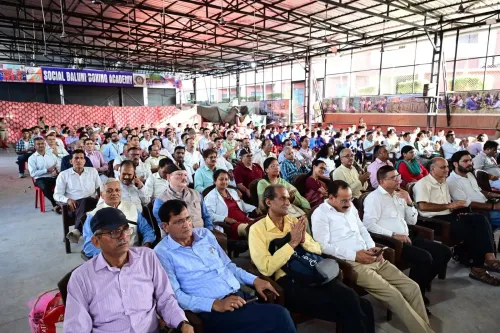
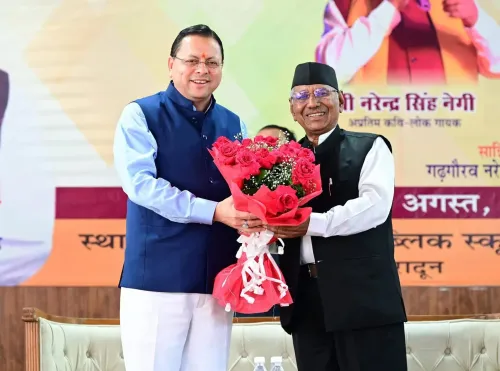
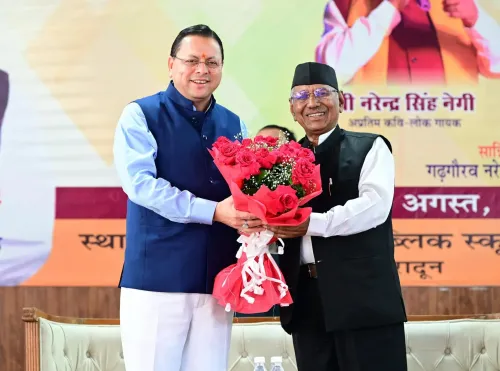
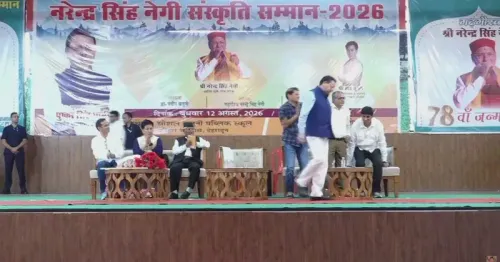
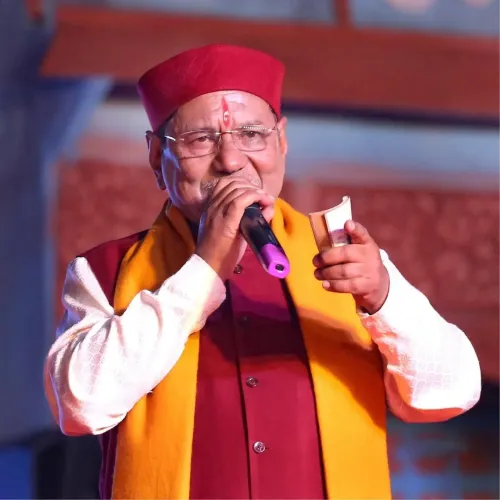
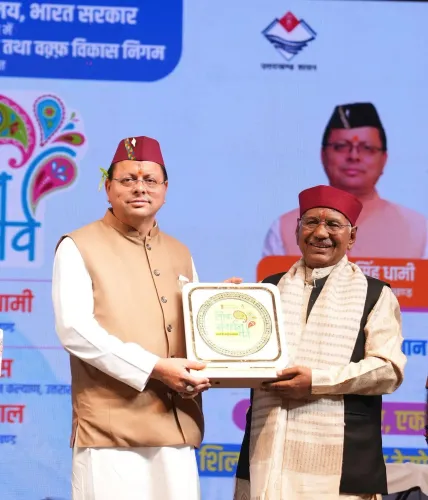
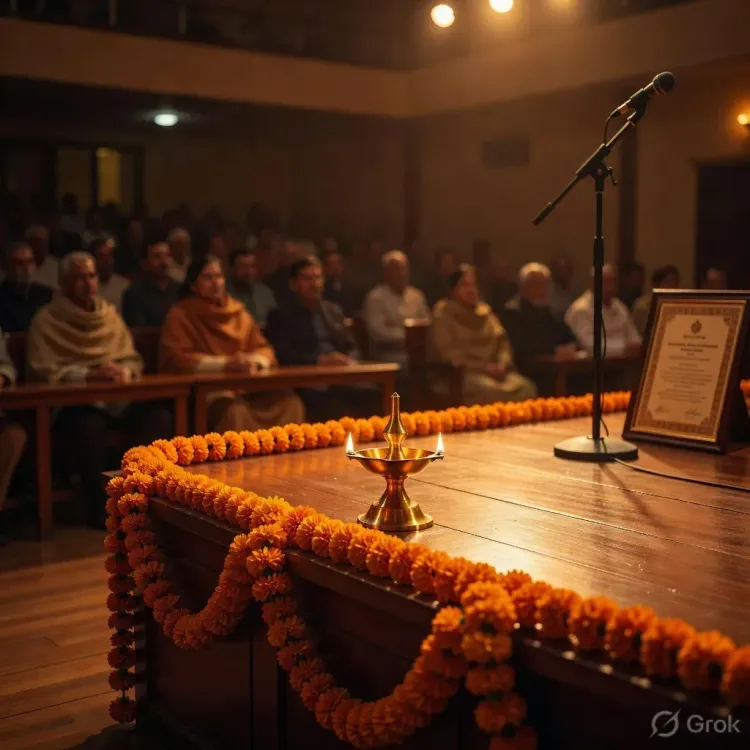
In the hill-state capital on Thursday, 13 August 2026, Uttarakhand Chief Minister Pushkar Singh Dhami stepped into a room filled with the memory of Garhwali folk music — attending the 'Narendra Singh Negi Sanskriti Samman Samaroh', a cultural felicitation ceremony organised in Dehradun to mark the birthday of celebrated folk singer Narendra Singh Negi.
The man being honoured: five decades of Garhwali voice
Narendra Singh Negi is no ordinary regional artist. Active since the 1970s, he has spent more than five decades composing, writing, and singing in the Garhwali language — weaving social commentary, mountain landscapes, and community identity into songs that generations of Uttarakhandis have grown up with. His body of work is widely regarded as one of the most significant archives of living Garhwali folk tradition.
For a state whose cultural identity is inseparable from its folk heritage, Negi is not just a musician — he is a living institution.
Dhami's presence and the state's cultural signal
CM Dhami, who has represented BJP in Uttarakhand since the state's early years and has served as Chief Minister since 2021, participated in the ceremony as a mark of the government's engagement with regional cultural preservation. State governments across India routinely lend political weight to such events — but the choice to attend a birthday felicitation for a folk artist carries a specific signal: that Garhwali and Kumaoni cultural expressions remain central to Uttarakhand's official identity, not peripheral footnotes.
Uttarakhand, carved out as a separate state in 2000, has consistently positioned its distinct hill culture as a pillar of statehood. Events like this one sit squarely in that tradition.
What the Garhwali community is watching
For folk artists and the broader Garhwali community, the Chief Minister's presence at a cultural samman samaroh is a moment of recognition — a signal that the state's highest office sees their artistic heritage as worth celebrating publicly. The coming months may reveal whether this attendance translates into formal policy: state awards, dedicated folk-arts festivals, or institutional support for artists working in regional languages.
The stage in Dehradun on 13 August was, at minimum, a reminder that in Uttarakhand, the mountains still sing — and the government is, for now, listening.
Point of View
Honouring a figure like Negi costs nothing and signals everything. The broader arc here is one of state-building through culture: Uttarakhand, now 26 years old as a state, continues to construct its distinct identity partly through official recognition of artists who gave the region its voice long before statehood arrived.
NationPress
13 Aug 2026
Frequently Asked Questions
Who is Narendra Singh Negi?
Narendra Singh Negi is a celebrated Garhwali folk singer, lyricist, and composer from Uttarakhand who has been active since the 1970s, known for songs that address social themes and preserve regional mountain identity.
What is the Narendra Singh Negi Sanskriti Samman Samaroh?
It is a cultural felicitation ceremony organised in Dehradun to honour folk legend Narendra Singh Negi on his birthday, celebrating his contributions to Garhwali folk music and culture.
Why did CM Dhami attend Narendra Singh Negi's birthday event?
Chief Minister Pushkar Singh Dhami participated in the ceremony to mark the state government's respect for regional folk traditions and its support for preserving Garhwali cultural heritage.
Where was the Narendra Singh Negi birthday event held?
The Narendra Singh Negi Sanskriti Samman Samaroh was held in Dehradun, the capital city of Uttarakhand, on 13 August 2026.
What is Uttarakhand's approach to preserving folk culture?
Since its formation in 2000, Uttarakhand has emphasised Garhwali and Kumaoni cultural expressions as central to its state identity, with the government regularly participating in events that honour regional artists and traditions.