CM Sawant Launches Atal Asra Portal, Honours NGOs in Porvorim
Synopsis
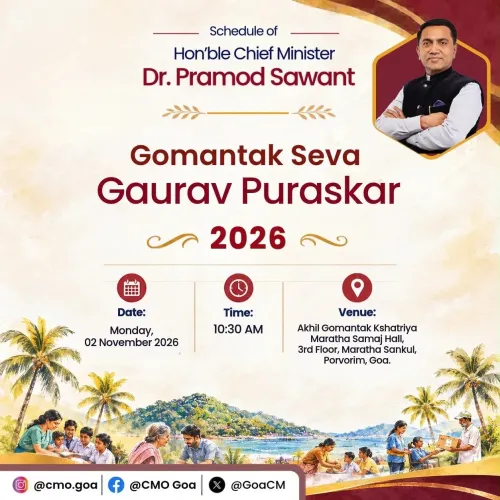
Goa Chief Minister Pramod Sawant launched the Atal Asra Portal and honoured NGOs with the Gomantak Seva Gaurav Puraskar at Porvorim on November 2, 2026, distributing sanction orders and spotlighting palliative care and Gau Seva organisations.
Key Takeaways
Atal Asra Portal launched in Porvorim on November 2, 2026 to digitise processing of Goa social welfare housing and support scheme sanctions.
CM Pramod Sawant personally distributed sanction orders to beneficiaries at the ceremony.
Gomantak Seva Gaurav Puraskar presented to NGOs for outstanding contributions across multiple social service sectors.
Special recognition given to organisations working in palliative care and Gau Seva , including rescue and care of thousands of injured cows.
Social Welfare Minister Subhash Phal Desai and senior officials attended, signalling high-level government commitment.
The event extends a consistent Goa government approach of pairing civil society recognition with digital welfare tools for greater transparency.
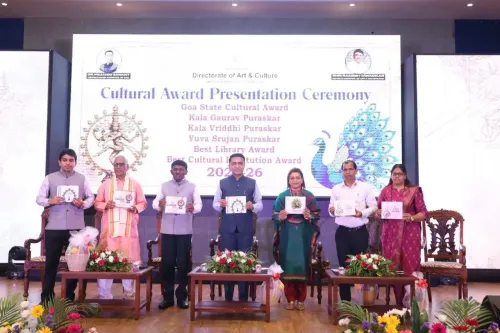
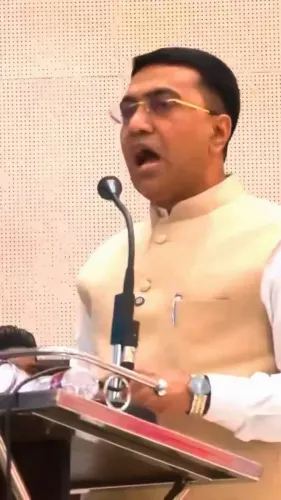
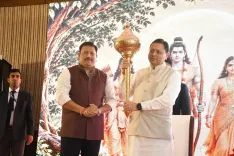
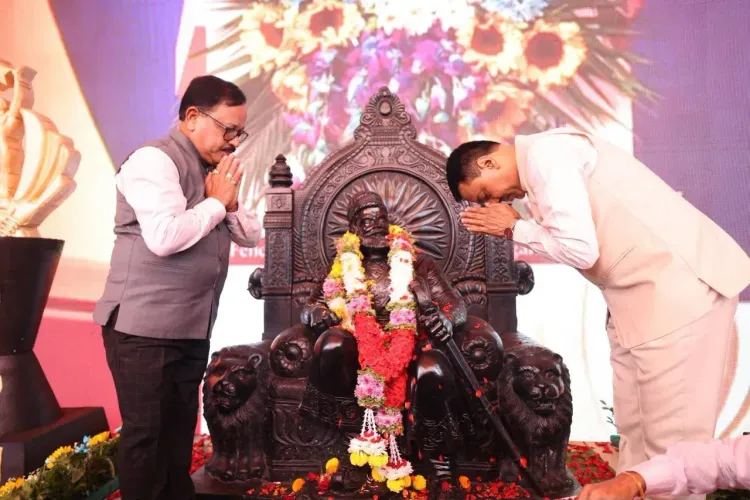
At a packed ceremony in Porvorim on Monday, November 2, 2026, Goa Chief Minister Pramod Sawant launched the Atal Asra Portal and presented the prestigious Gomantak Seva Gaurav Puraskar to non-governmental organisations whose quiet, determined work has been shaping lives across the state. Two gestures — one a digital tool, one a public honour — that together signal how Goa intends to run its welfare machinery going forward.
What the Atal Asra Portal sets out to do
The Atal Asra Portal is a digital platform designed to process and distribute sanctions under Goa's social welfare housing and support schemes. By moving approvals online, the government aims to cut the bureaucratic lag that has historically delayed benefits from reaching the most vulnerable. At Monday's event, CM Sawant personally distributed sanction orders to beneficiaries — a visible reaffirmation, as he framed it, of the 'government's commitment to strengthening social welfare and ensuring support reaches those who need it most.'
Social Welfare Minister Subhash Phal Desai was present alongside senior officials, underlining the cross-departmental weight the government is placing on the initiative. The Atal Asra scheme itself fits within a broader pattern: since the BJP-led administration took charge in 2017, Goa has consistently paired public awards for civil society with digital platforms intended to make welfare delivery more transparent and auditable.
Gomantak Seva Gaurav Puraskar — recognising the unseen backbone
The Gomantak Seva Gaurav Puraskar is the state's formal mechanism for honouring sustained social service, and Monday's ceremony put a spotlight on two categories that rarely headline political events: palliative care and Gau Seva. CM Sawant specifically acknowledged organisations that have mobilised to rescue and tend to thousands of injured cows — a domain that straddles animal welfare, cultural sentiment, and ground-level compassion in equal measure.
Palliative care groups received equal recognition, a nod to organisations providing end-of-life dignity to patients who fall outside the reach of mainstream healthcare infrastructure. Together, the awardees represent a cross-section of civil society that operates in spaces government programmes rarely penetrate efficiently — making the formal partnership between the state and these NGOs strategically significant, not merely ceremonial.
Goa's welfare architecture and what comes next
The event at Porvorim is not a standalone gesture. It continues a deliberate Goa government approach of formalising NGO partnerships for elderly care, palliative services, and animal welfare — channelling state resources and legitimacy toward organisations already doing the work on the ground. The critical test now lies in execution: how quickly the Atal Asra Portal scales beneficiary registrations, whether grievance redressal mechanisms prove robust, and whether subsequent rounds of the Gomantak Seva Gaurav Puraskar deepen the state's reach into underserved welfare sectors.
For Goa's NGO ecosystem, Monday's ceremony was validation. For the state's welfare beneficiaries, it was a promise made in public — one the portal's rollout numbers will either keep or expose.
Point of View
The administration signals both administrative modernisation and cultural alignment with its core constituency. The real indicator of intent will be the portal's beneficiary uptake data in the months ahead. If Atal Asra delivers measurable, auditable outcomes, it strengthens Sawant's claim to techno-administrative credibility in a small state where personal delivery of welfare has outsized political salience.
NationPress
2 Nov 2026
Frequently Asked Questions
What is the Atal Asra Portal in Goa?
The Atal Asra Portal is a digital platform launched by the Goa government to process and distribute sanctions under the state's social welfare housing and support schemes, aiming to speed up benefit delivery to vulnerable residents.
What is the Gomantak Seva Gaurav Puraskar?
The Gomantak Seva Gaurav Puraskar is a Goa state award instituted to honour non-governmental organisations and individuals for sustained, outstanding contributions to social service across sectors including health, animal welfare, and community care.
What is Gau Seva and why was it highlighted at the Porvorim event?
Gau Seva refers to cow protection and animal rescue activities; CM Sawant specifically acknowledged NGOs that have rescued and cared for thousands of injured cows, recognising it as an area of extraordinary voluntary service.
Who is Subhash Phal Desai and what is his role in Goa welfare schemes?
Subhash Phal Desai is Goa's Social Welfare Minister, responsible for implementing the state's social security programmes and coordinating with NGOs; he was present at the Atal Asra Portal launch alongside senior officials.
How does the Atal Asra Portal benefit Goa residents?
By digitising the sanctioning process, the Atal Asra Portal is designed to reduce delays and improve transparency, ensuring welfare support reaches eligible beneficiaries faster and with greater accountability.