CM Sawant Lays Foundation Stone for Sancordem Panchayat Rebuild
Synopsis
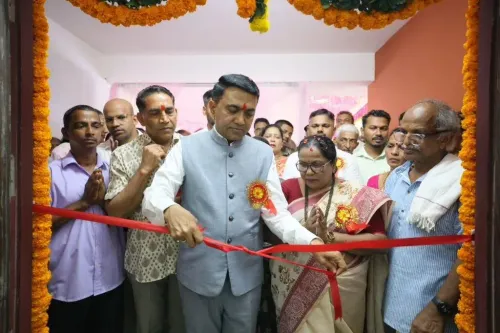
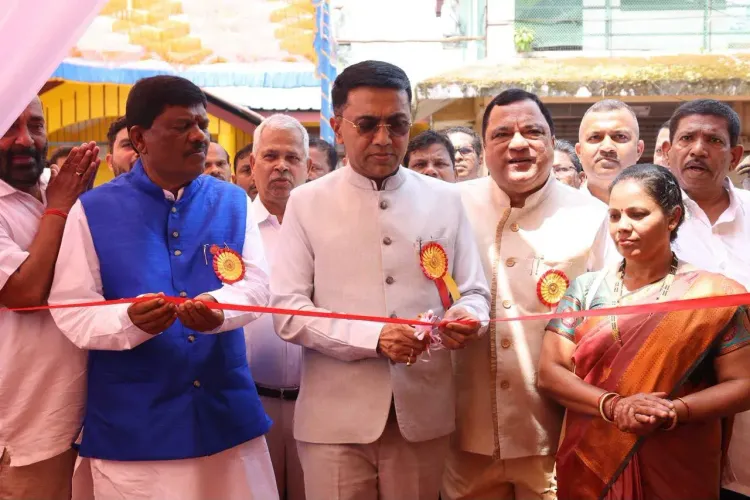
Goa CM Pramod Sawant laid the foundation stone for the Sancordem Panchayat building reconstruction and inaugurated a new Panchayat Hall under the Golden Jubilee Scheme on 30 September 2026, with the rebuilt complex set to include a bank branch and residential quarters as Dharbandora positions itself as an education and development hub.
Key Takeaways
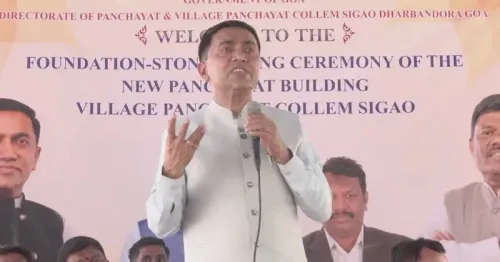
CM Pramod Sawant laid the foundation stone for the Village Panchayat Sancordem building reconstruction on 30 September 2026 .
The project is funded under the Deendayal Panchayat Raj Infrastructure Development (Golden Jubilee) Scheme .
The reconstructed building will house a bank branch and residential quarters in addition to panchayat offices.
Individuals who contributed to the Forest Rights Act claims documentation process were felicitated at the event.
The National Forensic Sciences University Goa campus and a proposed second university are anchoring Dharbandora 's emergence as an education corridor.
Speaker Dr Ganesh Gaonkar and Minister Mauvin Godinho were present at the ceremony.
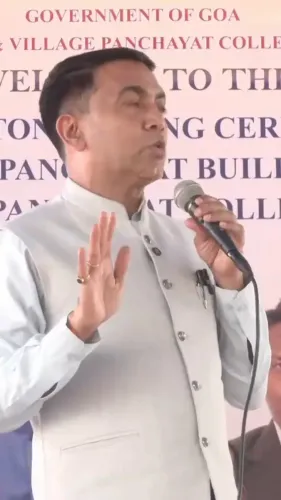
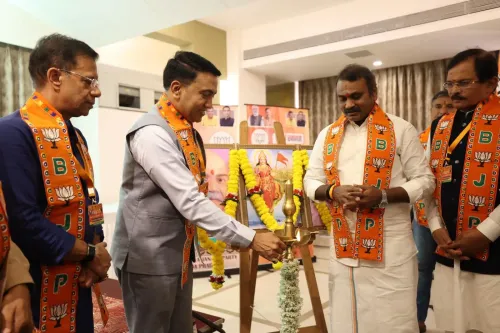
A village in Goa's interior just got a concrete vote of confidence. Goa Chief Minister Pramod Sawant on Wednesday, 30 September 2026, laid the foundation stone for the reconstruction of the Village Panchayat Sancordem building and inaugurated a newly developed Panchayat Hall in Sancordem, Dharbandora — a move that signals the state's intent to turn a once-peripheral taluka into a genuine development corridor.
What the Sancordem panchayat building will house
The reconstructed building is not just a government office upgrade. It will also accommodate a bank branch and residential quarters, packing essential financial access and staff facilities into a single civic complex. The project is funded under the Deendayal Panchayat Raj Infrastructure Development (Golden Jubilee) Scheme, Goa's dedicated programme for modernising village panchayat buildings and facilities. CM Sawant framed the development in the language of two flagship national and state missions: Aatmanirbhar Bharat (self-reliant India) and Swayampurna Goa (self-sufficient Goa).
Speaker Dr Ganesh Gaonkar and Panchayat and Transport Minister Mauvin Godinho joined the CM at the event, underlining the political weight the ruling establishment places on the Dharbandora constituency.
Forest Rights Act: recognising ground-level documentation work
The ceremony carried a quieter but meaningful dimension. Sawant felicitated individuals who contributed to the Forest Rights Act claims process through research and documentation — acknowledging the painstaking on-the-ground work that translates a 2006 central legislation into actual land and livelihood rights for tribal and forest-dwelling communities. The recognition points to an active local effort in Dharbandora to process and validate claims under the Act.
Dharbandora's emergence as an education hub
Perhaps the most forward-looking element of Sawant's address was the framing of Sancordem as an emerging 'centre of education, opportunity and development.' The presence of the National Forensic Sciences University's Goa campus in the area is already reshaping the region's profile. A proposed second university in Dharbandora — the details of which are still taking shape — would further cluster higher-education institutions in a taluka that has historically lagged behind coastal Goa in infrastructure and investment.
The 73rd Constitutional Amendment of 1992 gave Panchayati Raj institutions their constitutional backbone across India. Three decades on, projects like the Sancordem rebuild represent the slow but visible translation of that framework into brick, mortar, and local capacity. If the bank branch opens on schedule and the proposed university follows, Dharbandora's transformation from margin to mainstream will have moved from aspiration to address.
Point of View
A model that addresses last-mile access without requiring a standalone branch. The clustering of higher-education institutions in Dharbandora, led by the National Forensic Sciences University, suggests a deliberate policy of building hinterland economic gravity rather than leaving development concentrated on the coast. Watch whether the proposed Dharbandora university clears regulatory and funding hurdles — that will be the real test of whether the vision lands.
NationPress
30 Sept 2026
Frequently Asked Questions
What is the Deendayal Panchayat Raj Infrastructure Development Golden Jubilee Scheme?
It is a Goa government programme dedicated to upgrading and reconstructing village panchayat buildings and facilities across the state, under which the Sancordem panchayat project is funded.
What facilities will the new Sancordem panchayat building include?
The reconstructed building will house panchayat offices, a bank branch, and residential quarters, consolidating civic, financial, and housing functions in one complex.
Why was Dharbandora chosen as an education hub in Goa?
The National Forensic Sciences University's Goa campus is already located in the area, and a second university has been proposed for Dharbandora, with the state positioning the taluka as an emerging centre of education and opportunity.
What is Swayampurna Goa?
Swayampurna Goa is a Goa government self-reliance initiative that frames state development projects around decentralised, self-sufficient local economies, often cited alongside the central government's Aatmanirbhar Bharat mission.
What is the Forest Rights Act and why were people felicitated in Sancordem?
The Forest Rights Act is a 2006 central legislation that enables tribal and other forest-dwelling communities to claim land and livelihood rights. At the Sancordem event, individuals who supported the claims process through research and documentation in the Dharbandora area were formally recognised.