Rijiju meets NCM leadership, reviews minority welfare priorities
Synopsis
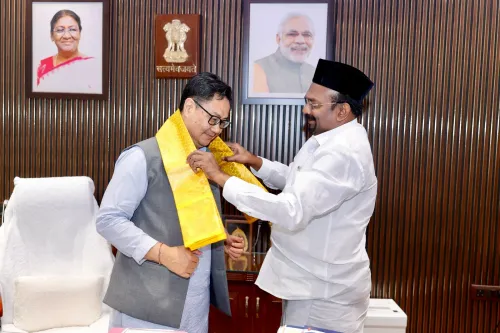
Union Minister Kiren Rijiju met National Commission for Minorities leadership on September 30, reviewing ongoing welfare schemes, key priorities and development initiatives for India's minority communities ahead of the parliamentary winter session.
Key Takeaways
Kiren Rijiju held a meeting with National Commission for Minorities leadership on September 30, 2026 .
NCM Chairperson Harjit Singh Grewal , Vice-Chairperson S.
Munawari Begum , and Members Berjis Desai and Glenn E.
Souza Ticlo attended.
Discussions covered the Commission's ongoing work, key priorities, and minority welfare initiatives.
The NCM was constituted in 1993 under the National Commission for Minorities Act, 1992, to protect minority rights.
The Ministry of Minority Affairs was established in January 2004 to deliver focused welfare programmes.
The review comes ahead of Parliament's winter session, when minority welfare allocations and the NCM annual report may face scrutiny.
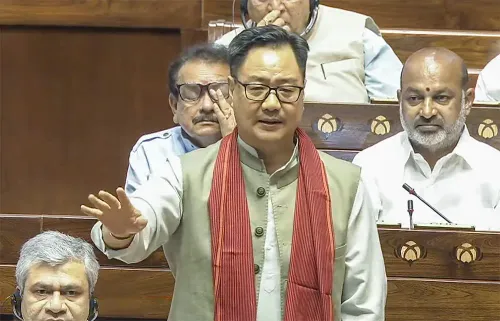
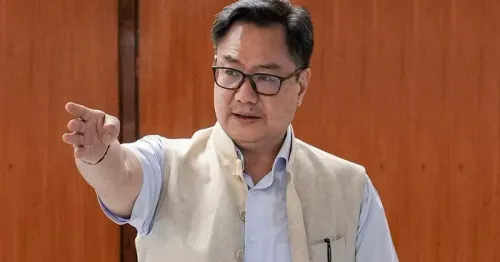
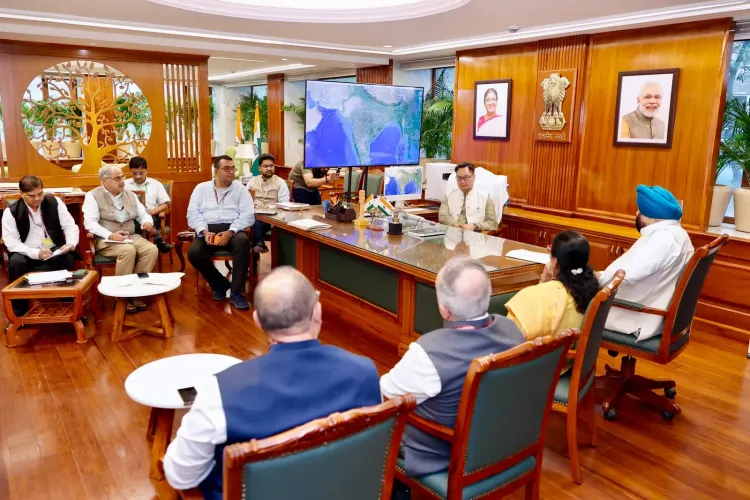
Union Minister of Minority Affairs Kiren Rijiju sat down on Wednesday, September 30 with the full leadership of the National Commission for Minorities to take stock of the statutory body's ongoing work — a routine but consequential coordination that shapes how welfare schemes reach India's six notified minority communities.
The meeting brought together Harjit Singh Grewal, Chairperson of the NCM; S. Munawari Begum, Vice-Chairperson; and Members Berjis Desai and Glenn E. Souza Ticlo, along with senior officials of the Ministry of Minority Affairs. Rijiju described the exchange as 'productive,' noting that discussions covered the Commission's ongoing work, key priorities, and initiatives aimed at the welfare and development of minority communities.
What the NCM does — and why ministerial oversight matters
The National Commission for Minorities is a statutory body created under the National Commission for Minorities Act, 1992, formally constituted in 1993. Its mandate is to safeguard the constitutional and legal rights of religious and linguistic minorities — monitoring grievances, recommending policy, and reviewing implementation of government programmes. The Ministry of Minority Affairs, established in January 2004, is its administrative home in the Union government.
Periodic reviews between the minister and the Commission are standard administrative practice, not ceremonial visits. They serve as a checkpoint for the delivery of flagship programmes — scholarship schemes, skill development initiatives, and educational outreach — that together represent the government's primary pipeline to minority communities.
Coordination ahead of the winter session
The timing carries its own significance. With Parliament's winter session on the horizon, the NCM's annual report and any proposals around minority welfare allocations will face scrutiny in both Houses. Meetings of this kind feed directly into how the government frames its legislative and budgetary positions. Rijiju, as both Minister of Parliamentary Affairs and Minister of Minority Affairs, sits at the precise intersection where commission inputs meet parliamentary strategy.
His dual portfolio means the outcomes of a conversation like today's can travel quickly from commission chambers to the floor of the Lok Sabha. For India's minority communities, that linkage is what transforms a 'productive meeting' into actual policy movement.
Point of View
Documented publicly, serve that communication purpose as much as an administrative one. With the winter session approaching, the government will want a clean record of engagement on minority rights to deflect scrutiny. How transparently the outcomes of this review — grievance redressals, scheme progress, policy recommendations — are tabled in Parliament will be the real test of institutional follow-through.
NationPress
30 Sept 2026
Frequently Asked Questions
What is the National Commission for Minorities and what does it do?
The National Commission for Minorities is a statutory body established under the NCM Act, 1992 and constituted in 1993. It protects the constitutional and legal rights of India's notified religious and linguistic minorities, monitors grievance redressal, and recommends policy to the government.
Who attended the Kiren Rijiju NCM meeting on September 30, 2026?
The meeting included NCM Chairperson Harjit Singh Grewal, Vice-Chairperson S. Munawari Begum, and Members Berjis Desai and Glenn E. Souza Ticlo, along with Ministry of Minority Affairs officials.
What is Kiren Rijiju's role in minority affairs?
Kiren Rijiju serves as Union Minister of Minority Affairs, overseeing the Ministry of Minority Affairs which formulates and implements welfare, educational, and economic development programmes for India's notified minority communities.
When was the Ministry of Minority Affairs established?
The Ministry of Minority Affairs was established in January 2004 to provide dedicated policy focus and implementation support for the welfare and development of minority communities in India.
Why do the Minister of Minority Affairs and NCM hold regular meetings?
These meetings are standard administrative coordination to review progress of government schemes — including scholarships, skill development, and educational programmes — and to ensure statutory commission inputs feed into policy and parliamentary deliberations.