NCM study on Sikh community outreach: Rijiju tells Rajya Sabha
Synopsis
The National Commission for Minorities conducted a dedicated study on Sikh community outreach to map gaps in government engagement — and the Centre has already acted on one front by appointing a Sikh leader as NCM Chairperson. Whether the study's full recommendations become policy is the next question.
Key Takeaways
Union Minister Kiren Rijiju informed the Rajya Sabha on 27 July about a government-commissioned study on Sikh community outreach.
The study, titled 'Outreach to the Sikh Community' , was conducted by the National Commission for Minorities (NCM) .
Harjit Singh Grewal from the Sikh community was recently appointed as Chairperson of the NCM .
Key schemes for minorities include PM VIKAS , PMJVK , and subsidised loans via NMDFC .
The NCM organises Sarv Dharm Samvad interfaith dialogues and has advised all States and UTs to institutionalise such events.
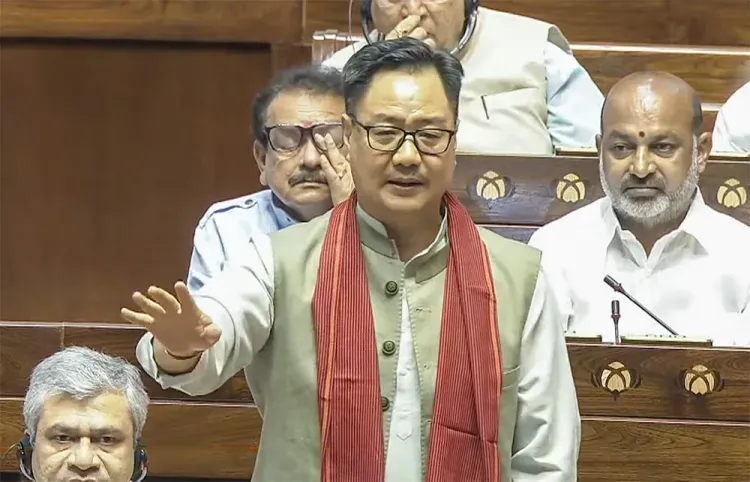
Union Minister of Minority Affairs Kiren Rijiju on Monday, 27 July informed the Rajya Sabha that the government has conducted a dedicated study to identify gaps in its outreach to the Sikh community and to strengthen their participation in public institutions and governance structures. The disclosure came through a written reply to a question in the upper house.
The Study and Its Purpose
The study, titled 'Outreach to the Sikh Community', was conducted by the National Commission for Minorities (NCM). According to Rijiju, its objective was to better understand the unique challenges faced by the community and to recommend strategies that improve support, inclusivity, and engagement across social, cultural, and economic sectors.
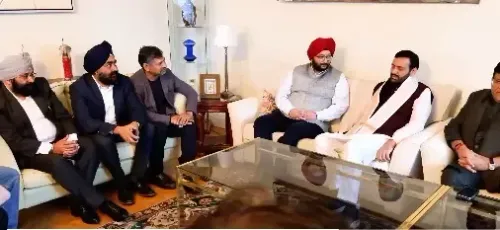
Notably, the government recently appointed Harjit Singh Grewal from the Sikh community as the Chairperson of the NCM — a move the Minister cited as evidence of the Centre's commitment to inclusive representation.
Key Government Schemes for Minority Communities
Rijiju outlined several schemes being implemented by the Ministry to improve the socio-economic condition of minority communities. These include Pradhan Mantri Virasat Ka Samvardhan (PM VIKAS), Pradhan Mantri Jan Vikas Karyakram (PMJVK), and subsidised loans through the National Minorities Development and Finance Corporation (NMDFC). The Ministry's stated mandate covers affirmative action in education, employment, and economic activities to ensure equitable participation for minority communities.
Interfaith Dialogue and Social Harmony Initiatives
The Minister also highlighted the NCM's role in organising Sarv Dharm Samvad — interfaith dialogue meetings — with representatives of various minority communities, alongside celebrations of major minority religious festivals. The Commission has advised all States and Union Territories to institutionalise such meetings and Sarv Dharm Sadbhav events, involving religious leaders, community representatives, NGOs, and government officials.
These platforms, Rijiju said, help address minority concerns, create awareness of welfare schemes, and promote mutual understanding among different religious communities.
What This Signals
The study and the appointment of a Sikh chairperson to the NCM come at a time when the Centre has faced periodic scrutiny over its engagement with religious minorities. The government's framing — centred on institutional participation and outreach gaps — signals a shift toward evidence-based policy design for minority welfare, though critics may note that the study's findings and recommendations have not yet been made public. How the NCM translates the study's conclusions into measurable policy outcomes will be the key test going forward.
Point of View
Yet symbolic representation and structural reform are not the same thing. The Ministry's schemes — PM VIKAS, PMJVK, NMDFC — have existed for years; the real question is whether this study surfaces why their reach within the Sikh community has been insufficient, and whether that diagnosis drives measurable change.
NationPress
26 Oct 2026
Frequently Asked Questions
What is the NCM study on Sikh community outreach about?
The study, titled 'Outreach to the Sikh Community', was conducted by the National Commission for Minorities to identify gaps in the government's current outreach efforts. Its goal is to recommend strategies to improve support, inclusivity, and engagement for the Sikh community across social, cultural, and economic sectors.
Who is Harjit Singh Grewal and why is his appointment significant?
Harjit Singh Grewal is a member of the Sikh community recently appointed as Chairperson of the National Commission for Minorities. The government cited this appointment as part of its efforts to ensure the Sikh community has direct representation at the leadership level of the NCM.
What government schemes support minority communities in India?
The Ministry of Minority Affairs implements schemes including Pradhan Mantri Virasat Ka Samvardhan (PM VIKAS), Pradhan Mantri Jan Vikas Karyakram (PMJVK), and subsidised loans through the National Minorities Development and Finance Corporation (NMDFC), aimed at improving education, employment, and economic participation.
What is Sarv Dharm Samvad and who organises it?
Sarv Dharm Samvad is an interfaith dialogue initiative organised by the NCM, bringing together representatives of minority communities, religious leaders, NGOs, and government officials. The NCM has also advised all States and Union Territories to institutionalise such meetings to promote social harmony.
Where was this information disclosed and by whom?
Union Minister of Minority Affairs Kiren Rijiju disclosed this information through a written reply in the Rajya Sabha on 27 July, in response to a question about the government's support for the Sikh community.