NCM releases study on Jain community's role in India's education
Synopsis
The National Commission for Minorities has released a first-of-its-kind SEEDS-authored study on the Jain community's educational contributions — from historic trusts to modern scholarships — positioning it as a policy reference document for minority education reform in India.
Key Takeaways
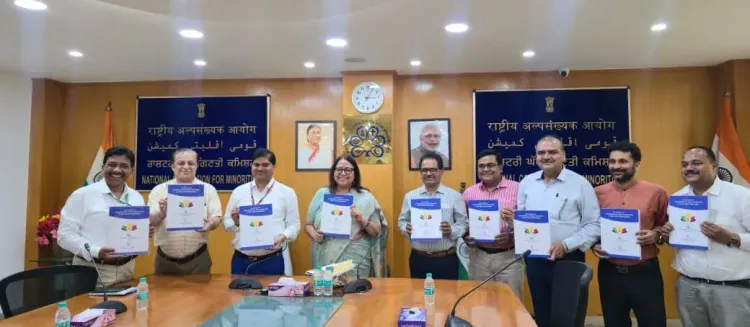
NCM Secretary Alka Upadhyaya released the study on 29 May in New Delhi .
The study, titled 'Contribution of Jain Community in the Field of Education' , was undertaken by the Socio-Economic and Educational Development Society (SEEDS) .
It documents the role of Jain trusts, philanthropists, educational institutions , and community organisations in promoting learning, scholarships, and value-based education.
The NCM described the report as a resource for policymakers, researchers, and institutions working on minority and community-led education models.
The release follows NCM's Minorities Day event, where leaders from all six recognised minority communities addressed the Commission.
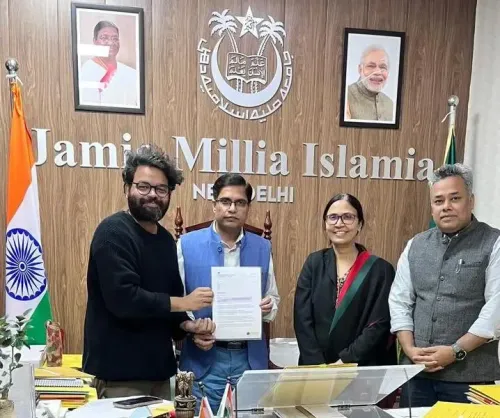
The National Commission for Minorities (NCM) on Friday, 29 May released a comprehensive study titled 'Contribution of Jain Community in the Field of Education', documenting the community's historic and ongoing role in shaping India's educational landscape. The study was formally released by NCM Secretary Alka Upadhyaya in New Delhi.
What the Study Covers
The research, undertaken by the Socio-Economic and Educational Development Society (SEEDS), traces the historical evolution, institutional contributions, and educational philosophy of the Jain community across India. It maps the work of Jain trusts, philanthropists, educational institutions, and community organisations in promoting learning, scholarships, research, and value-based education.
According to the statement, the study finds that Jain educational initiatives — guided by principles of knowledge, service, compassion, and inclusiveness — have contributed not only to academic advancement but also to social responsibility and nation-building.
What the NCM Said
Upadhyaya said the study reflects the Commission's continued commitment to research-driven policy inputs and evidence-based initiatives for the welfare and empowerment of minority communities. She described it as part of NCM's broader push toward inclusive development and informed policymaking.
The report is expected to serve as a reference document for policymakers, researchers, educational institutions, and community organisations working on minority education, value-based learning, and community-led development models.
Minorities Day: Community Leaders Speak
The study release follows NCM's recent celebration of Minorities Day, at which community leaders from all six recognised minority communities — Muslims, Sikhs, Christians, Buddhists, Jains, and Zoroastrians (Parsis) — addressed the gathering.
Dr Michael V. Williams of Mount Carmel School underlined the Christian community's contributions to nation-building through education and healthcare institutions that serve well beyond denominational boundaries. Md. Tauhid Alam of Jamia Hamdard situated minority welfare within the framework of Sabka Saath, Sabka Vishwas, Sabka Vikas, emphasising inclusion as a governance priority.
Harbans Singh of Khalsa College drew on Gurbani to articulate coexistence and collective prosperity as lived traditions, not mere slogans. Acharya Yeshi Phuntsok and Indu Jain spoke candidly about challenges faced by Buddhist and Jain communities, calling for responsive redressal from the NCM. Veteran Parsi leader Marazban Nariman Zaiwalla closed the December discussion by detailing minority-focused programmes and the NCM's role as a civic bridge.
Significance and Next Steps
The SEEDS study is the latest in a series of community-specific research efforts by the NCM aimed at grounding policy in documented evidence rather than anecdote. As debates around minority education policy continue, the report is likely to be cited in both parliamentary and civil society discussions on equitable access and community-led educational models.
Point of View
The Jain community's educational footprint is substantial yet often overlooked in mainstream minority discourse, which tends to centre larger communities. If the NCM follows this with similar studies across all six recognised minorities, it could build a genuinely comparative policy foundation — something India's minority welfare architecture has long lacked.
NationPress
12 Oct 2026
Frequently Asked Questions
What is the NCM study on Jain community education about?
The study, titled 'Contribution of Jain Community in the Field of Education', documents the historical evolution, institutional contributions, and educational philosophy of the Jain community in India. It was undertaken by the Socio-Economic and Educational Development Society (SEEDS) and covers Jain trusts, philanthropists, scholarships, and value-based education initiatives.
Who released the NCM Jain education study?
NCM Secretary Alka Upadhyaya formally released the study on 29 May in New Delhi. She said it reflects the Commission's commitment to research-driven policy inputs for the welfare and empowerment of minority communities.
Who conducted the research for the NCM study?
The study was undertaken by the Socio-Economic and Educational Development Society (SEEDS), an independent research body commissioned by the National Commission for Minorities.
How will the study be used?
According to the NCM, the report is intended to serve as a reference for policymakers, researchers, educational institutions, and community organisations working on minority education, value-based learning, and community-led educational development models.
Which minority communities participated in NCM's Minorities Day event?
Leaders from all six recognised minority communities — Muslims, Sikhs, Christians, Buddhists, Jains, and Zoroastrians (Parsis) — participated in the NCM's Minorities Day event, speaking on their communities' contributions and challenges.