Is the Government Ensuring Equal Opportunities for All Minorities?
Synopsis
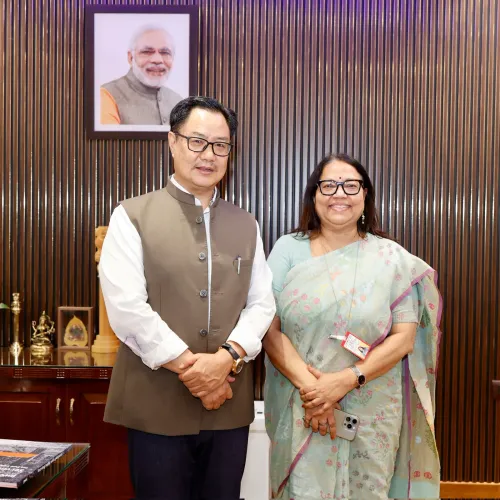
The government's commitment to ensuring equal opportunities for minority communities was reiterated by NCM Secretary Alka Upadhyaya. Highlighting the importance of continuous dialogue, she emphasized the invaluable contributions of minorities to India's diverse landscape and the significance of inclusive governance.
Key Takeaways
Government's commitment to minority welfare is evident.
Dialogue among communities is essential for progress.
Minorities contribute significantly to India's rich heritage .
Inclusive governance is a priority.
Community leaders play a crucial role in addressing challenges.
New Delhi, Dec 20 (NationPress) The Secretary of the National Commission for Minorities, Alka Upadhyaya, has emphasized that the government's initiatives are driven by the principle of leaving no one behind, ensuring that all communities enjoy equal chances for growth and success, as stated on Saturday.
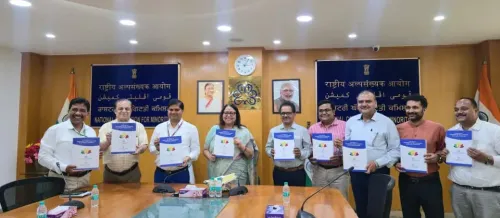
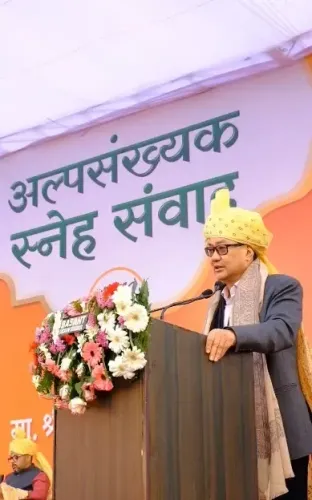
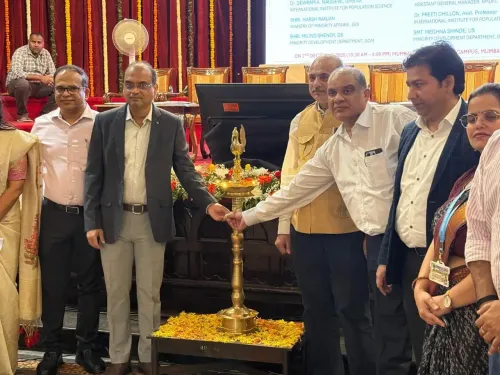
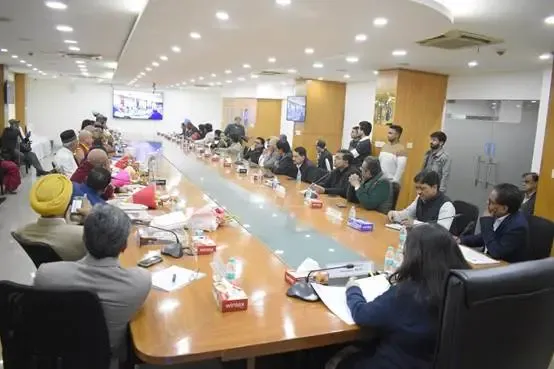
During an event celebrating Minorities Day on December 18, Upadhyaya engaged with delegates from six minority groups – Muslims, Sikhs, Christians, Buddhists, Jains, and Zoroastrians (Parsis), highlighting the significance of ongoing conversations between diverse communities.
The Secretary detailed various government programs designed to uplift minority populations, noting their invaluable contributions to the nation’s diverse social, cultural, and economic landscape.
“The National Commission for Minorities is diligently striving to create an inclusive and fair society,” she remarked.
A large audience from minority groups attended the gathering. During the interactive session, numerous questions were posed, addressing topics from Minority Certificates to the execution of different government initiatives, according to the statement.
The engagement illustrated a strong commitment to addressing issues through constructive dialogue, it affirmed.
At the event, Acharya Yeshi Phuntsok and Indu Jain discussed the challenges encountered by the Buddhist and Jain communities, seeking effective solutions from the National Commission for Minorities.
Parsi leader Marazban Nariman Zaiwalla elaborated on programs focused on minorities and described the NCM’s role as a facilitator, connecting India’s varied communities within a common civic framework.
Guest Speaker Michael V. Williams from Mount Carmel School highlighted the significance of Minority Day, emphasizing the Christian community’s longstanding yet quiet contributions to nation-building through educational and healthcare institutions that extend beyond denominational lines.
Md. Tauhid Alam of Jamia Hamdard positioned minority welfare within the broader context of Sabka Saath, Sabka Vishwas, Sabka Vikas, stressing that contemporary governance revolves around inclusion.
Harbans Singh from Khalsa College drew inspiration from Gurubani to illustrate that coexistence and shared prosperity are not mere slogans but a tradition we practice.
Point of View
The ongoing commitment of the government to address the needs of minority communities reflects a growing recognition of the importance of inclusivity. The dialogue between various groups is essential for fostering understanding and cooperation, ensuring that every citizen feels valued and supported in their pursuit of success.
NationPress
22 Sept 2026
Frequently Asked Questions
What is the purpose of Minority Day?
Minority Day aims to celebrate and recognize the contributions of minority communities to the nation’s development and to promote dialogue and understanding among diverse groups.
Who are the representatives of minority communities mentioned?
The representatives include members from six minority communities: Muslims, Sikhs, Christians, Buddhists, Jains, and Zoroastrians (Parsis).
What did Alka Upadhyaya emphasize during the event?
Alka Upadhyaya emphasized the government’s commitment to ensuring that no community is left behind and highlighted the importance of inclusive governance.
What challenges did community leaders discuss?
Community leaders discussed various challenges faced by their groups and sought responsive solutions from the National Commission for Minorities.
How does the government support minority communities?
The government supports minority communities through various schemes aimed at uplifting their social, cultural, and economic status.