Rijiju Calls for Unity on Student Welfare
Synopsis
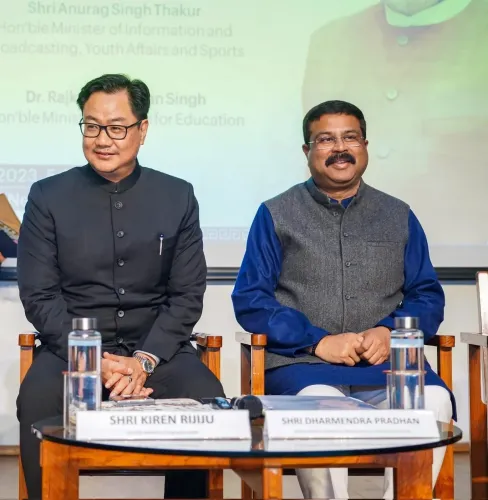
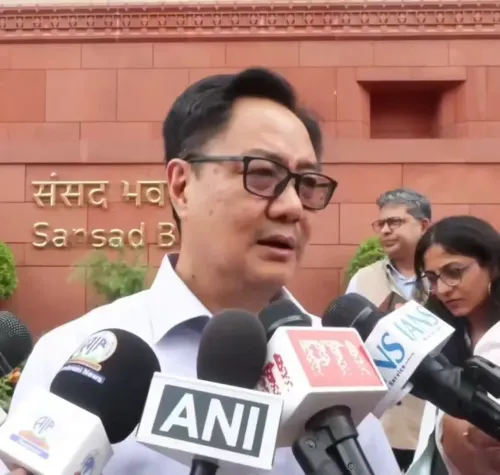
Union Parliamentary Affairs and Minority Affairs Minister Kiren Rijiju called for collective action on student welfare in a July 2026 post on X, signalling renewed focus on education reform and minority scholarship delivery ahead of Parliament's upcoming session.
Key Takeaways
Kiren Rijiju , Union Minister of Parliamentary Affairs and Minority Affairs, posted a call to 'come together for the students' on July 25, 2026 .
The message signals focus on student welfare amid the ongoing rollout of the National Education Policy 2020 .
As Minister of Minority Affairs , Rijiju oversees central scholarship schemes that directly benefit students from minority communities.
Parliamentary debates on education budget allocations and minority scholarship schemes are expected in the upcoming legislative session.
No specific announcement or policy measure has been formally confirmed alongside the post.
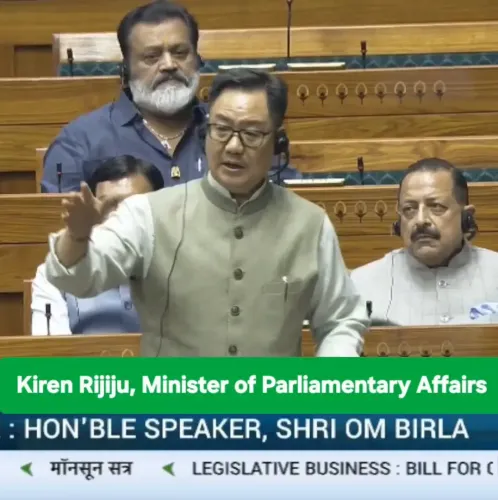
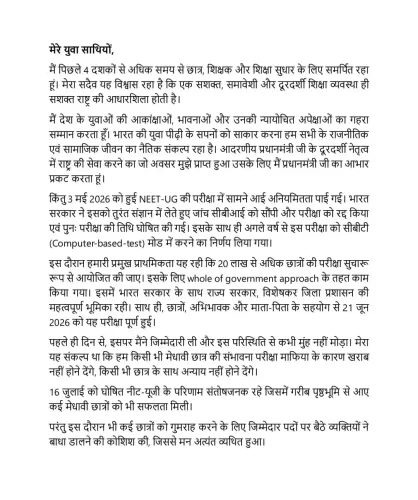
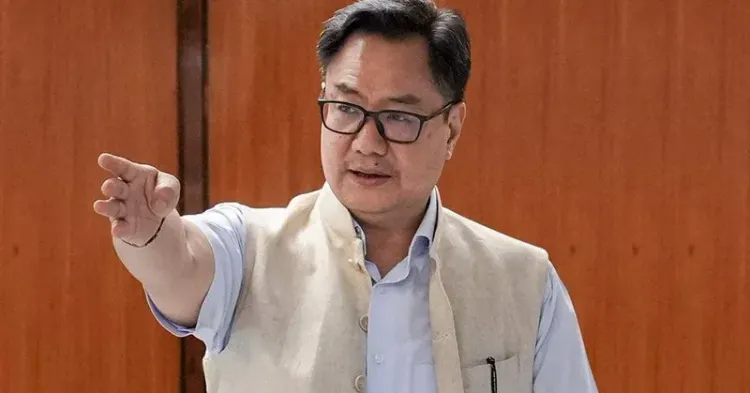
Union Parliamentary Affairs Minister Kiren Rijiju on Friday, July 25, 2026, called for collective action in support of students, sharing a message on X that urged stakeholders to come together for student welfare.
Context
Rijiju's post — 'We must come together for the students' — is brief but pointed, signalling that student welfare requires coordinated effort across institutions, government bodies, and civil society. The message comes at a time when India's education sector is in the midst of a multi-year transformation driven by the National Education Policy (NEP) 2020.
As Minister of Minority Affairs, Rijiju also oversees scholarship and welfare schemes that directly benefit millions of students from minority communities across the country. His dual portfolio gives the call added weight, spanning both parliamentary oversight and targeted welfare delivery.
Policy Backdrop
The National Education Policy 2020, approved by the Union Cabinet, remains the centrepiece of India's education reform agenda. It emphasises multidisciplinary learning, mother-tongue instruction in early years, and greater equity in access — particularly for students from marginalised and minority backgrounds.
Implementation of the NEP 2020 has been uneven across states, and parliamentary debates on education budget allocations have grown increasingly pointed. Minority scholarship schemes administered by the Ministry of Minority Affairs are also under scrutiny ahead of upcoming legislative sessions, with stakeholders pressing for wider reach and timely disbursement.
Union ministers have periodically used social media to signal intent and build public consensus around education reforms, and Rijiju's post follows that pattern — though the specific trigger or announcement it references could not be independently confirmed at the time of publication.
Stakeholders and Impact
The call to 'come together' is directed broadly, but the most immediate stakeholders are students — particularly those from minority communities who depend on central government scholarship programmes for access to higher education. Delays or gaps in these schemes can have direct consequences on enrolment and retention rates.
Civil society organisations, state education departments, and parliamentary committees on education are also implicated. Any coordinated push on student welfare would require alignment among these actors, making Rijiju's call as much a political signal as a policy one.
What's Next
Attention will now turn to Parliament's upcoming session, where education budget allocations and the rollout of minority scholarship schemes are expected to feature in debates. Rijiju's post may be a precursor to a legislative or administrative announcement on student welfare, though no formal statement has been issued yet.
Observers will watch whether the Ministry of Minority Affairs tables new measures or whether the call translates into cross-party consensus on education spending — a goal that has proved elusive in recent sessions.
Point of View
The framing of student welfare as a collective responsibility is politically significant — it implicitly invites opposition parties and state governments to align rather than contest. The timing, ahead of a parliamentary session where education spending faces scrutiny, suggests the post may be laying groundwork for a broader policy push. Whether it translates into concrete action will be the real test.
NationPress
22 Oct 2026
Frequently Asked Questions
What did Kiren Rijiju say about students?
Kiren Rijiju posted on X on July 25, 2026, stating 'We must come together for the students,' calling for collective action on student welfare.
What is Kiren Rijiju's role in education policy?
Kiren Rijiju is the Union Minister of Parliamentary Affairs and Minister of Minority Affairs. His ministry oversees central scholarship schemes for students from minority communities and he plays a role in parliamentary oversight of education legislation.
What is the National Education Policy 2020?
The National Education Policy 2020 was approved by the Union Cabinet to overhaul India's school and higher education systems, with emphasis on multidisciplinary learning, mother-tongue instruction, and greater equity in access for all students.
Which students benefit from Ministry of Minority Affairs schemes?
Students from minority communities across India benefit from central government scholarship programmes administered by the Ministry of Minority Affairs, which support access to school and higher education.
What is expected in Parliament regarding education?
Upcoming parliamentary sessions are expected to include debates on education budget allocations and the rollout of minority scholarship schemes, both of which fall under Rijiju's ministerial oversight.