CM Sawant Invokes 'Virasat Bhi, Vikas Bhi' on Ashadhi Ekadashi
Synopsis
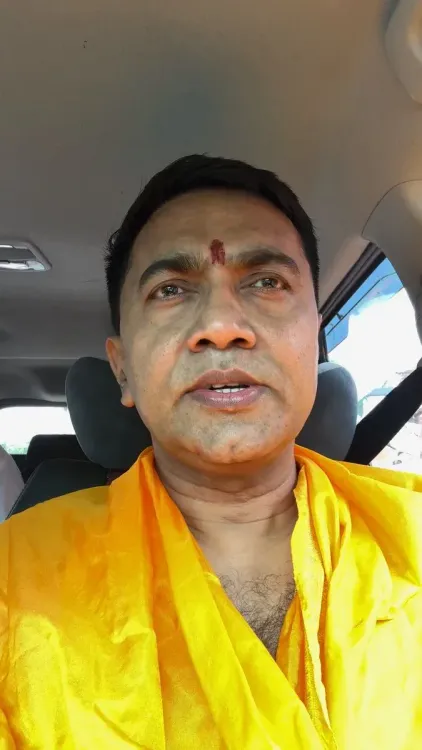
Goa CM Pramod Sawant marked Ashadhi Ekadashi on 25 July 2026 by spotlighting the Vitthalapur, Sankhali devotional gathering and urging Goan youth to embrace the state's bhakti heritage under PM Modi's 'Virasat Bhi, Vikas Bhi' vision, blending spiritual tradition with a call for progressive development.
Key Takeaways
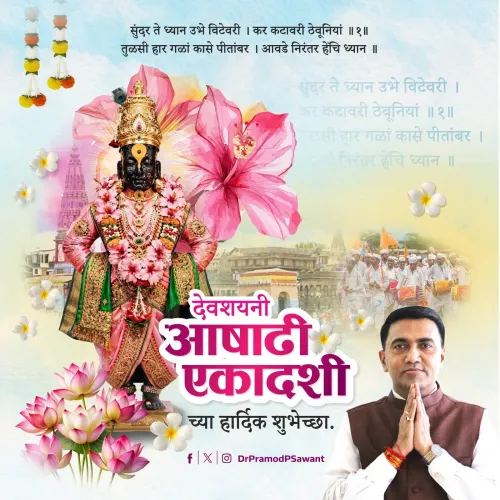
Goa CM Pramod Sawant posted on 25 July 2026 , marking Ashadhi Ekadashi with a call to honour Goa's bhakti heritage.
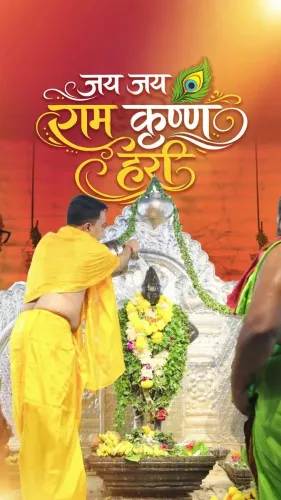
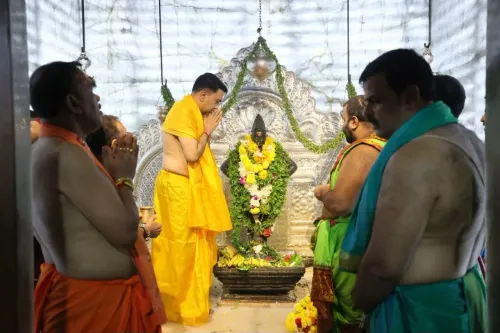
The annual devotional gathering of Goemkars takes place at Vitthalapur, Sankhali , mirroring the larger Wari pilgrimage to Pandharpur in Maharashtra.
Sawant invoked PM Narendra Modi 's 'Virasat Bhi, Vikas Bhi' framework, linking cultural preservation with the state's development agenda.
The message was directed specifically at Goa's youth , urging them to reconnect with the state's spiritual and cultural roots.
The post reflects the BJP 's broader pattern of integrating regional religious observances into a national cultural governance narrative.
State-level heritage tourism and youth cultural programmes may follow as policy expressions of the vision.
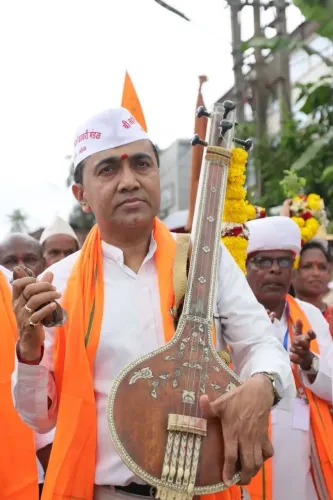
Goa Chief Minister Pramod Sawant on Saturday, 25 July 2026 marked Ashadhi Ekadashi by highlighting the annual devotional gathering at Vitthalapur, Sankhali, where Goemkars assemble in bhakti even as lakhs of pilgrims undertake the Wari to Pandharpur in Maharashtra. Invoking Prime Minister Narendra Modi's guiding vision of 'Virasat Bhi, Vikas Bhi' (Heritage as well as Development), Sawant called on Goa's youth to reconnect with the state's spiritual and cultural roots while building toward a progressive future.
Context
Ashadhi Ekadashi is one of the most significant observances in the Vaishnava calendar, marking the commencement of Chaturmas — the four-month period of heightened religious observance. Across Maharashtra and Goa, the occasion is synonymous with mass devotion to Vithoba, the presiding deity of Pandharpur. While the principal pilgrimage draws millions to Pandharpur, Goa hosts its own parallel gathering at Vitthalapur in Sankhali, North Goa, where the Vithoba tradition has deep local roots.
CM Sawant opened his post with the traditional invocation 'Jai Jai Ramakrishna Hari!' — the chant that resonates through Wari processions — signalling solidarity between Goa's bhakti culture and the broader Vaishnava tradition of the Deccan.
Policy Backdrop
The phrase 'Virasat Bhi, Vikas Bhi' — loosely translated as 'Heritage too, Development too' — has been a recurring motif in Prime Minister Narendra Modi's national addresses since 2014, positioning cultural preservation not as an obstacle to growth but as its foundation. Sawant explicitly attributed the vision to Modi, framing Goa's local temple tradition as an expression of this national cultural policy.
The BJP-led Goa government has consistently used religious festivals and bhakti events to reinforce a dual narrative: that Goa's distinct Konkani-Hindu identity is compatible with, and indeed energises, its economic modernisation. This approach mirrors similar messaging from BJP-governed states where heritage sites and pilgrimage circuits are integrated into tourism and infrastructure planning.
Stakeholders and Impact
Sawant's message was directed most pointedly at Goan youth, urging them to 'cherish our traditions and move confidently towards a brighter future.' The appeal reflects a broader concern within the state administration about cultural continuity as Goa's economy remains heavily oriented toward international tourism and migration.
Local cultural communities and devotees at Vitthalapur stand as the immediate stakeholders, with the gathering serving as a living demonstration of the heritage the CM wishes to preserve. Heritage tourism planners and youth organisations are the secondary audience for the 'Virasat Bhi, Vikas Bhi' framing.
What's Next
Sawant's Ashadhi Ekadashi message is likely to be followed by state-level announcements on heritage tourism circuits or youth cultural programmes, areas the Goa government has signalled interest in developing. Upcoming assembly sessions and national cultural policy discussions could provide further platforms for Goa to articulate how it applies the 'Virasat Bhi, Vikas Bhi' framework at the state level.
As pilgrimage tourism grows across India, Vitthalapur, Sankhali may receive increased infrastructure attention, positioning Goa's own Vithoba tradition as a complement — and a local alternative — to the Pandharpur Wari for Goemkar devotees.
Point of View
Modi's 'Virasat Bhi, Vikas Bhi' formulation. By foregrounding Vitthalapur as Goa's own pilgrimage centre, the CM subtly asserts a distinct Goan Hindu identity without distancing the state from the pan-Indian bhakti mainstream. The explicit call to youth signals that the administration sees cultural continuity as both a political and developmental priority, not merely a ceremonial gesture. This positions heritage not as nostalgia but as a policy instrument for social cohesion in a state navigating rapid tourism-driven change.
NationPress
23 Oct 2026
Frequently Asked Questions
What is Ashadhi Ekadashi and why is it significant in Goa?
Ashadhi Ekadashi is a major Hindu festival marking the start of Chaturmas and is associated with mass pilgrimage to Pandharpur in Maharashtra. In Goa, Goemkar devotees gather at Vitthalapur in Sankhali to observe the occasion with bhakti traditions centred on the Vithoba deity.
Where is the Ashadhi Ekadashi gathering held in Goa?
The gathering is held at Vitthalapur in Sankhali, North Goa, which hosts an annual devotional assembly of Goemkars on Ashadhi Ekadashi as a local parallel to the Pandharpur Wari pilgrimage.
What does 'Virasat Bhi, Vikas Bhi' mean?
'Virasat Bhi, Vikas Bhi' translates to 'Heritage too, Development too' and is a vision articulated by Prime Minister Narendra Modi since 2014 to balance the preservation of India's cultural heritage with the pursuit of economic and infrastructural progress.
What did Goa CM Pramod Sawant say on Ashadhi Ekadashi 2026?
CM Pramod Sawant posted on 25 July 2026 highlighting the Vitthalapur, Sankhali gathering, invoking PM Modi's 'Virasat Bhi, Vikas Bhi' vision, and urging Goa's youth to reconnect with the state's spiritual and cultural heritage while building toward a progressive future.
What is the Pandharpur Wari pilgrimage?
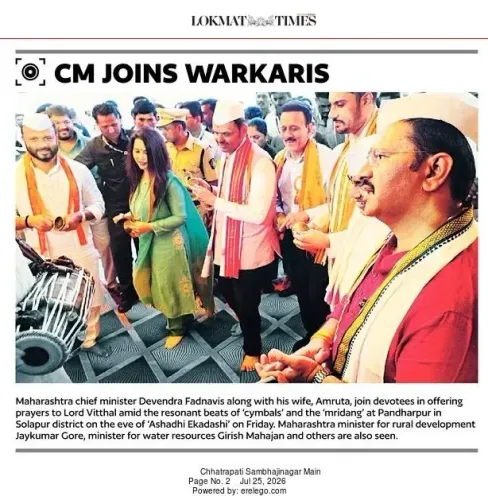
The Pandharpur Wari is an annual pilgrimage to the Vithoba temple in Pandharpur, Maharashtra, undertaken by lakhs of devotees called Warkaris on Ashadhi Ekadashi. It is one of the largest religious processions in India.