CM Sawant puts Parliament onus on Rahul Gandhi
Synopsis
Goa Chief Minister Pramod Sawant has called on Congress leader Rahul Gandhi to take responsibility for Parliament's smooth functioning, arguing the Opposition cannot simultaneously demand debate and disrupt proceedings. His post follows a statement by Home Minister Amit Shah clarifying the government's position on the ongoing parliamentary standoff.
Key Takeaways
Goa CM Pramod Sawant posted on 12 August 2026 holding Rahul Gandhi responsible for Parliament's smooth functioning.
Sawant cited a statement by Union Home Minister Amit Shah as having removed all ambiguity about the government's position.
He accused the Opposition of 'political theatrics' — demanding debate while disrupting the very proceedings that enable it.
Sawant specifically invoked Gandhi's constitutional role as Leader of the Opposition in the Lok Sabha , not merely his party position.
Parliamentary disruptions leading to adjournments have been a recurring pattern in India since 2014 , affecting legislative productivity across multiple sessions.
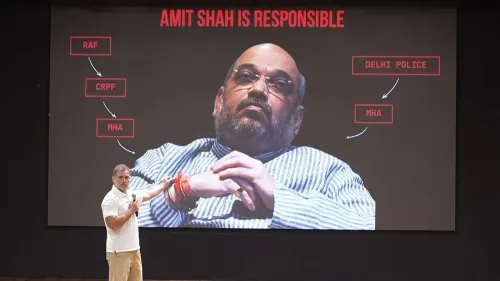
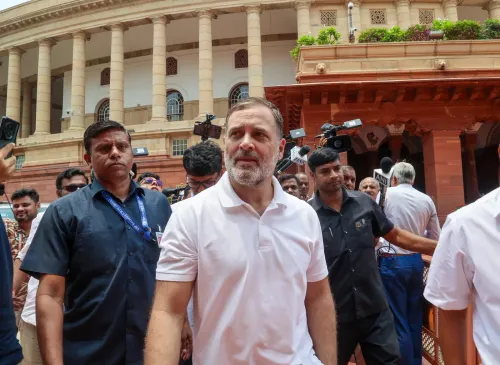
The floor of Parliament has become a battlefield again — and Goa Chief Minister Pramod Sawant wants the Leader of the Opposition to answer for it. On Wednesday, 12 August 2026, Sawant posted a pointed message on X, squarely placing the responsibility for Parliament's smooth functioning on Congress leader Rahul Gandhi, after Union Home Minister Amit Shah publicly stated the government's position on the ongoing deadlock.
Shah's statement sets the stage
Sawant's post follows what he describes as a clear articulation by Home Minister Amit Shah of the government's stance — a move that, in his reading, removes all ambiguity about the path forward. While the specific content of Shah's statement cannot be independently verified, Sawant's framing presents it as a definitive line drawn by the ruling side, effectively shifting the next move to the opposition's court.
The contradiction Sawant is calling out
The sharpest line in Sawant's post is also the most politically loaded: 'The Opposition cannot demand answers and debate on issues of public importance while repeatedly disrupting the very House where those discussions must take place.' It is a charge that cuts to the heart of a decade-long pattern in Indian parliamentary politics — opposition benches demanding accountability while simultaneously preventing the proceedings that would enable it.
Sawant calls this 'political theatrics,' and directs Rahul Gandhi, as Leader of the Opposition in the Lok Sabha, to ensure constructive debate instead. The framing is deliberate: it positions Gandhi not merely as a party leader but as a constitutional officer with a duty to the House.
A decade of disrupted sessions
The pattern Sawant invokes is well-documented. Since 2014, repeated parliamentary sessions have seen adjournments triggered by opposition protests, with legislative productivity taking measurable hits. Both the ruling dispensation and opposition parties have, at various points, accused each other of weaponising procedure. The result has been a recurring cycle — urgent national issues go undebated not because Parliament lacks the time, but because the floor never settles long enough to hold the conversation.
Sawant's intervention, coming from a state chief minister rather than a central minister, signals that the BJP's messaging on parliamentary conduct is being amplified across its leadership spectrum.
What Gandhi's response will reveal
The ball is now in the opposition's court — and how Rahul Gandhi responds will define the tenor of the session ahead. A constructive pivot would validate the government's call; continued disruptions would hand the BJP a ready-made narrative about opposition obstructionism. Either way, the next few sittings of Parliament will be watched closely for signs of whether procedural reform talks gain any traction across party lines.
In Indian democracy's oldest and loudest argument — who is really failing Parliament — Pramod Sawant has just added his voice to the prosecution's bench.
Point of View
Led by Rahul Gandhi, bears institutional responsibility for parliamentary dysfunction. By framing Gandhi's role in constitutional terms — as Leader of the Opposition, not just a party chief — the BJP widens the accountability frame beyond partisan politics. This mirrors a broader strategic shift where the ruling party uses its state-level leaders to echo and reinforce central messaging, saturating the political discourse across multiple platforms simultaneously. The real test is whether this pressure translates into procedural negotiations or simply entrenches both sides further ahead of the next session.
NationPress
12 Aug 2026
Frequently Asked Questions
Why is Goa CM Pramod Sawant commenting on Parliament?
Sawant, a senior BJP leader, used his platform to amplify the party's position that Rahul Gandhi, as Leader of the Opposition, bears responsibility for Parliament's smooth functioning — a message the BJP is pushing across its leadership ranks.
What did Amit Shah say about Parliament that Sawant is referring to?
Sawant's post states that Home Minister Amit Shah clearly articulated the government's position on the current parliamentary situation, though the specific content of that statement has not been independently detailed in this report.
What is Rahul Gandhi's role as Leader of the Opposition?
As Leader of the Opposition in the Lok Sabha, Rahul Gandhi holds a constitutionally recognised position that carries the responsibility of leading constructive scrutiny of the government and ensuring the opposition participates meaningfully in parliamentary proceedings.
How often has India's Parliament been disrupted in recent years?
Parliamentary disruptions leading to adjournments have been a recurring feature since 2014 , with opposition protests on various issues repeatedly reducing legislative productivity across multiple sessions over the past decade.
What does Sawant mean by 'political theatrics' in Parliament?
Sawant uses the phrase to describe what he sees as the Opposition's contradictory behaviour — publicly demanding debates and answers on national issues while simultaneously disrupting the parliamentary proceedings that would allow those very debates to happen.