CM Sawant Chairs Meet to Fast-Track Goa Sustainable Agriculture Plan
Synopsis
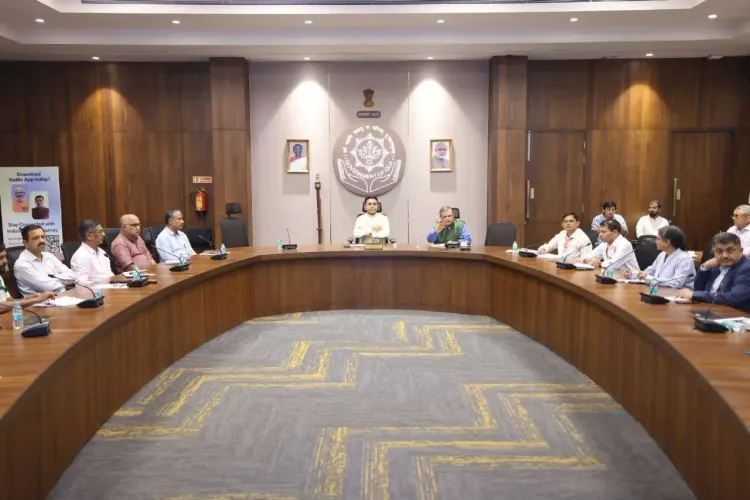
Goa Chief Minister Pramod Sawant on 22 July 2026 chaired an Inter-Departmental Alignment Meeting at Mantralaya, Porvorim, to accelerate the Goa Sustainable Agriculture Action Plan 2025 through CM-Krishi SAMPARK Goa, directing departments to deliver visible outcomes within 90 days under the Aatmanirbhar Bharat and Swayampurna Goa frameworks.
Key Takeaways
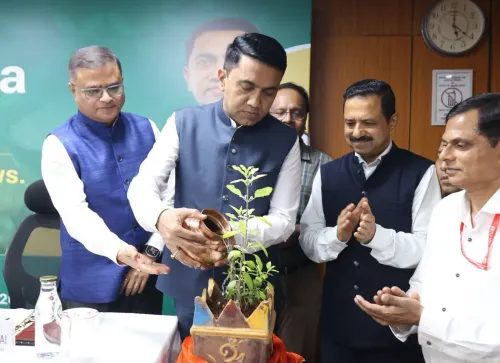
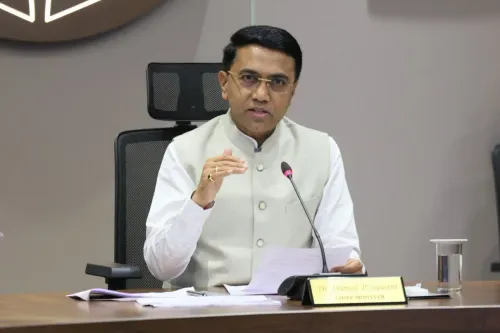
CM Pramod Sawant chaired an Inter-Departmental Alignment Meeting at Mantralaya, Porvorim on 22 July 2026 .
The meeting focused on fast-tracking the Goa Sustainable Agriculture Action Plan (GSAAP) 2025 through the CM-Krishi SAMPARK Goa initiative.
All departments were directed to coordinate with implementing agencies and deliver visible outcomes within 90 days .
The initiative is aligned with the national Aatmanirbhar Bharat campaign and the state's Swayampurna Goa goal.
The plan operates under the Goa State Amrit Kaal Agriculture Policy 2025 , which frames Goa's agricultural development up to 2047 .
Progress on 90-day deliverables is expected to be reviewed by late October 2026 .
Goa Chief Minister Pramod Sawant on Wednesday, 22 July 2026, chaired an Inter-Departmental Alignment Meeting at Mantralaya, Porvorim, directing all concerned departments to accelerate implementation of the Goa Sustainable Agriculture Action Plan (GSAAP) 2025 through the CM-Krishi SAMPARK Goa initiative, with a firm 90-day execution deadline.
Context
CM Sawant convened the alignment meeting to break departmental silos and ensure coordinated delivery of the state's flagship agriculture programme. In his post, he stated that every department has been directed to 'work in close coordination with implementing agencies and support partners, with a strong focus on execution, accountability, and delivering visible outcomes within the next 90 days.' The meeting was held at the seat of Goa's state government at Mantralaya, Porvorim.
The CM-Krishi SAMPARK Goa initiative — which stands for Sustainable Agriculture Market Partnership for Access, Reach and Knowledge — is the primary vehicle through which GSAAP 2025 is being rolled out. The initiative focuses on market linkages, knowledge dissemination, and farmer outreach across the state.
Policy Backdrop
The GSAAP 2025 sits within the broader framework of the Goa State Amrit Kaal Agriculture Policy 2025, which aligns Goa's agricultural development trajectory with India's national Amrit Kaal vision extending to 2047. CM Sawant explicitly linked the effort to the national Aatmanirbhar Bharat campaign — launched by the Government of India in May 2020 — and the state's own goal of Swayampurna Goa, meaning a self-sufficient Goa.
The use of a 90-day accountability window is consistent with a broader administrative practice adopted by several Indian state governments since 2020 to enforce time-bound delivery on policy commitments. Such timelines are designed to convert policy intent into measurable on-ground outcomes within a single quarter.
Stakeholders and Impact
Goa's farming community stands as the primary beneficiary of the initiative, which aims to improve their access to markets, agricultural knowledge, and institutional support. The inter-departmental format of the meeting signals that multiple state agencies — spanning agriculture, horticulture, rural development, and allied sectors — are expected to contribute to implementation.
Support partners and implementing agencies working alongside government departments are also central to the model, suggesting a public-private or multi-stakeholder delivery structure under CM-Krishi SAMPARK Goa. The emphasis on 'visible outcomes' indicates the government's intent to make the programme's impact perceptible to farmers and rural communities within the near term.
What's Next
With a 90-day clock now running from 22 July 2026, the first progress review of GSAAP 2025 deliverables can be expected by late October 2026. Any budgetary allocations or policy reviews related to the initiative are likely to surface during the next session of the Goa Legislative Assembly.
The outcome of this accountability exercise will be a key indicator of whether Goa's sustainable agriculture ambitions translate into tangible gains for farmers — and could shape the state's approach to future inter-departmental coordination under the Amrit Kaal framework.
Point of View
Reinforcing ideological continuity with the Centre. The multi-stakeholder model embedded in CM-Krishi SAMPARK, combining government departments with external support partners, suggests Goa is experimenting with a hybrid delivery architecture that could serve as a template for other small states. Whether the 90-day accountability window produces measurable farmer-level outcomes will be a critical test of the state's administrative capacity.
NationPress
21 Oct 2026
Frequently Asked Questions
What is the Goa Sustainable Agriculture Action Plan 2025?
The Goa Sustainable Agriculture Action Plan (GSAAP) 2025 is a state-level policy framework aimed at advancing sustainable farming practices in Goa, implemented through the CM-Krishi SAMPARK Goa initiative and aligned with the Goa State Amrit Kaal Agriculture Policy 2025 .
What is CM-Krishi SAMPARK Goa?
CM-Krishi SAMPARK Goa stands for Sustainable Agriculture Market Partnership for Access, Reach and Knowledge . It is Goa's state initiative to improve market linkages, farmer outreach, and agricultural knowledge dissemination as part of the GSAAP 2025 rollout.
What did Pramod Sawant announce at the Mantralaya meeting on 22 July 2026?
CM Pramod Sawant directed all departments to coordinate with implementing agencies and deliver visible outcomes under GSAAP 2025 within 90 days , at an Inter-Departmental Alignment Meeting held at Mantralaya, Porvorim .
What is Swayampurna Goa?
Swayampurna Goa is a state-level vision of self-sufficiency for Goa, complementing the national Aatmanirbhar Bharat campaign. It underpins several of the state government's economic and agricultural policy goals.
When will the 90-day deadline for GSAAP 2025 expire?
The 90-day deadline set at the 22 July 2026 meeting is expected to expire by late October 2026 , at which point departments are expected to report on visible outcomes under the CM-Krishi SAMPARK Goa initiative.