CM Sawant thanks Centre for ₹398 cr advance tax devolution to Goa

Synopsis
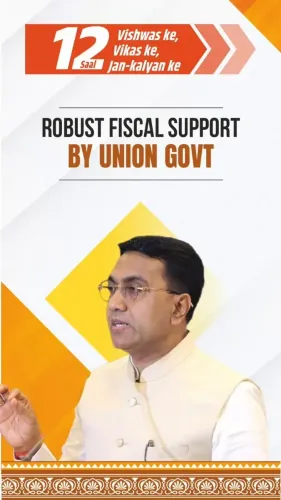
The Union Government released ₹1,09,019 crore as tax devolution to states on August 1, 2026, including a ₹398 crore advance instalment for Goa. Chief Minister Pramod Sawant credited PM Modi and Finance Minister Sitharaman, calling the transfer a boost for infrastructure and cooperative federalism.
Key Takeaways
The Centre released ₹1,09,019 crore as tax devolution to all states on August 1, 2026 .
Goa received an advance instalment of ₹398 crore earmarked to accelerate capital and developmental expenditure.
The release flows from the 15th Finance Commission formula, which allocates 41 percent of the central divisible tax pool to states.
CM Pramod Sawant attributed the transfer to PM Narendra Modi and Finance Minister Nirmala Sitharaman .
The advance structure is designed to front-load state spending and speed up infrastructure project execution within the financial year.
The release was framed by Sawant within the broader Viksit Bharat 2047 development narrative.
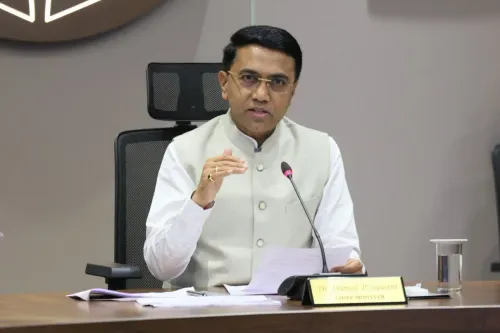
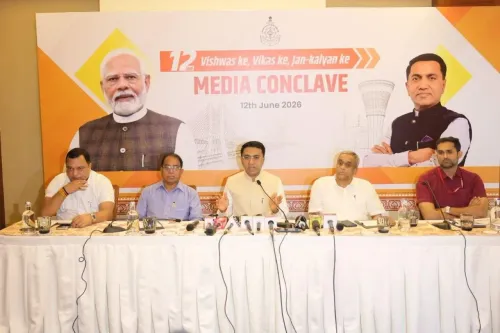
An advance instalment of ₹398 crore is heading to Goa — part of a sweeping ₹1,09,019 crore tax devolution release to states by the Union Government on Saturday, August 1, 2026. Goa Chief Minister Pramod Sawant welcomed the transfer, saying it would accelerate the state's infrastructure push and deepen inclusive growth.
Sawant credited Prime Minister Narendra Modi and Union Finance Minister Nirmala Sitharaman for the 'timely release,' describing it as a reflection of the Centre's commitment to cooperative federalism. 'This timely release will further strengthen Goa's development journey by enabling faster execution of infrastructure projects, enhancing public service delivery, and driving inclusive growth,' he wrote.
What the ₹398 crore advance means for Goa's project pipeline
The transfer is structured as an advance instalment — a front-loaded payment designed specifically to let states move capital expenditure faster rather than waiting for scheduled monthly tranches. For Goa, whose economy leans heavily on tourism, services, and mining, the injection is intended to speed up infrastructure execution before the financial year's spending window narrows.
The 15th Finance Commission — the constitutional body that sets the devolution formula — had recommended that states receive 41 percent of the divisible pool of central taxes for the period 2021–26. Releases like this one flow from that formula, making them constitutional transfers rather than discretionary grants. The size of each instalment tracks central tax collections, which means a buoyant revenue year at the Centre translates directly into larger state receipts.
Cooperative federalism or political optics — why the framing matters
The Modi administration has consistently framed tax devolution releases as evidence of cooperative federalism, a principle that places states as genuine partners in national development rather than subordinate recipients of central largesse. Chief ministers from BJP-governed states have echoed that framing, and Sawant's post fits squarely within that pattern.
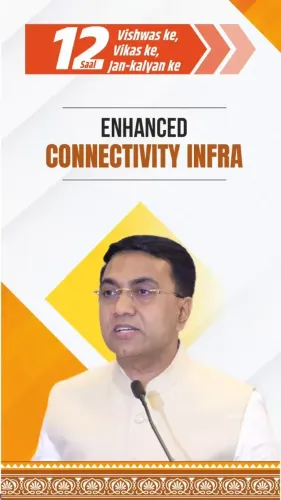
The broader backdrop is the Viksit Bharat 2047 agenda — the government's long-horizon goal of making India a developed economy by its centenary of independence. State-level infrastructure spending is a critical lever in that plan, and advance devolution instalments are one of the Centre's tools to keep that spending on track.
What matters next is whether the funds translate into project completions on the ground. Goa's utilisation certificates and infrastructure delivery timelines will be the real measure of whether the advance instalment earns its billing.
Point of View
Publicly thanking the Centre serves a dual purpose: it signals alignment with the BJP's national narrative and keeps Goa's infrastructure pipeline politically visible. The real test of cooperative federalism, however, lies not in the transfer but in what gets built — and Goa's track record on capital utilisation will be the harder story to tell. With the 16th Finance Commission deliberations approaching, states have every incentive to demonstrate both gratitude and delivery.
NationPress
1 Aug 2026
Frequently Asked Questions
What is tax devolution and why does Goa receive it?
Tax devolution is the constitutionally mandated transfer of a share of central tax revenues to state governments. The 15th Finance Commission recommended that states collectively receive 41 percent of the central divisible pool; Goa receives its proportional share based on the commission's allocation formula.
How much did Goa receive in the August 2026 tax devolution release?
Goa received an advance instalment of ₹398 crore as part of the Union Government's total release of ₹1,09,019 crore to all states on August 1, 2026.
What is the purpose of an advance tax devolution instalment?
An advance instalment is a front-loaded payment released before the regular monthly schedule to help states accelerate capital expenditure and infrastructure project execution within the financial year.
What is the 15th Finance Commission's role in tax devolution?
The 15th Finance Commission is the constitutional body that recommended the formula for sharing central taxes with states for the period 2021–26, fixing the states' collective share at 41 percent of the divisible pool.
How does this release connect to Viksit Bharat 2047?
The Viksit Bharat 2047 agenda aims to make India a developed economy by its centenary of independence. State-level infrastructure spending funded through tax devolution is a key building block of that goal, and advance releases are designed to keep project timelines on track.