CM Sawant Pays Tribute to Dr. Shyama Prasad Mukherjee on Birth Anniversary
Synopsis
Goa Chief Minister Pramod Sawant marked the 125th birth anniversary of Dr. Shyama Prasad Mukherjee on 6 July 2026, honouring the Bharatiya Jana Sangh founder as a symbol of national unity and sovereignty. The tribute reflects the BJP's sustained effort to draw ideological continuity from its Jana Sangh roots.
Key Takeaways
Goa CM Pramod Sawant paid tribute to Dr.
Shyama Prasad Mukherjee on his birth anniversary on 6 July 2026 .
Mukherjee was born on 6 July 1901 and founded the Bharatiya Jana Sangh on 21 October 1951 .
He died in 1953 under detention in Jammu and Kashmir while protesting entry-permit restrictions.
The Bharatiya Jana Sangh is recognised as the direct ideological predecessor of the BJP , having merged into the Janata Party in 1977 .
BJP leaders across India observe 6 July annually to reaffirm the party's ideological lineage rooted in national unity and sovereignty.
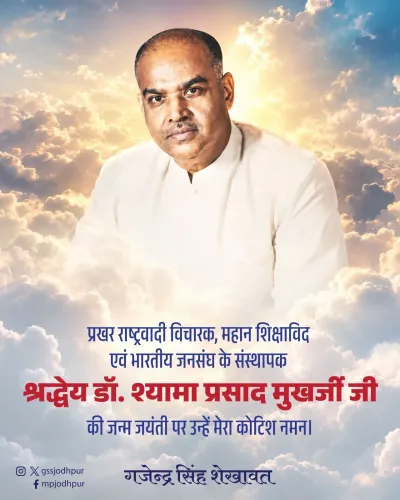
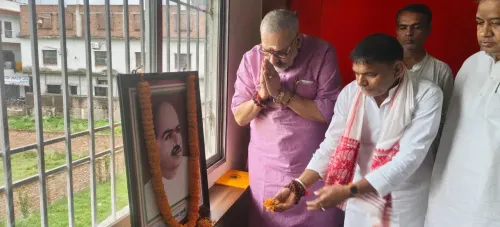
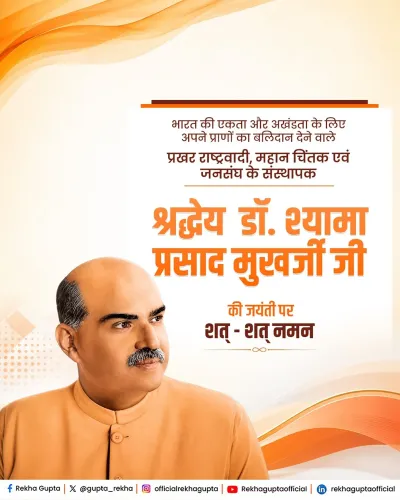
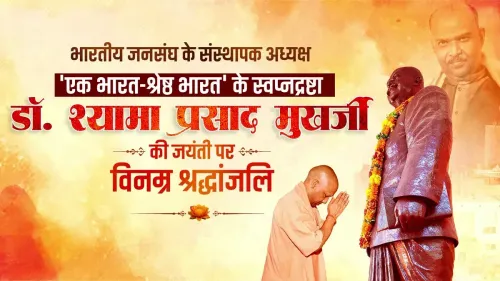
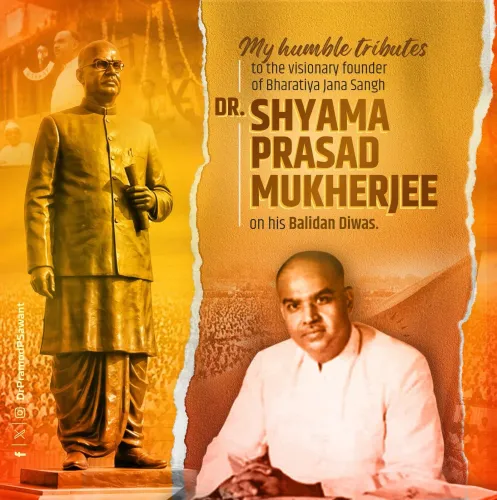
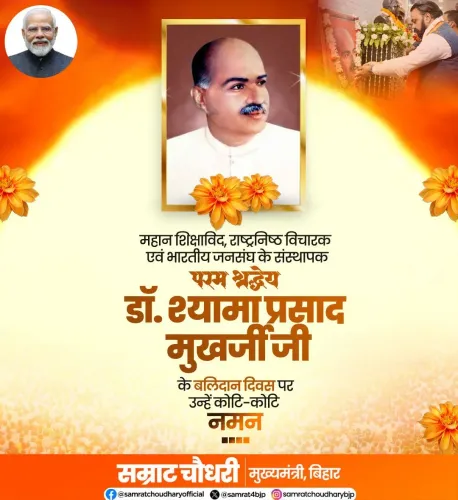
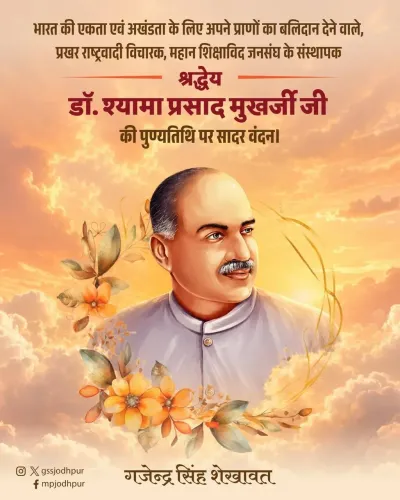
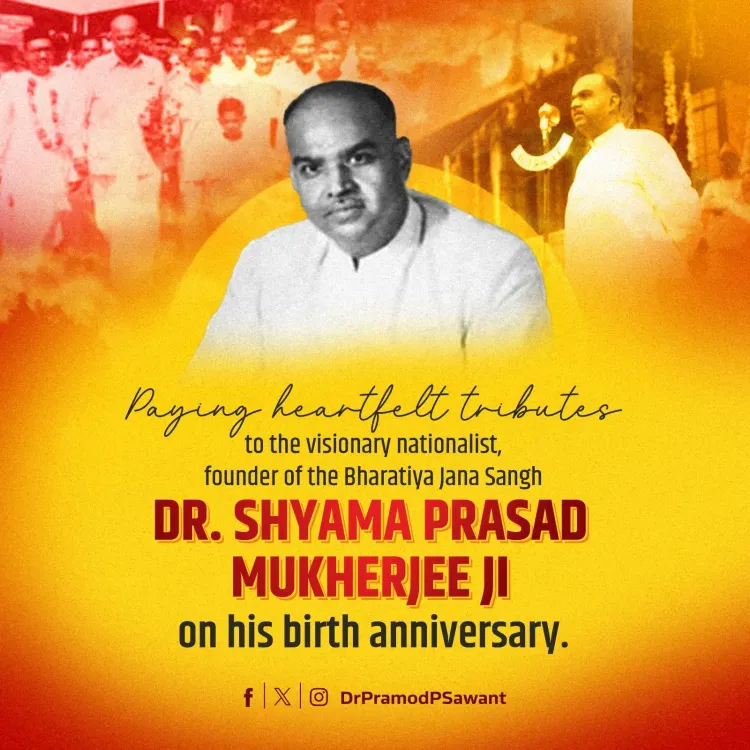
Goa Chief Minister Pramod Sawant on Sunday, 6 July 2026 paid tribute to Dr. Shyama Prasad Mukherjee on his birth anniversary, hailing him as a 'visionary nationalist, statesman and founder of the Bharatiya Jana Sangh' who dedicated his life to safeguarding India's unity, integrity and sovereignty.
Context
Dr. Shyama Prasad Mukherjee was born on 6 July 1901 and went on to become one of the most consequential nationalist politicians of pre- and post-independence India. An educationist and statesman, he is best remembered as the founder of the Bharatiya Jana Sangh, which he established on 21 October 1951 to consolidate nationalist political forces outside the Congress framework. He died in 1953 while under detention in Jammu and Kashmir, where he had gone to protest the requirement for a permit to enter the state — a cause rooted in his opposition to any dilution of India's territorial integration.
CM Sawant, in his post on X, stated that Mukherjee's 'courage, selfless sacrifice and steadfast commitment to national interests continue to inspire generations.' The tribute reflects the BJP's consistent effort to honour the Jana Sangh's founding figure as a symbol of cultural nationalism and national unity.
Policy Backdrop
The Bharatiya Jana Sangh, founded by Mukherjee, merged into the Janata Party in 1977 and is widely recognised as the direct ideological predecessor of the Bharatiya Janata Party. The BJP has long drawn a line of continuity from Mukherjee's nationalism to its own political positions on sovereignty and territorial integrity, including its long-standing opposition to Article 370 — the constitutional provision that granted special status to Jammu and Kashmir and was abrogated in 2019.
State and central BJP leaders issue tributes to Mukherjee every 6 July, framing him as an early proponent of complete national integration. These commemorations form a recurring part of the party's effort to anchor its current policy positions within a longer historical narrative stretching back to the early 1950s.
Stakeholders and Impact
BJP workers and affiliated nationalist organisations across Goa and the rest of India observe Mukherjee's birth anniversary with party programmes and tributes. For the BJP, the occasion serves both as an act of remembrance and as a reaffirmation of the ideological values — national unity, sovereignty, and cultural nationalism — that the party traces to the Jana Sangh era.
As Goa's Chief Minister and a prominent state-level BJP leader, Sawant's tribute also reinforces the party's organisational culture of commemorating foundational figures, signalling ideological continuity to the party cadre and the broader electorate.
What's Next
The 6 July anniversary is expected to see similar tributes from BJP leaders at the central and state levels across India. References to Mukherjee's legacy are likely to recur in upcoming BJP state-level events and, potentially, in parliamentary debates touching on themes of national integration and sovereignty. His legacy remains a touchstone in the party's political discourse, particularly when questions of territorial integrity arise.
Point of View
Party-wide commemorative calendar that the BJP uses to reinforce its ideological genealogy from the Jana Sangh era to the present. By invoking Mukherjee's 'selfless sacrifice' and commitment to sovereignty, the party subtly links its historical opposition to Article 370 — and its 2019 abrogation — to a decades-old nationalist tradition. For a state-level leader like Sawant, such tributes also serve an internal party-management function, signalling alignment with central BJP values to the cadre. The consistency of this annual ritual across all BJP-governed states underscores how foundational figures are deployed as living policy arguments rather than mere historical memories.
NationPress
5 Oct 2026
Frequently Asked Questions
Who was Dr. Shyama Prasad Mukherjee?
Dr. Shyama Prasad Mukherjee was an Indian politician, educationist and statesman born on 6 July 1901. He founded the Bharatiya Jana Sangh in 1951, which is recognised as the ideological predecessor of the BJP. He died in 1953 while under detention in Jammu and Kashmir.
Why do BJP leaders pay tribute to Shyama Prasad Mukherjee every year?
BJP leaders pay tribute to Mukherjee on 6 July, his birth anniversary, to honour the founder of the Bharatiya Jana Sangh and reinforce the party's ideological continuity with the Jana Sangh's emphasis on national unity, sovereignty and cultural nationalism.
What did Goa CM Pramod Sawant say about Shyama Prasad Mukherjee?
CM Pramod Sawant called Mukherjee a 'visionary nationalist, statesman and founder of the Bharatiya Jana Sangh,' saying he dedicated his life to safeguarding India's unity, integrity and sovereignty, and that his courage and sacrifice continue to inspire generations.
What is the Bharatiya Jana Sangh?
The Bharatiya Jana Sangh was a nationalist political party founded by Dr. Shyama Prasad Mukherjee on 21 October 1951. It merged into the Janata Party in 1977 and is widely regarded as the direct ideological forerunner of the Bharatiya Janata Party (BJP).
How did Shyama Prasad Mukherjee die?
Dr. Shyama Prasad Mukherjee died in 1953 while under detention in Jammu and Kashmir, where he had gone to protest the requirement for a permit for Indian citizens to enter the state — a cause linked to his opposition to any dilution of India's territorial integration.