Rajasthan CM Sharma hails Amit Atal screening at IFFI
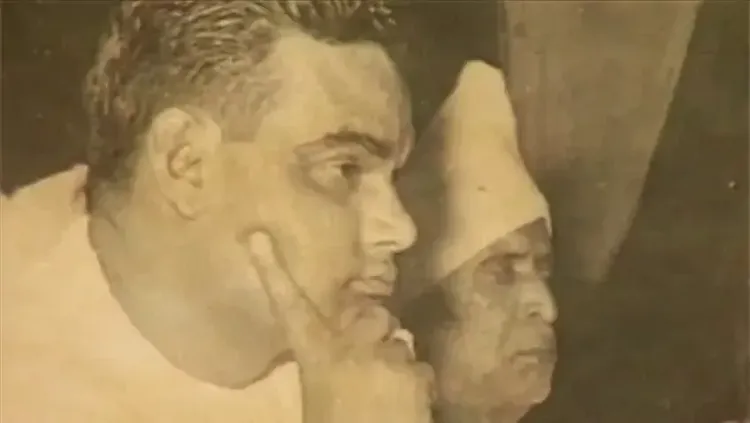
Synopsis
Rajasthan CM Bhajan Lal Sharma hailed the special IFFI Goa screening of Amit Atal, a film on Atal Bihari Vajpayee, as a chance to recall the former Prime Minister's ideals of national interest, dignified speech and public welfare, crediting Panchjanya with carrying that life-philosophy to a new generation.
Key Takeaways
Rajasthan Chief Minister Bhajan Lal Sharma on 26 November 2026 hailed the IFFI Goa screening of Amit Atal, a film on Atal Bihari Vajpayee.
He said Vajpayee's personality is a heritage of Indian democracy combining national loyalty, firm ideas, dignity of words and human feeling.
Sharma wrote that Vajpayee proved the highest purpose of politics is national interest and public welfare.
He credited Panchjanya with introducing a new generation to Vajpayee's life-philosophy.
IFFI, held in Goa since 1952, has hosted special screenings of politically themed films in recent editions.
Vajpayee served as Prime Minister from 1998 to 2004 and died in 2018.
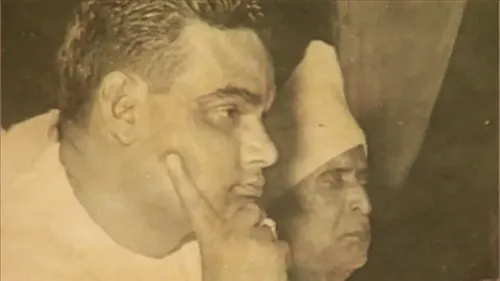
A special screening of Amit Atal at the International Film Festival of India in Goa became, in one senior leader's telling, a living classroom on democratic memory. Rajasthan Chief Minister Bhajan Lal Sharma on 26 November 2026 hailed the film on former Prime Minister Atal Bihari Vajpayee as a chance to remember his thoughts and ideals. He described Vajpayee's personality as a heritage of Indian democracy in which unwavering loyalty to the nation, firmness of ideas, dignity of words and human feeling meet as one public life.
Amit Atal under the IFFI Goa lights
Sharma said the special screening of अमिट अटल (Amit Atal), based on Vajpayee's life, turned into a distinctive occasion to recall his ideas and ideals. India's flagship government-supported film festival, staged in Goa since 1952, has in recent editions given space to politically themed cinema. The Rajasthan CM pointed to the presentation by Panchjanya as a meaningful initiative to introduce a new generation to Vajpayee's life-philosophy and to carry those ideas to people at large.
In his post he wrote that Vajpayee proved through his own life that the highest purpose of politics is national interest and public welfare — rashtrahit and janakalyan.
The Vajpayee template Sharma put on record
Vajpayee led India as Prime Minister from 1998 to 2004 and is widely remembered for oratory, poetry and an emphasis on national interest and consensus politics. Sharma's tribute placed that record inside a larger claim: that Indian democracy still draws on a style in which language itself carried dignity, and politics was framed as service rather than spectacle.
After Vajpayee's death in 2018, BJP leaders have regularly used cultural platforms to reconnect younger audiences with that emphasis. IFFI has become one more stage in that commemorative circuit — festival halls doubling as sites of political memory.
Panchjanya's bet on a younger audience
The CM credited Panchjanya, an RSS-affiliated weekly focused on cultural and ideological outreach, with taking the film to IFFI. In his telling the audience is straightforward: festival-goers in Goa, and a new generation that may know Vajpayee more as a name than as a political grammar.
What remains open is whether Amit Atal moves from a special screening into wider theatrical or digital release, and whether states treat future IFFI editions as more than a ceremonial stop. For a festival that trades in images, the sharper test is whether this portrait of Atal travels beyond the Goa hall — into classrooms, theatres, and the next generation's political vocabulary.
Point of View
BJP leaders have repeatedly used cultural stages to present him as the party's democratic credential — poet, coalition-builder, and the public face of national-interest politics for voters who never lived through 1998-2004. Placing Amit Atal inside a government-supported festival folds that commemorative work into cultural diplomacy, a lane Vajpayee-era governments themselves favoured. The test is distribution: if the film stays inside a special screening, the outreach Sharma praised will remain a festival moment, not a generational one.
NationPress
26 Nov 2026
Frequently Asked Questions
What did Rajasthan CM Bhajan Lal Sharma say about Amit Atal at IFFI?
He said the special screening at IFFI in Goa was a distinctive chance to remember Atal Bihari Vajpayee's thoughts and ideals. Sharma described Vajpayee's personality as a heritage of Indian democracy combining national loyalty, firm ideas, dignified language and human feeling.
What is the film Amit Atal about?
According to Sharma's post, Amit Atal is a film based on the life of former Prime Minister Atal Bihari Vajpayee. He said it aims to introduce a new generation to Vajpayee's life-philosophy. Production details were not specified in the post.
Where is the International Film Festival of India held?
IFFI is held in Goa. The annual government-supported festival has showcased Indian and international cinema there since 1952.
Who was Atal Bihari Vajpayee?
Atal Bihari Vajpayee was Prime Minister of India from 1998 to 2004. He is remembered for oratory, poetry and an emphasis on national interest and consensus politics, and he died in 2018.
What did Sharma say about Panchjanya's role?
He called Panchjanya's presentation a meaningful initiative to take Vajpayee's ideas to people at large. Panchjanya is an RSS-affiliated weekly focused on cultural and ideological outreach.