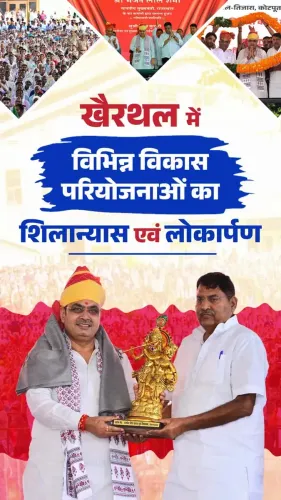
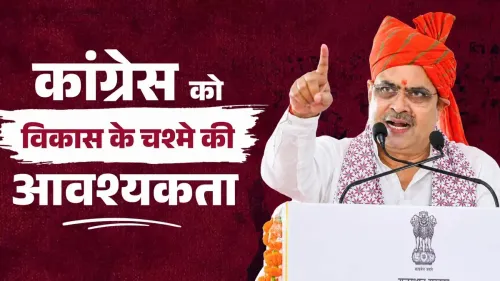
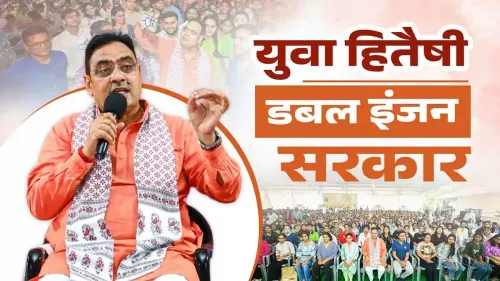
CM Bhajan Lal Sharma marks 2.5 years of BJP rule in Rajasthan
Synopsis
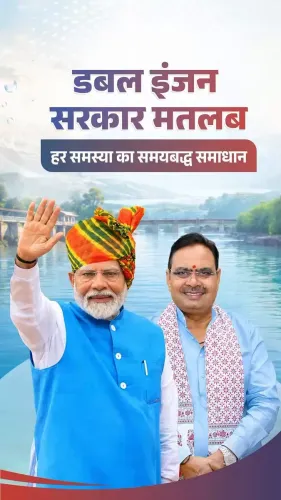
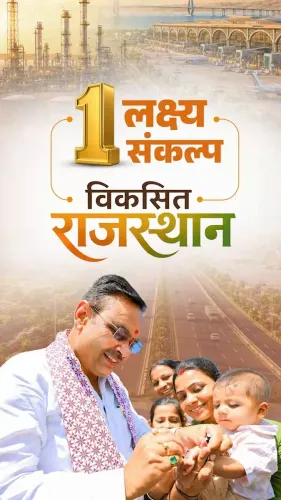
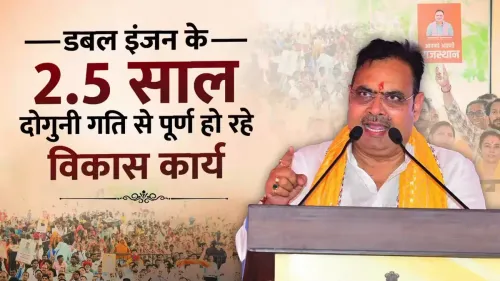
Rajasthan Chief Minister Bhajan Lal Sharma marked two-and-a-half years of BJP's 'double engine' government on 17 July 2026, citing new roads, hospitals, schools, irrigation works, and youth opportunities delivered across every assembly constituency in the state.
Key Takeaways
Bhajan Lal Sharma marked 2.5 years of the BJP's 'double engine' government in Rajasthan on 17 July 2026 .
The Chief Minister cited new roads, modern hospitals, improved schools, expanded irrigation, and youth employment as key deliverables.
The 'double engine' model aligns the Rajasthan state government with the BJP-led central government to co-fund and co-deliver infrastructure schemes.
The post claimed development has reached every one of Rajasthan 's 200 assembly constituencies.
Lakhs of farmers, youth, and ordinary residents are cited as beneficiaries of the infrastructure and welfare push.
The next state budget and assembly session debates are expected to provide a formal test of the government's development claims.
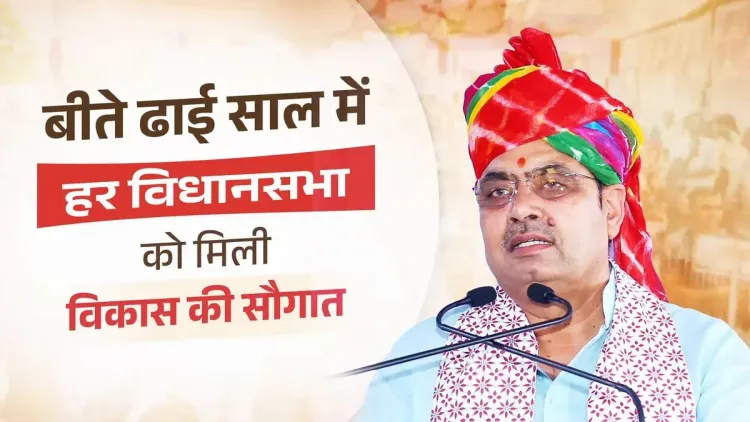
Rajasthan Chief Minister Bhajan Lal Sharma on Friday, 17 July 2026 highlighted the developmental gains achieved across every assembly constituency of the state during the past two-and-a-half years of the BJP's 'double engine' government, pointing to new roads, modernised hospitals, improved schools, expanded irrigation facilities for farmers, and fresh employment avenues for youth.
Context
In his post, Sharma wrote — 'डबल इंजन सरकार के बीते ढाई वर्षों में राजस्थान की हर विधानसभा विकास की नई सौगातों की साक्षी बनी है' — ('In the past two-and-a-half years of the double engine government, every assembly constituency of Rajasthan has witnessed new gifts of development'). He added that these works have not only strengthened basic infrastructure but have also kindled fresh hope, confidence, and a brighter future in the lives of lakhs of residents of the state.
The post marks a symbolic milestone: roughly 30 months since the BJP formed its government in Rajasthan in December 2023, installing Sharma as Chief Minister after the party's assembly election victory. The timing is consistent with the party's practice of periodic public stocktaking of governance outcomes.
Policy Backdrop
The 'double engine' frame — where a BJP state government and the BJP-led central government are presented as working in tandem — has been a consistent communication and policy-delivery model for the party since 2014. Under this arrangement, central schemes such as PM Gati Shakti for infrastructure and centrally co-funded irrigation programmes are positioned as benefiting directly from aligned political leadership at both levels.
In Rajasthan, the post-2023 state budgets have reflected priorities in road connectivity, rural health infrastructure, school upgradation, and canal and drip-irrigation expansion — areas Sharma specifically referenced in his post. The 'double engine' narrative ties these outlays explicitly to the simultaneous presence of BJP governments in Jaipur and New Delhi.
Stakeholders and Impact
The constituencies most directly addressed in Sharma's messaging are Rajasthan's farming communities, who stand to gain from irrigation improvements, and the state's youth, for whom new economic opportunities have been cited as a priority. The Chief Minister's framing — that development has reached 'every assembly constituency' — signals an intent to demonstrate geographic equity in project distribution across the state's 200 assembly segments.
Lakhs of ordinary residents, particularly in rural and semi-urban areas, are the implied beneficiaries of the infrastructure push. Credible project-level data on specific road lengths, hospital upgrades, or exact beneficiary counts from the period in question has not been independently released in verifiable public form as of this report.
What's Next
Attention will now turn to the Rajasthan state budget for 2026-27 and any mid-term review of ongoing road and irrigation projects, which will offer a more granular picture of actual delivery against the claims made in this governance narrative. The next assembly session is also expected to see opposition scrutiny of scheme implementation data, providing a formal forum for testing the government's development record.
As the BJP approaches the midpoint of its five-year term in Rajasthan, the communication strategy of highlighting constituency-level gains is likely to intensify, setting the stage for the party's positioning ahead of the next state election cycle.
Point of View
The message is calibrated for maximum geographic reach ahead of what will eventually be a re-election campaign. The emphasis on farmers and youth is deliberate: both are swing constituencies in Rajasthan that the BJP needs to consolidate. What remains to be tested is whether granular, project-level data — on road lengths, hospital bed additions, or irrigation coverage — will match the breadth of the political claim when placed under legislative scrutiny.
NationPress
16 Oct 2026
Frequently Asked Questions
What is the 'double engine' government Bhajan Lal Sharma is referring to?
The 'double engine' government refers to the BJP being in power simultaneously at the state level in Rajasthan and at the national level in New Delhi, which the party argues allows for better co-ordination and faster delivery of infrastructure and welfare schemes.
How long has Bhajan Lal Sharma been Chief Minister of Rajasthan?
Bhajan Lal Sharma has been Chief Minister of Rajasthan since December 2023, when the BJP won the state assembly elections. His post on 17 July 2026 marks approximately two-and-a-half years in office.
What development works has the Rajasthan government highlighted in 2.5 years?
The Rajasthan government has highlighted new roads, modernised hospitals, improved schools, expanded irrigation facilities for farmers, and new employment opportunities for youth as key development outcomes over the past two-and-a-half years.
Which constituencies in Rajasthan have seen development under the BJP government?
Chief Minister Sharma's post claims that every assembly constituency among Rajasthan's 200 segments has witnessed new development projects, though independent project-level verification of this claim is not yet publicly available.
What schemes support Rajasthan's infrastructure development under the double engine model?
Central schemes such as PM Gati Shakti for infrastructure and centrally co-funded irrigation programmes are among the key policy instruments that the BJP's 'double engine' model uses to channel development funds into Rajasthan.