CM Bhajan Lal Sharma Meets Sambal Sakhis, Reviews Women Outreach
Synopsis
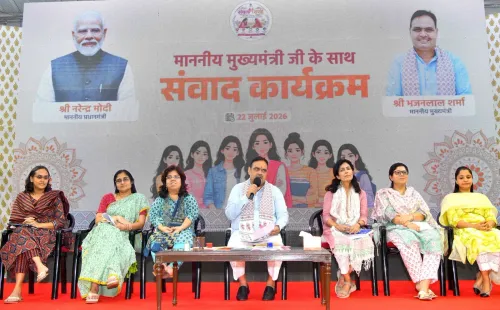
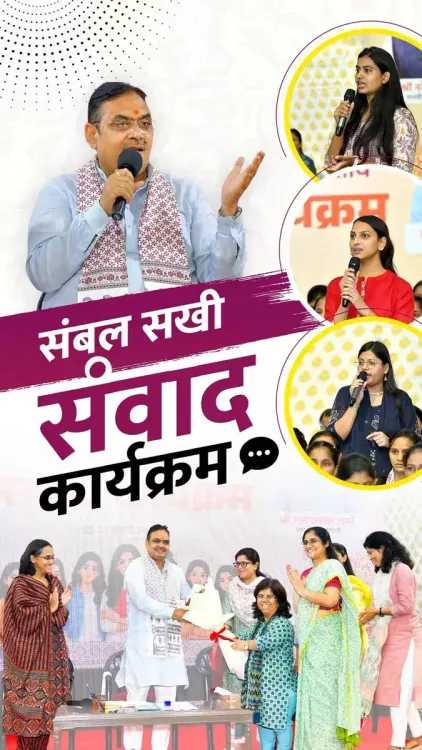
Rajasthan Chief Minister Bhajan Lal Sharma held a dialogue with Sambal Sakhis on 23 July 2026, reviewing their experiences and role in empowering women and delivering government welfare schemes to the needy across the state.
Key Takeaways
CM Bhajan Lal Sharma met Sambal Sakhis on 23 July 2026 to gather their experiences and suggestions on public service work.
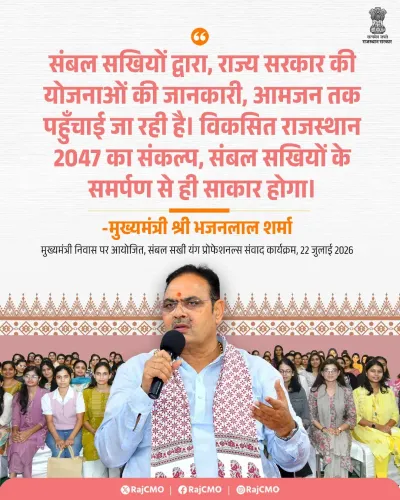
Sambal Sakhis are community-level women volunteers in Rajasthan tasked with awareness generation and last-mile welfare scheme delivery.
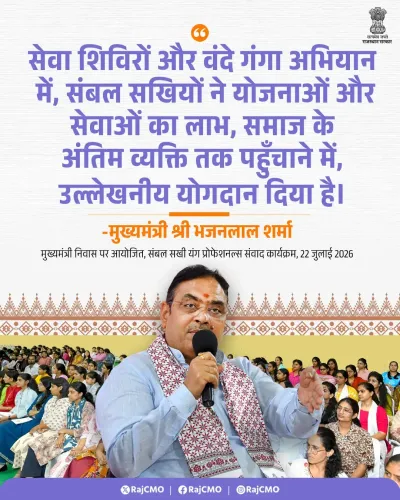
The Chief Minister highlighted their 'crucial role' in making women aware, self-reliant, and empowered.
The Sambal Sakhi model builds on national frameworks like Beti Bachao Beti Padhao and state-level Sakhi networks that position women as governance agents.
The initiative is part of the Rajasthan government's post- December 2023 push to strengthen women-led community outreach for welfare delivery.
Expansion of the Sambal Sakhi network and new operational guidelines are being watched for during the current assembly term.
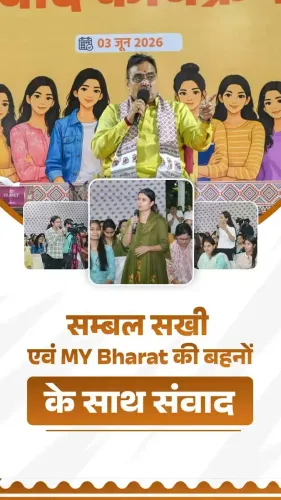
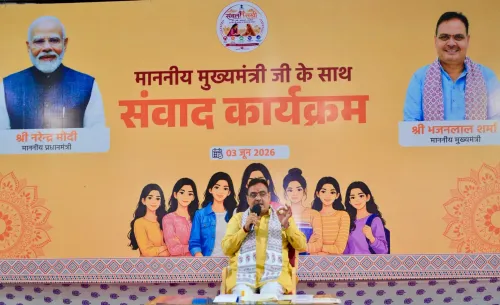
Rajasthan Chief Minister Bhajan Lal Sharma on Thursday, 23 July 2026, held a direct dialogue with Sambal Sakhis — the state's community-based women volunteers — gathering their on-ground experiences, suggestions, and updates on their public service work across Rajasthan.
Posting on X, the Chief Minister wrote: 'Sambal Sakhiyon se samvad kar unke anubhavon, sujhaavon aur janseva ke kshetra mein kiye ja rahe karyon ki jaankari prapt ki' — ('I engaged in dialogue with Sambal Sakhis and gathered information about their experiences, suggestions, and work being done in the field of public service.')
Context
Sambal Sakhis are community-level women volunteers deployed by the Rajasthan government to serve as a bridge between citizens and state welfare schemes. Their mandate spans awareness generation, beneficiary identification, and last-mile delivery of government programmes to those in need. Chief Minister Sharma's engagement with them signals active monitoring of this outreach network at the highest level of the state government.
In his post, Sharma underlined that Sambal Sakhis are playing a 'crucial role' (mahatvapurn bhumika) in making women aware, self-reliant, and empowered, while simultaneously ensuring that the benefits of government schemes reach the needy.
Policy Backdrop
The Sambal Sakhi model fits within a broader national pattern — particularly prominent in BJP-governed states — of deploying trained women volunteers and self-help group networks to strengthen welfare delivery. This approach draws on the lineage of national programmes such as Beti Bachao Beti Padhao and earlier state-level 'Sakhi' or 'Sakhi Mandal' frameworks that position women as active agents in governance and service delivery.
Since the Rajasthan assembly elections of December 2023, the state government under Sharma has prioritised women-led community outreach as a pillar of its welfare architecture. The Sambal Sakhi network represents a post-election institutional push to formalise and scale this model within the current assembly term.
Stakeholders and Impact
The primary beneficiaries of the Sambal Sakhi network are rural women and marginalised communities across Rajasthan who may otherwise face barriers in accessing government scheme benefits. By placing trained women volunteers at the community level, the state aims to close information and access gaps that often prevent eligible citizens from receiving entitlements.
For the volunteers themselves, the Sambal Sakhi role represents an avenue for civic participation and economic agency. Chief Minister Sharma's direct dialogue with them suggests the government is treating their feedback as operational intelligence to refine scheme implementation on the ground.
What's Next
Observers will watch for any formal announcements expanding the Sambal Sakhi network — including revised operational guidelines, increased remuneration, or an expanded mandate covering additional welfare programmes. The Chief Minister's public engagement with the volunteers may also precede a broader policy communication exercise ahead of upcoming administrative reviews. How the government acts on the suggestions gathered from this dialogue will be a key indicator of the network's evolving role in Rajasthan's welfare delivery architecture.
Point of View
A model that has gained traction since the rollout of direct benefit transfers. The real test will be whether the suggestions gathered translate into structural changes to the Sambal Sakhi framework or remain a one-time optics exercise.
NationPress
22 Oct 2026
Frequently Asked Questions
Who are Sambal Sakhis in Rajasthan?
Sambal Sakhis are community-based women volunteers appointed by the Rajasthan government to generate awareness about government schemes, identify eligible beneficiaries, and ensure last-mile delivery of welfare benefits to women and marginalised communities.
What did CM Bhajan Lal Sharma discuss with Sambal Sakhis?
On 23 July 2026, CM Bhajan Lal Sharma engaged in a dialogue with Sambal Sakhis to learn about their on-ground experiences, gather their suggestions, and review the public service work they are carrying out across Rajasthan.
What is the role of Sambal Sakhis in women empowerment?
According to CM Sharma, Sambal Sakhis play a crucial role in making women aware, self-reliant, and empowered, while also ensuring that the benefits of government schemes reach those who need them most.
How does the Sambal Sakhi scheme relate to national women empowerment programmes?
The Sambal Sakhi model builds on national initiatives such as Beti Bachao Beti Padhao and earlier state-level Sakhi or Sakhi Mandal frameworks, which position trained women volunteers as key agents in governance and welfare service delivery.
When did Rajasthan start focusing on women-led community outreach?
The Rajasthan government under CM Bhajan Lal Sharma has prioritised women-led community outreach as part of its welfare strategy since the December 2023 assembly elections, with the Sambal Sakhi network being a central element of that approach.