CM Sharma: Rajasthan No. 1 in Swachh Bharat rural list
Synopsis
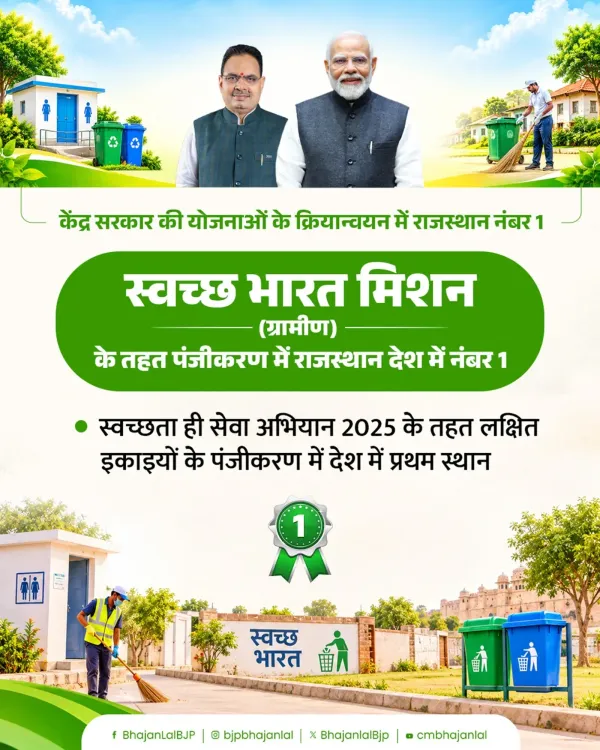
Rajasthan Chief Minister Bhajan Lal Sharma said on 27 November 2026 that the state ranks number one in implementing central schemes and first in Swachh Bharat Mission (Grameen) registration. He called it proof of a public sanitation movement. Late-2026 ranking figures were not independently confirmed.
Key Takeaways
On 27 November 2026, Rajasthan Chief Minister Bhajan Lal Sharma said the state is number 1 in implementing central government schemes.
He claimed first place nationally in registration under Swachh Bharat Mission (Grameen).
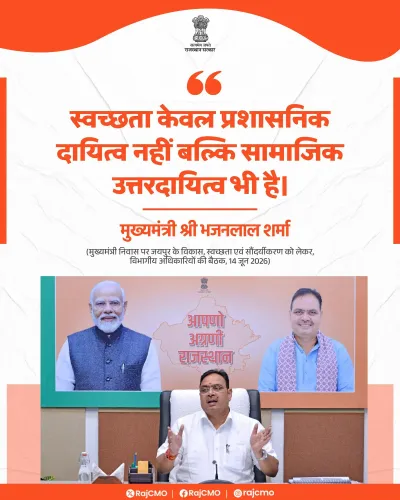
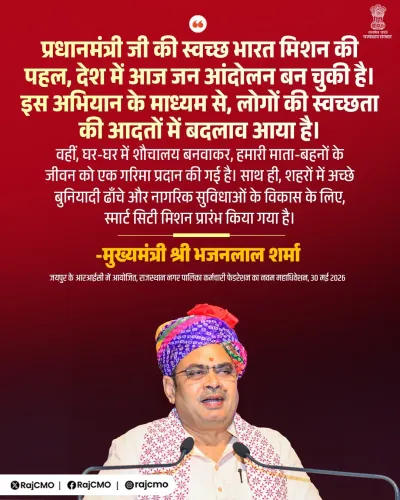
Sharma described sanitation as a janandolan, or people’s movement, for a clean and healthy Rajasthan.
Swachh Bharat Mission was launched on 2 October 2014; the rural arm is tracked by the Ministry of Jal Shakti.
Sharma has been Chief Minister of Rajasthan since December 2023.
Rajasthan Chief Minister Bhajan Lal Sharma on Friday, 27 November 2026, claimed his state had secured the country’s top rank in registrations under the Swachh Bharat Mission (Grameen), framing sanitation as a people’s movement for a cleaner, healthier Rajasthan.
Writing on X, Sharma said Rajasthan is ‘number 1’ in implementing central government schemes. He added that his government is continuously striving to turn cleanliness into a janandolan (people’s movement) and to build a clean and healthy state. ‘Achieving first place in the country in registration under Swachh Bharat Mission (Rural),’ he wrote, ‘is a testament to public participation and collective resolve towards cleanliness.’
The line is a delivery claim, not a budget speech. Sharma, a BJP leader who has been Chief Minister since December 2023, is tying his government’s record to how fast Rajasthan absorbs flagship Union programmes.
Sharma’s first-place claim on rural SBM registration
The Chief Minister treated the ranking as proof that sanitation has moved off files and into villages. Rural households file the registrations. State rural development officials process them. That chain is what he called a collective resolve.
This report records his statement. Late-2026 ranking figures and the precise registration metric were not independently confirmed at the time of writing.
Swachh Bharat Mission still ranks every state
The Swachh Bharat Mission was launched on 2 October 2014 to end open defecation and lift rural hygiene. Its Grameen arm remains a flagship public-health programme. States are scored on parameters such as household toilet construction and community participation, as compiled by the Ministry of Jal Shakti.
BJP-led state governments routinely publicise top slots on those tables. A ranking becomes a message of competence. The next quarterly bulletin becomes the next test.
The first-place boast Sharma posted on Friday will be judged by the next Jal Shakti numbers — and by whether rural Rajasthan’s toilets and habits match the claim.
Point of View
And the Centre that ranks states on scheme absorption. A first-place claim on registration is an input metric, not a finished sanitation outcome, and that distinction will matter when the next Jal Shakti numbers appear. For a government in office since December 2023, these rankings have become a proxy for competence.
NationPress
27 Nov 2026
Frequently Asked Questions
What did Rajasthan CM Bhajan Lal Sharma say about Swachh Bharat Mission?
On 27 November 2026 he said Rajasthan is number 1 in implementing central schemes and has secured first place in the country in registration under Swachh Bharat Mission (Rural). He called the result a sign of public participation and collective resolve towards cleanliness.
What is Swachh Bharat Mission (Grameen)?
It is the rural component of the Swachh Bharat Mission, launched on 2 October 2014 by the Government of India. The programme aims to eliminate open defecation and improve rural sanitation coverage, with states ranked on toilets and community participation.
Who is Bhajan Lal Sharma?
Bhajan Lal Sharma is the Chief Minister of Rajasthan, in office since December 2023, and a BJP leader. He has focused on publicising the state’s performance in central welfare schemes.
Which ministry tracks SBM (Grameen) state rankings?
The Ministry of Jal Shakti compiles state-wise progress on Swachh Bharat Mission (Grameen). Typical parameters include household toilet construction and reported community participation.
Did Rajasthan officially rank first in SBM rural registration in 2026?
The Chief Minister claimed first place in registration under Swachh Bharat Mission (Rural). This report does not independently confirm late-2026 ranking figures or the exact metric used.