CM Shivakumar attends Kittur Utsav in Belagavi
Synopsis
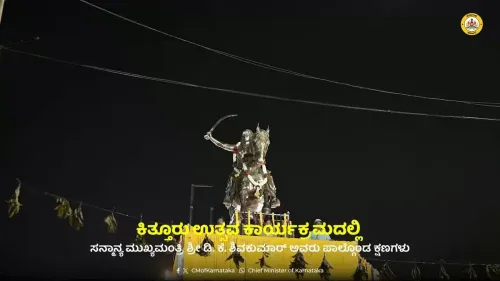
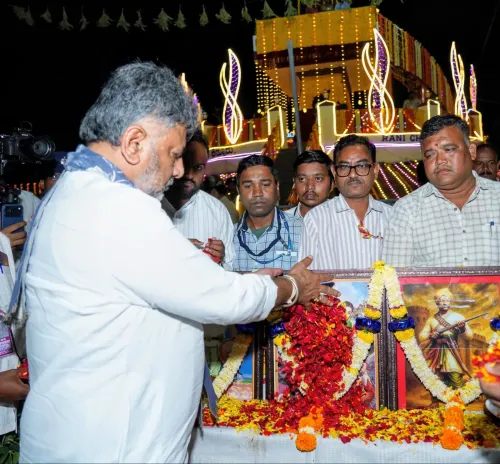
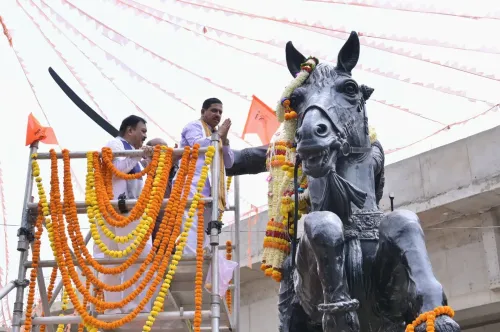
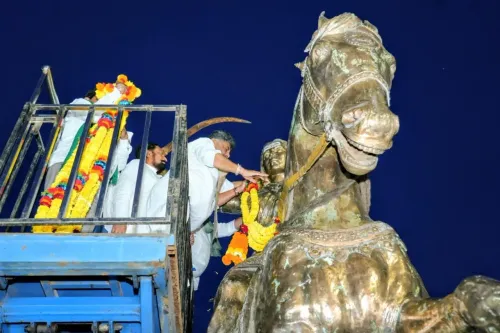
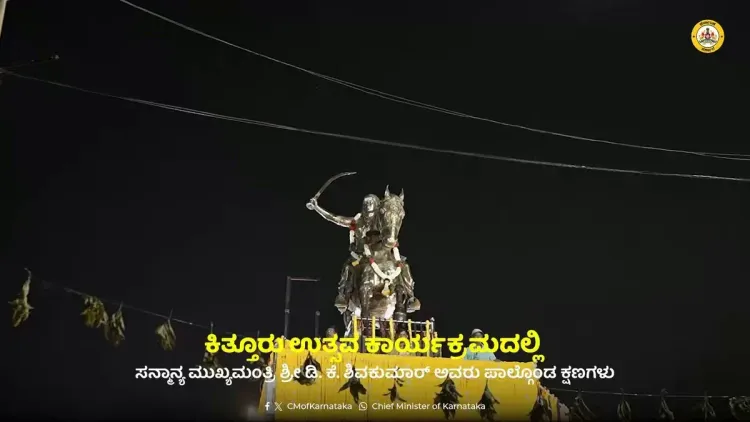
Karnataka Chief Minister DK Shivakumar attended the Kittur Utsav festival at Kittur in Belagavi district on 26 October 2026, honouring the legacy of Rani Chennamma, who led an armed revolt against British colonial rule in 1824.
Key Takeaways
Chief Minister DK Shivakumar attended the Kittur Utsav at Kittur, Belagavi on 26 October 2026 .
Rani Chennamma led an armed revolt against the British East India Company in 1824 , one of India's earliest anti-colonial uprisings.
The CMO described Chennamma's courage as 'a lesson in self-respect for every generation.' Kittur Utsav is a state-supported cultural festival held annually in Belagavi district to commemorate Chennamma's legacy.
Karnataka governments have organised the Utsav since at least the early 2000s, using it for heritage outreach in north Karnataka.
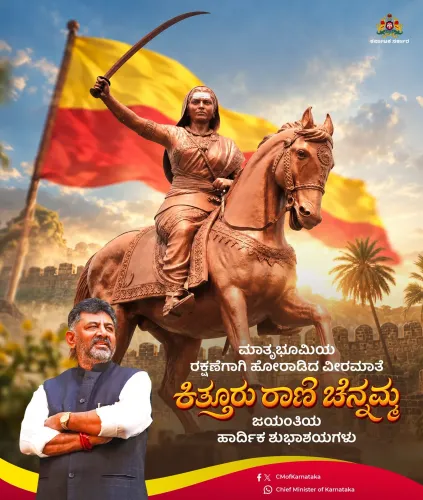
Nearly two centuries after Rani Chennamma raised arms against the British East India Company in a defiant stand that would echo through Karnataka's collective memory, her legacy was honoured once again — this time with the Chief Minister himself present at the source. The Chief Minister's Office of Karnataka announced on Monday, 26 October 2026 that Chief Minister DK Shivakumar participated in the Kittur Utsav celebrations held at Kittur in Belagavi district.
The CMO's post, written in Kannada, captured the occasion with a line that frames the queen's spirit as perennial civic instruction: 'ರಾಣಿ ಚೆನ್ನಮ್ಮನ ಧೈರ್ಯ ಪ್ರತಿ ಪೀಳಿಗೆಗೆ ಸ್ವಾಭಿಮಾನದ ಪಾಠ' — 'Rani Chennamma's courage is a lesson in self-respect for every generation.'
Kittur 1824: the revolt that preceded 1857
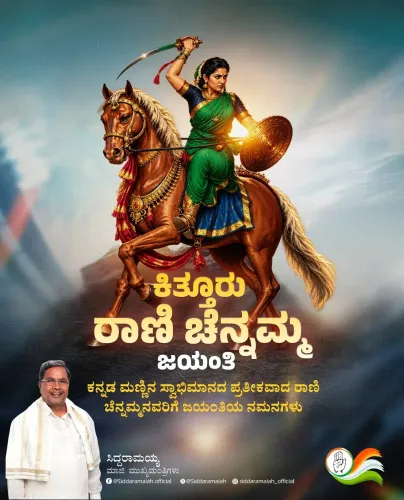
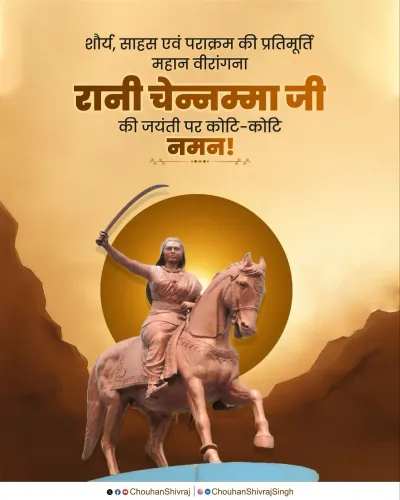
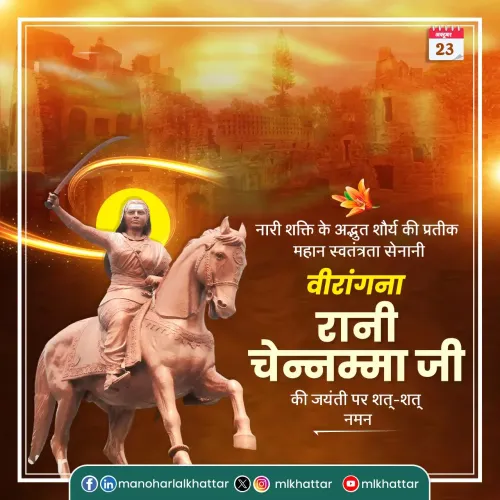
Rani Chennamma of Kittur is remembered as one of India's earliest armed resisters of British colonial rule. In 1824 — more than three decades before the better-known uprising of 1857 — she led her forces against East India Company troops who sought to enforce the 'Doctrine of Lapse' and annex her kingdom after a succession dispute. Her courage and defeat became a touchstone of pre-independence resistance in the Kannada-speaking world.
Kittur itself is a small town in Belagavi district in northern Karnataka, but its historical weight far outstrips its size. The fort, the palace ruins, and the memory of Chennamma are the centrepiece of the annual Kittur Utsav, a state-supported cultural festival that Karnataka governments have organised since at least the early 2000s.
A state festival with deep regional roots
The Kittur Utsav sits within a deliberate pattern: Karnataka's ruling coalitions, across administrations, have consistently used commemorations of 19th-century anti-colonial figures to reinforce regional identity — particularly in the north Karnataka belt, where pride in the Kittur legacy runs strong. Senior political participation is a fixture of the event, signalling state-level weight to what might otherwise be a local cultural gathering.
Shivakumar's presence at the 2026 edition continues that tradition. The event serves both as a heritage moment and as an exercise in public outreach in a region that sits at the cultural and political crossroads of Karnataka and its border with Maharashtra.
As long as Kittur stands, the story of a queen who refused to yield will keep being told — and every generation of leaders will make the journey to remind citizens who told it first.
Point of View
High-profile participation by the Chief Minister is rarely just ceremonial. The event is simultaneously heritage, outreach, and a quiet assertion of regional belonging.
NationPress
27 Oct 2026
Frequently Asked Questions
What is Kittur Utsav and why is it celebrated?
Kittur Utsav is an annual state-supported cultural festival held at Kittur in Belagavi district, Karnataka, to commemorate Rani Chennamma's 1824 armed revolt against British East India Company rule. It celebrates her courage and regional heritage.
Who was Rani Chennamma of Kittur?
Rani Chennamma was the Queen of Kittur who led one of India's earliest armed resistances against British colonial authority in 1824, opposing the East India Company's attempt to annex her kingdom under the Doctrine of Lapse.
Did DK Shivakumar attend Kittur Utsav 2026?
Yes. According to the Chief Minister's Office of Karnataka, DK Shivakumar participated in the Kittur Utsav event held at Kittur, Belagavi on 26 October 2026.
Where is Kittur located in Karnataka?
Kittur is a town in Belagavi district in northern Karnataka, historically significant as the site of Rani Chennamma's 1824 revolt and her fort and palace ruins.
How long has Karnataka been celebrating Kittur Utsav?
Karnataka governments have organised Kittur Utsav since at least the early 2000s, using the event to promote regional heritage and honour pre-independence resistance figures in north Karnataka.