CM Shivakumar at BTS 2026: Karnataka's $173B Tech Vision
Synopsis
Chief Minister DK Shivakumar addressed Bengaluru Tech Summit 2026, citing USD 173 billion in software exports, USD 9.4 billion FDI, over 1,000 GCCs and 24,000 startups, while unveiling plans for an AI University, BRAINZ robotics zone, semiconductor push and marine biotechnology policy.
Key Takeaways
Karnataka contributes nearly 40% of India's software and services exports, valued at approximately USD 173 billion .
The state received USD 9.4 billion in FDI equity inflows in H1 FY 2025–26 , accounting for 26.7% of India's total FDI.
Karnataka hosts over 1,000 Global Capability Centres , more than 24,000 recognised startups and nearly two in five Indian unicorns.
Proposed institutions include an AI University , BRAINZ (Bengaluru Robotics and AI Innovation Zone) and a genome editing institute; existing missions include the ₹300 crore Nipuna Karnataka skilling scheme.
Semiconductor investments exceed ₹23,000 crore with over 100 fabless chip companies , backed by SFAL, IISc's 2D Innovation Hub and Infifab.
New state policies cover space technology , marine biotechnology and sustainable data centres , signalling diversification well beyond traditional IT services.
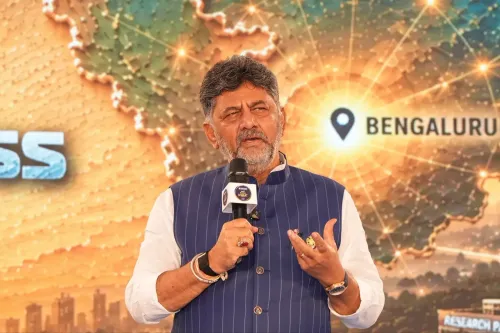
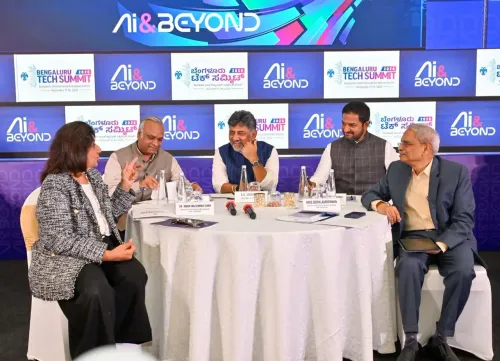
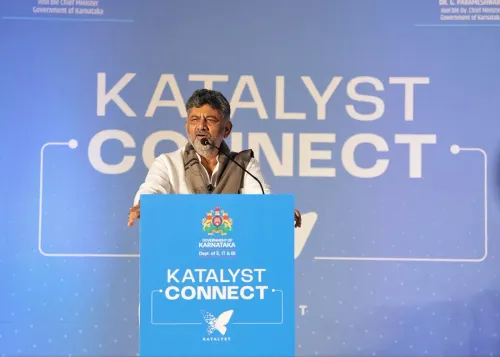
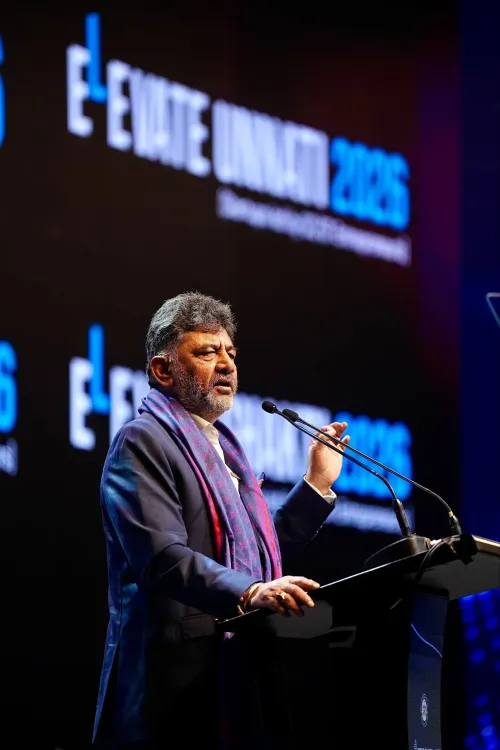
Karnataka's Chief Minister DK Shivakumar stepped onto the stage at the Bengaluru Tech Summit 2026 on Tuesday, 17 November with a declaration that his state isn't merely participating in the global technology race — it's designing the track. Addressing industry leaders, global investors and innovators under the summit's theme 'AI & Beyond', Shivakumar laid out a sweeping vision for Karnataka's next chapter, anchored in hard numbers and a pipeline of new institutions that could reshape India's deeptech landscape.
A $173 billion export engine — and the ambition to grow it
The Chief Minister opened with the statistic that sets Karnataka apart: the state accounts for nearly 40% of India's software and services exports, with exports worth approximately USD 173 billion. That figure alone makes Karnataka's tech corridor one of the most consequential in Asia. He added that in the first half of FY 2025–26, the state attracted USD 9.4 billion in FDI equity inflows — a full 26.7% of India's national total — signalling that global capital continues to bet heavily on Bengaluru.
Beyond raw exports, the ecosystem metrics tell an equally striking story. Karnataka hosts over 1,000 Global Capability Centres, more than 24,000 recognised startups, and nearly two out of every five Indian unicorns. What was once a cluster of software services firms has evolved into a full-spectrum innovation economy — and Shivakumar made clear the state intends to press that advantage hard.
BRAINZ, an AI University, and the deeptech push
The centrepiece of Shivakumar's forward agenda is a clutch of proposed institutions designed to anchor Karnataka at the frontier of emerging technology. The BRAINZ (Bengaluru Robotics and AI Innovation Zone) is envisioned as a dedicated hub for AI and robotics research. A proposed AI University and AI Hub would supply the talent pipeline to feed it. Meanwhile, a Centre of Excellence at IIIT Raichur would extend the state's deeptech reach beyond Bengaluru into Tier-2 cities.
Underpinning this institutional expansion is the ₹300 crore Nipuna Karnataka skilling mission, which has already made over 33,000 people industry-ready in emerging technologies. The existing startup support architecture — ELEVATE, ELEVATE NXT, Innoverse and Government First — provides equity-free grants, infrastructure, patient capital and market access to founders at every stage.
Chips, biotech and space: diversifying beyond software
Perhaps the most consequential signal in Shivakumar's address was the emphasis on hardware and life sciences. Karnataka now has over 100 fabless chip companies and investments exceeding ₹23,000 crore in semiconductor research and manufacturing — a deliberate push to move the state from chip design into fabrication. Initiatives including SFAL, the 2D Innovation Hub at IISc and Infifab are the vehicles for that transition.
On the life sciences side, Shivakumar highlighted the new Marine Biotechnology Policy, the Karnataka Institute of Marine Biotechnology and Blue Economy, the Agri Innovation Park, and programmes like Krishikalpa and Charaka, alongside a proposed institute for genome editing and gene therapy. New state policies in space technology and sustainable data centres round out an agenda that stretches Karnataka's tech identity far beyond the software services that built it.
Karnataka's invitation to the world
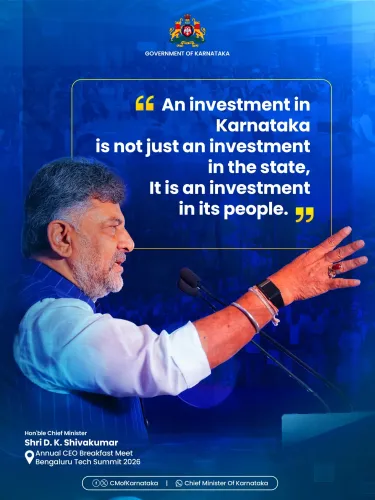
Shivakumar closed with a direct pitch to global investors and researchers: Karnataka will provide the talent, the policies and the partnerships — the ask is for the world to bring its ideas. It is an invitation backed by three decades of ecosystem-building, a concentration of research institutions from IISc to the new centres at Raichur, and a state government that has staked its near-term economic identity on emerging technology leadership.
The Bengaluru Tech Summit has long been Karnataka's annual moment to project ambition. This year, with AI governance debates accelerating globally and semiconductor supply chains being redrawn, the stage was larger than usual — and the state's pitch was calibrated accordingly.
Whether the proposed AI University, BRAINZ zone and genome-editing institute move from announcement to operation on schedule will be the real measure of Karnataka's next chapter. The blueprint is on the table; the construction clock starts now.
Point of View
Not merely consolidate the last one. The pivot toward semiconductors, marine biotech, space and genome editing reflects a deliberate effort to insulate the state's economy against the commoditisation of software services as AI automates lower-value tasks. The concentration of proposed institutions — AI University, BRAINZ, genome editing institute — in a single address is consistent with a government trying to shape investor and talent narratives ahead of an election cycle. The real test will be whether institutional timelines and funding commitments survive routine budgetary pressures.
NationPress
17 Nov 2026
Frequently Asked Questions
What did CM DK Shivakumar announce at Bengaluru Tech Summit 2026?
CM Shivakumar outlined Karnataka's technology vision at BTS 2026, citing USD 173 billion in software exports and unveiling plans for an AI University, BRAINZ robotics and AI innovation zone, semiconductor push with ₹23,000 crore in investments, and new policies in space technology and marine biotechnology.
What is the BRAINZ zone Karnataka announced?
BRAINZ stands for Bengaluru Robotics and AI Innovation Zone — a proposed dedicated hub for AI and robotics research announced by CM Shivakumar at the Bengaluru Tech Summit 2026 to strengthen Karnataka's deeptech ecosystem.
How much FDI did Karnataka attract in FY 2025-26?
Karnataka received USD 9.4 billion in FDI equity inflows in the first half of FY 2025–26, accounting for 26.7% of India's total FDI during that period, according to CM Shivakumar's address at BTS 2026.
What is the Nipuna Karnataka skilling mission?
Nipuna Karnataka is a ₹300 crore state skilling mission aimed at making workers industry-ready in emerging technologies. By the time of the BTS 2026 address, it had already trained over 33,000 people.
How many unicorns and startups does Karnataka have?
Karnataka has more than 24,000 recognised startups and is home to nearly two out of every five Indian unicorns, according to figures cited by CM Shivakumar at the Bengaluru Tech Summit 2026.