Goyal flags first biscuit export from Varanasi to Madagascar
Synopsis
Union Commerce Minister Piyush Goyal announced on 17 November 2026 that the first biscuit export consignment has departed from Varanasi to Madagascar, backed by APEDA, highlighting India's push to move small regional food processors into African markets.
Key Takeaways
The first biscuit export consignment from Varanasi to Madagascar was flagged by Commerce Minister Piyush Goyal on 17 November 2026 .
APEDA (Agricultural and Processed Food Products Export Development Authority) facilitated the shipment as part of its cluster-to-export programme.
The move aligns with the Agriculture Export Policy 2018 , which targeted doubling of processed food exports and diversification into African markets.
Varanasi has been a targeted hub for MSME food-processing clusters under central government export-promotion initiatives.
The consignment is consistent with the PLI scheme for food processing , which incentivises regional manufacturers to scale toward international markets.
India and Madagascar already share trade ties in agricultural commodities; the biscuit shipment marks a step up the value chain.
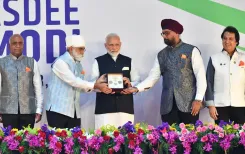
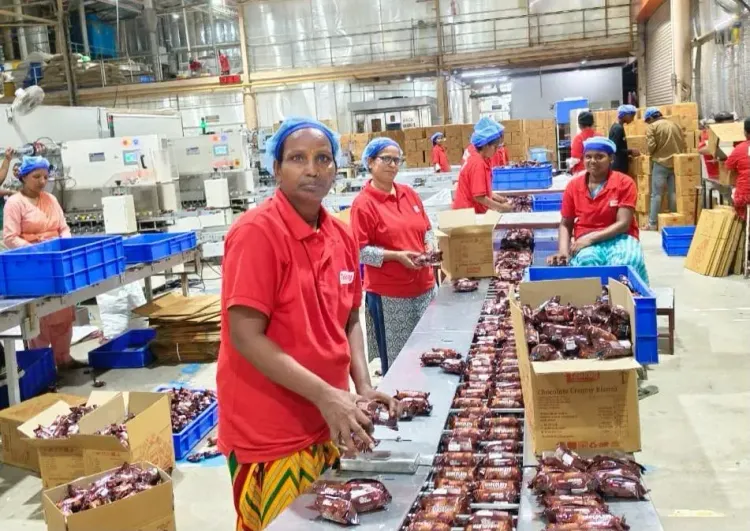
A batch of biscuits packed in Varanasi has crossed the Indian Ocean for the first time — landing in Madagascar as the city's food processors make their debut on an African shelf. Union Commerce and Industry Minister Piyush Goyal announced the milestone on 17 November 2026, flagging the first consignment as proof that India's small-town manufacturers are finding footholds far beyond their home districts.
Posting on X in Hindi, Goyal wrote: 'वाराणसी ➡️ मेडागास्कर 🍪 बिस्कुट की पहली निर्यात खेप रवाना!' — 'Varanasi to Madagascar: the first biscuit export consignment has departed!' He tagged @APEDADOC, the official handle of the Agricultural and Processed Food Products Export Development Authority (APEDA), the Commerce Ministry body that facilitated the shipment. 'Local to global,' the minister added, 'our small and regional entrepreneurs are now making their mark in the world's markets.'
Why Varanasi, and why biscuits?
Varanasi has been a deliberate focus of central government effort to build export-ready MSME clusters in food processing. The city's biscuit and bakery units — relatively low on capital but high on labour intensity — are exactly the kind of enterprises APEDA's cluster-to-export programmes were designed to lift. The authority has run dedicated promotion drives for biscuits, confectionery, and bakery products since the mid-2010s, working to certify small producers and connect them with overseas buyers.
The Agriculture Export Policy of 2018 set an explicit target: double processed food exports and diversify away from traditional markets toward Africa and the Global South. Eight years on, a consignment of biscuits sailing from eastern Uttar Pradesh to the Indian Ocean is a small but concrete data point against that ambition.
Madagascar and India's Africa push
Madagascar is not a headline trade partner — but that is partly the point. The Commerce Ministry's sustained push into African markets has deliberately targeted nations outside the established corridors, opening lanes for value-added products where Indian processors face less competition. India and Madagascar already trade in agricultural commodities; moving up the value chain to packaged foods is the next logical step.
For the Varanasi producer, Madagascar represents something bigger than one order. It is a proof-of-concept — that a regional unit can meet export standards, navigate documentation, and build a durable supply relationship with an African buyer. APEDA's role in that handholding is precisely what the authority was designed for.
Production-Linked Incentives and the 'local to global' frame
Goyal's phrase 'local to global' is not incidental. It echoes the stated logic of the Production-Linked Incentive (PLI) scheme for food processing, which incentivises incremental output with the explicit expectation that manufacturers scale toward exports. The Varanasi-Madagascar route, however modest in volume today, fits neatly into that policy narrative — small units graduating from domestic distribution to international consignments, backed by APEDA facilitation and PLI-era investment in processing capacity.
Watch for more APEDA-facilitated shipments from Uttar Pradesh clusters in the months ahead, and any formal trade facilitation measures between New Delhi and Antananarivo that could widen the lane this first consignment has opened.
Point of View
Goyal reinforces the 'local to global' narrative that underpins both APEDA's cluster programmes and the PLI food-processing scheme — framing export success not just as a corporate story but as a small-entrepreneur story. The deliberate choice of Madagascar — an emerging, non-traditional market — signals that the ministry is measuring progress by breadth of market reach, not just volume. If more Uttar Pradesh clusters follow this template, it could quietly reshape India's processed-food export geography toward the Global South.
NationPress
17 Nov 2026
Frequently Asked Questions
What is the Varanasi to Madagascar biscuit export?
It is the first consignment of biscuits manufactured in Varanasi, Uttar Pradesh, to be exported to Madagascar, an Indian Ocean island nation. Commerce Minister Piyush Goyal announced the shipment on 17 November 2026, with APEDA facilitating the export.
What is APEDA and what role did it play?
APEDA is the Agricultural and Processed Food Products Export Development Authority under India's Commerce Ministry. It promoted and facilitated the Varanasi biscuit export by connecting local producers with overseas buyers and helping them meet export certification standards.
How does this fit into India's Agriculture Export Policy?
India's Agriculture Export Policy 2018 set a goal to double processed food exports and diversify into African and Global South markets. The Varanasi-Madagascar biscuit shipment is a direct outcome of that strategy, executed through APEDA's cluster-to-export programmes.
Why is Madagascar a target for Indian food exports?
Madagascar is part of India's deliberate push into non-traditional African markets where value-added Indian products face less competition. India and Madagascar already trade in agricultural commodities, and packaged foods represent a step up the value chain.
What is the PLI scheme for food processing?
The Production-Linked Incentive scheme for food processing offers financial incentives to manufacturers for incremental output, with an emphasis on scaling toward exports. Smaller regional units graduating to international markets, like the Varanasi biscuit producers, are a key target segment of the scheme.