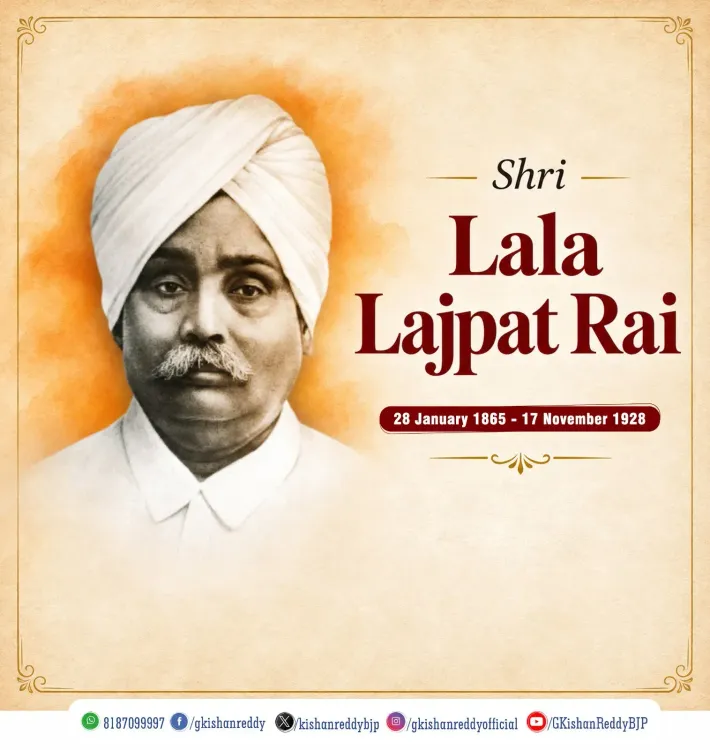
Kishan Reddy Pays Tribute to Punjab Kesari Lala Lajpat Rai
Synopsis
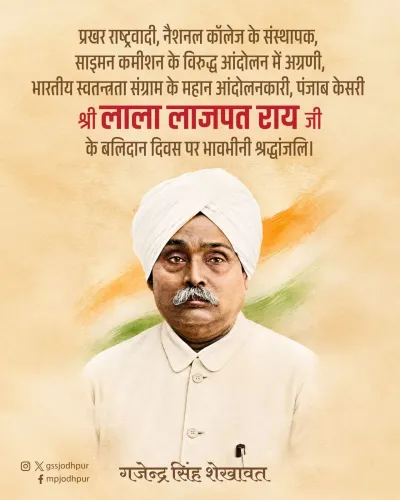
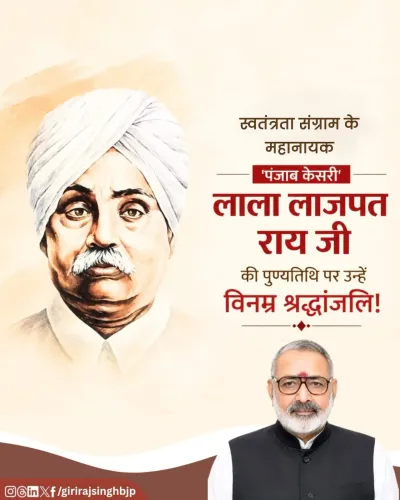
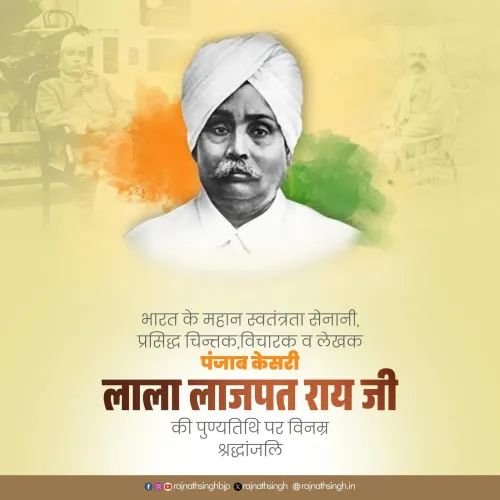
Union Coal and Mines Minister G. Kishan Reddy honoured Lala Lajpat Rai on his death anniversary, recalling the Punjab Kesari's leadership in the Swadeshi Movement and his sacrifice opposing the Simon Commission in Lahore in 1928.
Key Takeaways
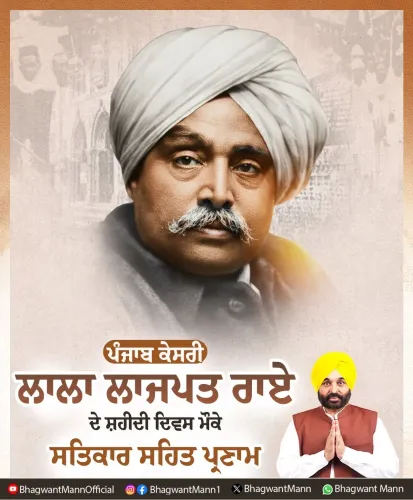
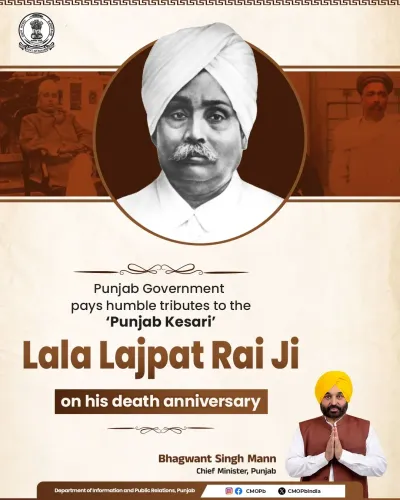
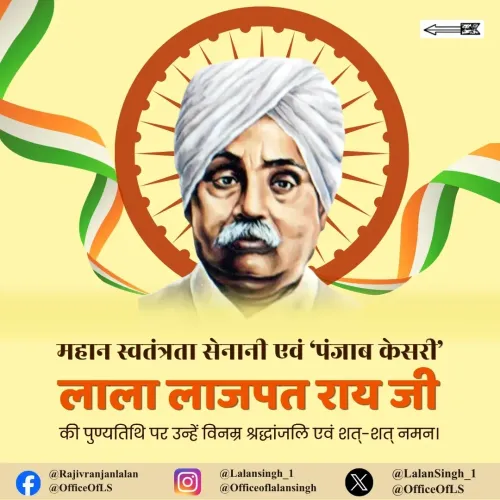
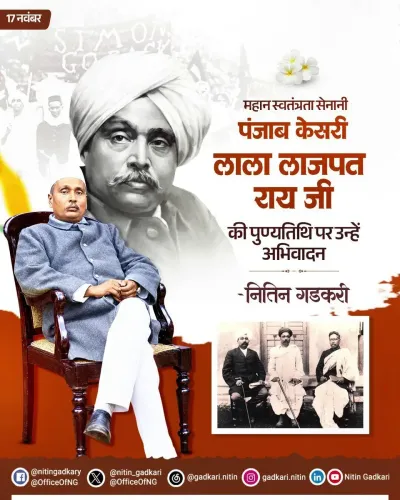
Kishan Reddy posted a tribute to Lala Lajpat Rai on his punyatithi , 17 November 2026 .
Lala Lajpat Rai was known as Punjab Kesari (Lion of Punjab) and was part of the Lal-Bal-Pal trio of nationalist leaders.
He was a prominent figure in the Swadeshi Movement , which promoted indigenous goods and boycotted British products.
Lala Lajpat Rai led protests against the Simon Commission in Lahore on 30 October 1928 and died shortly after injuries sustained in a police lathi charge.
Ministerial tributes to freedom-movement figures are a recurring pattern among BJP leaders on social media.
Ninety-eight years after Lala Lajpat Rai succumbed to injuries sustained at a Lahore protest against British rule, Union Coal and Mines Minister G. Kishan Reddy marked the freedom fighter's punyatithi (death anniversary) on Tuesday, 17 November 2026, saluting a legacy that helped ignite a nation.
In his post, Reddy described Lala Lajpat Rai as 'among the prominent leaders of the Lal-Bal-Pal trio' and credited him with 'enduring contributions to the Swadeshi Movement,' while calling his opposition to the Simon Commission and the sacrifice that followed 'an inspiring chapter of our national history.'
Who was 'Punjab Kesari' — and why the title still resonates
Lala Lajpat Rai earned the sobriquet Punjab Kesari — Lion of Punjab — for his fierce, uncompromising brand of nationalism in the early twentieth century. Alongside Bal Gangadhar Tilak and Bipin Chandra Pal, he formed the celebrated Lal-Bal-Pal triumvirate, the most assertive nationalist voice of the Extremist wing within the Indian National Congress.
His role in the Swadeshi Movement was foundational: a nationwide campaign that urged Indians to reject British-manufactured goods and champion indigenous industry — an economic act of defiance that carried profound political weight.
The Simon Commission and the blow at Lahore
When the Simon Commission arrived in India in February 1928, it carried a pointed insult: not a single Indian sat on the parliamentary panel tasked with reviewing India's constitutional future. Protests erupted across major cities. On 30 October 1928, Lala Lajpat Rai led a demonstration in Lahore against the commission's arrival. Police lathi charges left him gravely injured. He died within weeks — and the manner of his death galvanised a younger generation of revolutionaries to accelerate the freedom struggle.
That sequence of events — peaceful protest, colonial repression, fatal injury — became one of the most retold chapters of India's independence narrative, the kind that moves from textbooks into lived political memory.
BJP's pattern of commemorating freedom-movement figures
Reddy's tribute fits within a consistent practice among BJP ministers of marking the birth and death anniversaries of pre-independence nationalists on social media, with particular emphasis on figures associated with the Swadeshi and anti-colonial phases of the freedom struggle. As BJP's Telangana state president, Reddy also carries a regional political role that makes such public commemorations visible to a southern audience not always associated with Punjab-centric nationalist history.
The gesture is ceremonial in form but cumulative in effect — each tribute reinforcing a particular lineage of nationalist memory the party publicly claims as its own.
Lala Lajpat Rai did not live to see independence. But the charge at Lahore that took his life lit a fuse — and that story, nearly a century on, still commands a prime-time moment every November 17.
Point of View
The party signals an ideological lineage rooted in assertive, uncompromising nationalism rather than the Gandhian mainstream. As Telangana BJP chief, Reddy's amplification of a Punjab-centric historical figure also reflects an effort to build pan-India nationalist sentiment in a southern state where the party is still consolidating ground. The gesture is routine in form but deliberately curated in content.
NationPress
17 Nov 2026
Frequently Asked Questions
When did Lala Lajpat Rai die and why?
Lala Lajpat Rai died in November 1928 after sustaining injuries during a police lathi charge at a protest in Lahore against the Simon Commission on 30 October 1928.
What is the Lal-Bal-Pal trio?
Lal-Bal-Pal refers to the nationalist triumvirate of Lala Lajpat Rai, Bal Gangadhar Tilak, and Bipin Chandra Pal, the leading voices of the Extremist wing within the Indian National Congress in the early twentieth century.
Why was the Simon Commission controversial?
The Simon Commission, which arrived in India in February 1928, was a British parliamentary body reviewing India's constitutional future that included no Indian members, which was seen as a deliberate exclusion and triggered widespread protests.
What was Lala Lajpat Rai's role in the Swadeshi Movement?
Lala Lajpat Rai was a leading figure in the Swadeshi Movement, the early twentieth-century campaign that urged Indians to use indigenous goods and boycott British-manufactured products as a form of economic resistance to colonial rule.
Why is Lala Lajpat Rai called Punjab Kesari?
Lala Lajpat Rai earned the title Punjab Kesari, meaning Lion of Punjab, for his fierce and uncompromising leadership in the nationalist movement, especially his work in organising resistance against British rule in Punjab and across India.