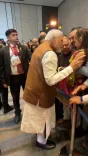
Rijiju shares PM Modi's live address at 23rd ASEAN-India Summit
Synopsis
PM Modi addressed the 23rd ASEAN-India Summit in Manila on November 17, 2026. Union Minister Kiren Rijiju shared a live-stream link, spotlighting India's sustained Act East Policy engagement with the ten-nation Southeast Asian bloc since 2002.
Key Takeaways
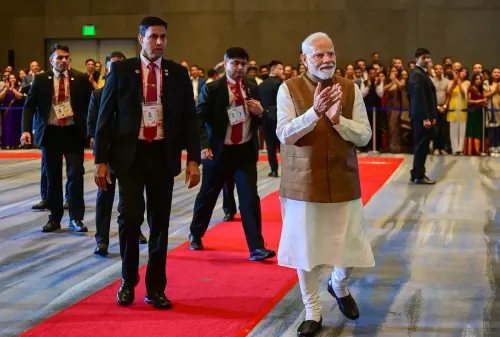
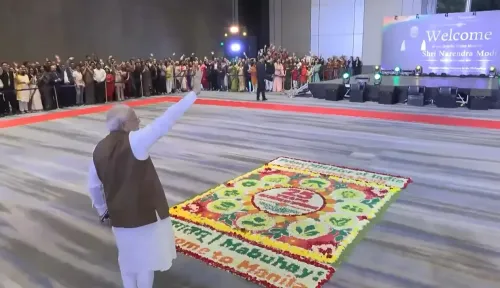
PM Narendra Modi delivered India's remarks at the 23rd ASEAN-India Summit in Manila on November 17, 2026 .
Union Minister Kiren Rijiju amplified the event by sharing a live-stream link on X.
The ASEAN-India Summit has been held annually since 2002 , institutionalising dialogue between India and the 10-member ASEAN bloc .
India's Act East Policy , unveiled in 2014 , placed ASEAN at the centre of New Delhi's eastern strategic outreach.
India and ASEAN hold a Strategic Partnership since 2012 , underpinned by a Free Trade Area operational since 2010 .
The next ASEAN-India Summit is expected in 2027 , making Manila's outcomes the benchmark for follow-up commitments.
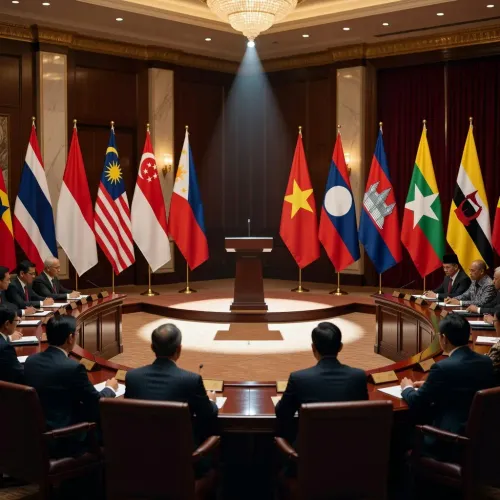
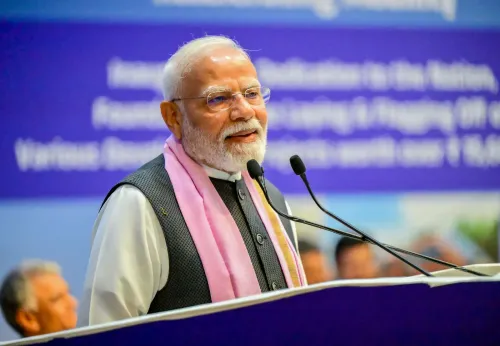
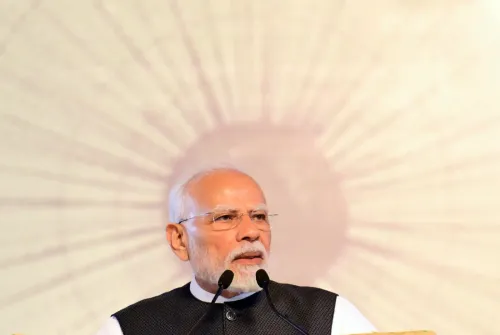
At the 23rd ASEAN-India Summit in Manila, Prime Minister Narendra Modi took the floor to deliver India's remarks before the ten-nation bloc — and Union Parliamentary Affairs Minister Kiren Rijiju amplified the moment on Tuesday, November 17, 2026, sharing a live-stream link so Indian audiences could watch in real time.
Modi at Manila: India's voice at a 24-year-old forum
The ASEAN-India Summit has been a fixture of regional diplomacy since its first edition in 2002, giving New Delhi a direct, annual channel to Southeast Asia's most consequential grouping. Manila, capital of the Philippines and a founding ASEAN member, plays host this year, bringing the leaders of all ten ASEAN states together with the Indian Prime Minister for structured dialogue on trade, connectivity and maritime cooperation.
Modi has attended these summits consistently since taking office in 2014, the same year India unveiled its Act East Policy — a strategic reorientation that placed ASEAN at the very core of India's eastern engagement. The policy effectively replaced the older 'Look East' framework with something sharper: active investment in physical corridors, digital links, and security architecture stretching from Northeast India into the Indo-Pacific.
From a free-trade area to a strategic partnership
The institutional scaffolding behind today's summit is substantial. India and ASEAN upgraded their relationship to a Strategic Partnership in 2012, and the ASEAN-India Free Trade Area, operational since 2010, expanded over subsequent years to cover services and investment. Those economic ties provide the baseline; each annual summit builds on them with fresh connectivity proposals and security understandings.
The Manila edition continues that regularised rhythm. While precise agenda outcomes have yet to be formally confirmed, the broader pattern is well-established: bilateral trade facilitation, physical connectivity projects linking India's northeast to mainland Southeast Asia, and maritime cooperation in a region where India's Indo-Pacific calculus carries growing weight.
Why Rijiju's amplification matters
Rijiju's decision to broadcast the live-stream link is a small but deliberate act of public diplomacy — signalling that this summit carries enough domestic relevance to warrant real-time attention from Indian citizens. As a senior BJP leader and cabinet minister from Arunachal Pradesh, a border state whose connectivity to Southeast Asia is both literal and strategic, Rijiju's interest in ASEAN affairs is more than ceremonial.
The next ASEAN-India Summit is pencilled in for 2027, meaning whatever commitments Modi tables in Manila today will set the baseline expectations for that follow-up meeting — and for India's posture in an increasingly contested Indo-Pacific neighbourhood.
Point of View
Trade flows, and security understandings. For Modi, addressing the bloc in the Philippines carries symbolic weight: the Philippines sits at the fault line of South China Sea disputes, making India's maritime cooperation language especially consequential. Rijiju's public amplification signals that the ruling establishment wants domestic audiences to register ASEAN as a live, priority theatre — not a diplomatic formality.
NationPress
17 Nov 2026
Frequently Asked Questions
What is the ASEAN-India Summit?
The ASEAN-India Summit is an annual leaders' meeting between India and the ten member states of the Association of Southeast Asian Nations, established in 2002 to advance economic, connectivity and security cooperation.
Where is the 23rd ASEAN-India Summit being held?
The 23rd ASEAN-India Summit is being held in Manila, the capital of the Philippines, on November 17, 2026.
What is India's Act East Policy?
India's Act East Policy, unveiled in 2014, elevated ASEAN as the core of India's eastern strategic engagement, replacing the older 'Look East' framework with active investment in physical connectivity, digital links and security architecture across the Indo-Pacific.
What is the India-ASEAN trade relationship?
The ASEAN-India Free Trade Area became operational in 2010 and later expanded to services and investment. India and ASEAN hold a Strategic Partnership, upgraded in 2012, underpinning broader economic and diplomatic ties.
Why did Kiren Rijiju share PM Modi's ASEAN speech?
Union Parliamentary Affairs Minister Kiren Rijiju shared a live-stream link to PM Modi's address at the 23rd ASEAN-India Summit in Manila, amplifying the event for Indian audiences and signalling the summit's domestic policy significance.