PM Modi heads to Manila for ASEAN and East Asia Summits
Synopsis
Prime Minister Narendra Modi flies to Manila on 16 November 2026 to attend the 23rd ASEAN-India Summit and 21st East Asia Summit, reinforcing India's Act East Policy and its role in the Indo-Pacific order, with a diaspora interaction also planned.
Key Takeaways
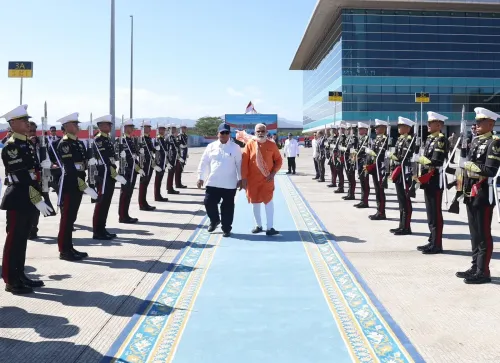
PM Modi departed for Manila, Philippines on 16 November 2026 to attend two summits.
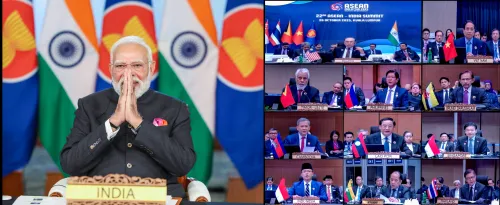
The 23rd ASEAN-India Summit brings India together with the 10-member ASEAN bloc ; the 21st East Asia Summit widens the dialogue to 18 nations including the US, China and Japan.
India's Act East Policy , announced in 2014 , underpins New Delhi's sustained multilateral engagement with Southeast Asia.
India-ASEAN relations were upgraded to a strategic partnership in 2012 , following full dialogue partnership status granted in 1995 .
Modi will also meet the Indian diaspora community based in the Philippines during the visit.
Key deliverables to watch: joint statements on trade, digital economy, and maritime security .
India's diplomatic calendar hits a high-intensity stretch on Monday, 16 November 2026, as Prime Minister Narendra Modi flies to Manila, Philippines to attend two of Asia's most consequential multilateral forums — the 23rd ASEAN-India Summit and the 21st East Asia Summit — in a visit that underlines New Delhi's sustained push to anchor itself at the heart of the Indo-Pacific order.
Two summits, one clear signal
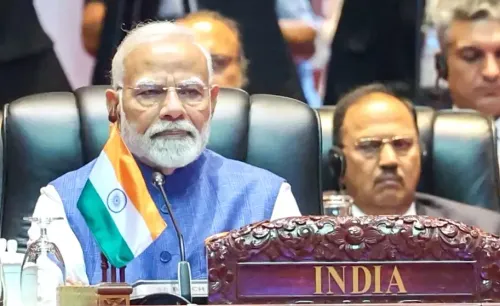
Modi announced the trip on X, writing: 'India attaches immense importance to close friendship with ASEAN nations.' The twin-summit format is itself a statement — the ASEAN-India Summit brings together India and the 10-member Association of Southeast Asian Nations, while the broader East Asia Summit expands the room to 18 nations, pulling in strategic heavyweights including China, Japan, and the United States. When India sits at both tables, it is not a passive guest.
The Philippines holds the ASEAN chair this year and is hosting both events in Manila. For Manila, the double-hosting role is a marker of regional standing; for New Delhi, it is a familiar itinerary — Modi has personally attended most ASEAN-India Summits since his government announced the Act East Policy in 2014, a doctrine that explicitly places ASEAN centrality at the core of India's regional architecture.
From dialogue partner to strategic pillar: India-ASEAN's long arc
The relationship did not arrive at this intensity overnight. India became a full ASEAN dialogue partner in 1995, and the first ASEAN-India Summit was held in 2002. The upgrade to a strategic partnership came at the 2012 ASEAN-India Summit in New Delhi — a jump in diplomatic classification that unlocked deeper cooperation on trade, maritime security, and connectivity.
Act East, announced a decade ago, sharpened that into an operational doctrine: engagement with Southeast Asia was no longer aspirational but structural. Annual summit attendance, infrastructure investment in the sub-region, and maritime dialogue are now standard instruments of Indian foreign policy, not special occasions.
Diaspora meeting on the margins
Beyond the summit chambers, Modi noted he is 'looking forward to interacting with the Indian community based in the Philippines.' The diaspora stop is a fixture of his Southeast Asian visits — a soft-power routine that also carries real political resonance at home. The overseas Indian community in Manila and across the Philippines, while smaller than those in Singapore or Malaysia, represents a living link between the two countries that Modi has consistently worked to amplify.
Watch for joint statements and deliverables on trade, digital economy cooperation, and maritime security when the summits conclude — those outcomes will tell the fuller story of what two days in Manila actually produced.
Point of View
India simultaneously engages its Southeast Asian neighbourhood and the wider 18-nation Indo-Pacific arena, reinforcing its self-image as an indispensable regional power rather than a peripheral one. The Philippines chair year adds a bilateral dimension: strengthening ties with Manila fits neatly into India's broader effort to cultivate maritime partners in the South China Sea littoral. The diaspora engagement, modest in scale, is nonetheless consistent with Modi's signature practice of converting every foreign visit into a soft-power domestic dividend.
NationPress
16 Nov 2026
Frequently Asked Questions
Why is PM Modi visiting Manila in November 2026?
PM Modi is in Manila on 16–17 November 2026 to attend the 23rd ASEAN-India Summit and the 21st East Asia Summit , both hosted by the Philippines as the current ASEAN chair. He will also meet the Indian community based there.
What is the ASEAN-India Summit?
The ASEAN-India Summit is an annual meeting between the leaders of India and the 10 member states of ASEAN . It began in 2002 , and the relationship was upgraded to a strategic partnership in 2012 .
What is the East Asia Summit and who attends?
The East Asia Summit is an annual strategic dialogue forum of 18 nations , including all ASEAN members plus India, China, Japan, Australia, New Zealand, Russia, and the United States.
What is India's Act East Policy?
India's Act East Policy , announced by PM Modi in 2014 , prioritises deep engagement with Southeast and East Asian nations, treating ASEAN centrality as a cornerstone of India's Indo-Pacific strategy.
What outcomes should we expect from the Manila summits?
Watch for joint statements covering trade, digital economy cooperation, and maritime security . Bilateral sideline meetings between Modi and individual ASEAN leaders may also yield specific agreements or deliverables.