CM Yogi launches UP digital census and 'Yogi ki Paati' book

Synopsis
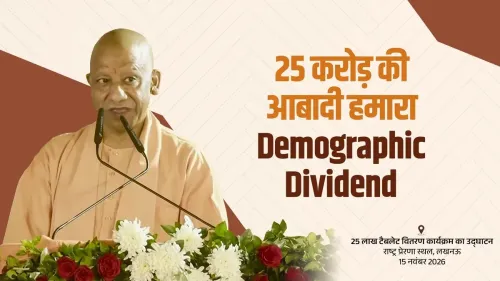
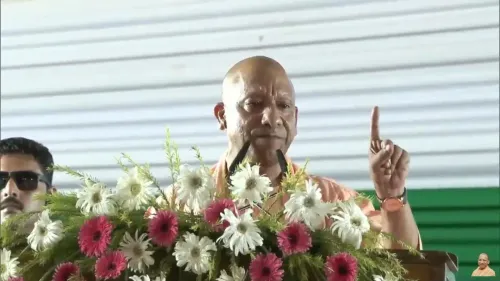
Uttar Pradesh CM Yogi Adityanath has launched the state's digital census phase under Jan Ganana-2027 and virtually inaugurated the 'Yogi ki Paati' coffee-table book, calling participation in the census a collective responsibility of UP's 25 crore residents.
Key Takeaways
CM Yogi Adityanath announced the virtual inauguration of the 'Yogi ki Paati' coffee-table book and exhibition on 16 November 2026 .
The 'Yogi ki Paati' letter series has run for more than 50 consecutive weeks , making it one of the longest-running direct citizen-outreach formats by any Indian state CM.
The Jan Ganana-2027 second phase begins with self-enumeration from 16–30 November 2026 in Uttar Pradesh.
House-to-house enumeration will follow from 1 December 2026 to 4 January 2027 .
The exercise is billed as the world's largest and India's first fully digital census ; the last completed Indian census was in 2011 .
Uttar Pradesh, with 25 crore residents , is the most populous and logistically critical state in the national census rollout.
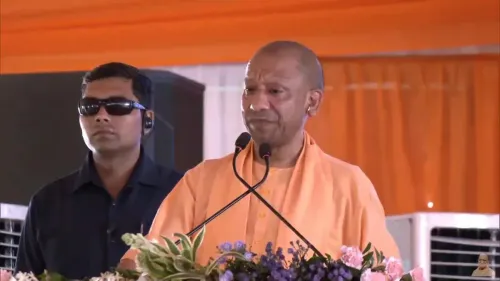
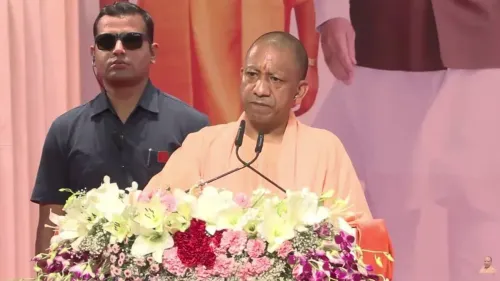
Two milestones converge in Lucknow on Monday, 16 November 2026 — a weekly letter series that has quietly become Uttar Pradesh's most personal governance experiment turns into a coffee-table book, and India's first digital census formally begins its countdown in the state's towns and villages. Uttar Pradesh Chief Minister Yogi Adityanath announced both events in a morning post on X, framing them together as twin expressions of citizen participation.
Writing in Hindi, the Chief Minister described Uttar Pradesh's 25 crore residents as his family. 'यह मेरे लिए केवल पत्र लिखना नहीं, बल्कि अपने परिवार से संवाद करने का अवसर है' — 'For me this is not merely writing a letter, but an opportunity to converse with my family,' he said, explaining what 'Yogi ki Paati' means to him.
'Yogi ki Paati': 50 weeks of weekly letters, now a book
Running for more than 50 consecutive weeks, 'Yogi ki Paati' — roughly 'Yogi's Letter' — has seen the Chief Minister dispatch a weekly note sharing policy updates, governance achievements, and personal reflections directly with citizens. The initiative sits within a long Uttar Pradesh tradition of chief ministerial public outreach, but its weekly cadence and near-uniform format gave it a distinct identity. Today's virtual inauguration of the coffee-table book and accompanying exhibition marks its first physical archiving — a signal that the administration views the series as a record worth preserving.
Jan Ganana-2027: UP opens the gates on India's digital census
The bigger administrative announcement is the formal launch of the second phase of Jan Ganana-2027, described by the government as the world's largest and India's first fully digital census exercise. The phase rolls out in two legs: self-enumeration from 16 to 30 November 2026, during which citizens can register their own household data digitally, followed by house-to-house enumeration from 1 December 2026 to 4 January 2027, when field enumerators go door to door to capture those not covered in the first leg.
India's last completed census dates to 2011, making the upcoming exercise long overdue and the data it will generate critical for planning in education, health, infrastructure, and welfare across every tier of government. Central government planners flagged the shift to a digital enumeration model as far back as 2019; Uttar Pradesh, as the country's most populous state, is both the biggest logistical challenge and the most consequential data source in the entire exercise.
Adityanath called citizen participation a 'collective responsibility', urging residents to engage with the process to fulfil the vision of a 'विकसित उत्तर प्रदेश' — a 'Developed Uttar Pradesh'. The appeal is pointed: a digital census lives or dies on enrolment rates, and a state of 25 crore people filing incomplete or no self-returns would skew national data for the next decade.
With self-enumeration windows now open and field teams set to follow from December, Uttar Pradesh's census machinery is live — and every household that logs in in the next fortnight writes the first line of India's demographic story for the 2030s.
Point of View
The digital census. For the Adityanath government, launching Jan Ganana-2027 in Uttar Pradesh carries both political and policy weight: a successful high-enrolment census produces data that underpins welfare allocations, delimitation, and development planning well into the 2030s. The 'Yogi ki Paati' book simultaneously positions the CM's weekly correspondence as a governance legacy, lending the routine census outreach a warmer, family-oriented framing designed to drive voluntary self-enumeration rates. Whether digital-first enumeration can reach UP's vast rural hinterland at the scale needed to validate the 'world's largest digital census' claim will be the real test of this launch day's ambitions.
NationPress
16 Nov 2026
Frequently Asked Questions
What is 'Yogi ki Paati'?
'Yogi ki Paati' is a weekly letter series by Uttar Pradesh Chief Minister Yogi Adityanath, running for over 50 weeks, in which he shares governance updates, policy achievements, and personal reflections with the state's citizens. A coffee-table book compiling the series was inaugurated virtually on 16 November 2026.
What is Jan Ganana-2027 and when does it start in UP?
Jan Ganana-2027 is India's first fully digital census exercise, described as the world's largest. In Uttar Pradesh, the second phase begins with self-enumeration from 16 to 30 November 2026, followed by house-to-house enumeration from 1 December 2026 to 4 January 2027.
When was India's last census conducted?
India's last completed census was conducted in 2011. The Jan Ganana-2027 exercise will be the first full census since then, making it over 15 years since national demographic data was last comprehensively updated.
How can UP residents participate in the digital census self-enumeration?
Citizens in Uttar Pradesh can self-register their household data digitally during the self-enumeration window running from 16 to 30 November 2026. Those not covered in this phase will be visited by field enumerators between 1 December 2026 and 4 January 2027.
Why is Uttar Pradesh's census participation especially important?
With approximately 25 crore residents, Uttar Pradesh is India's most populous state. The quality and completeness of its census data significantly influence national statistics used for resource allocation, welfare planning, and delimitation of constituencies for the next decade.