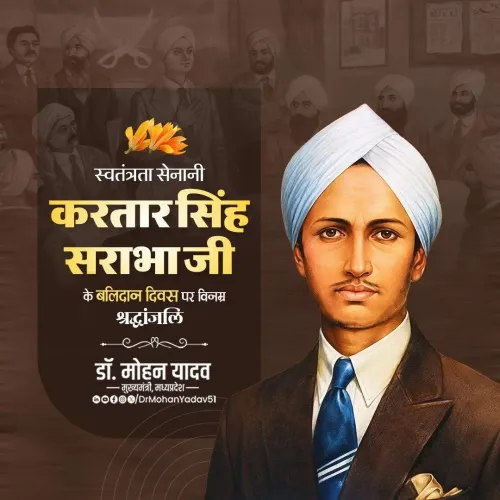
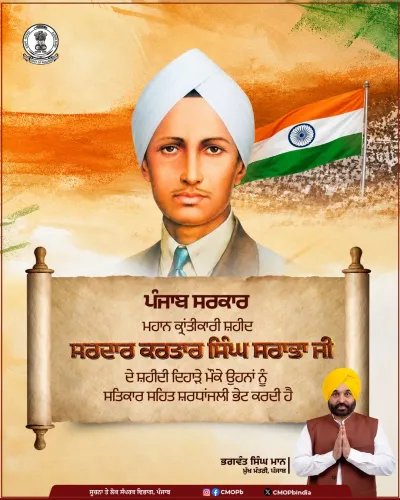
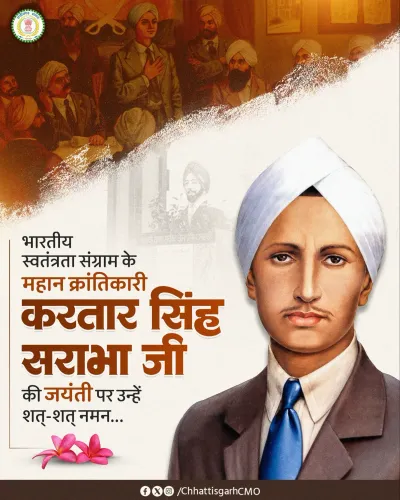
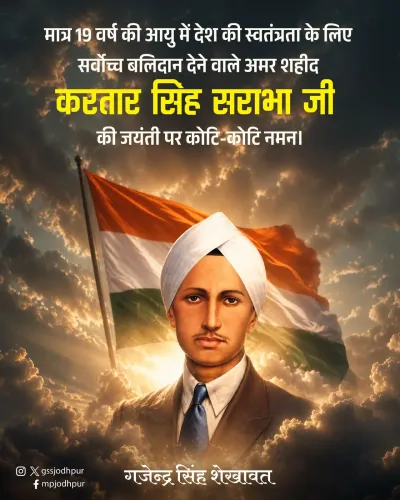
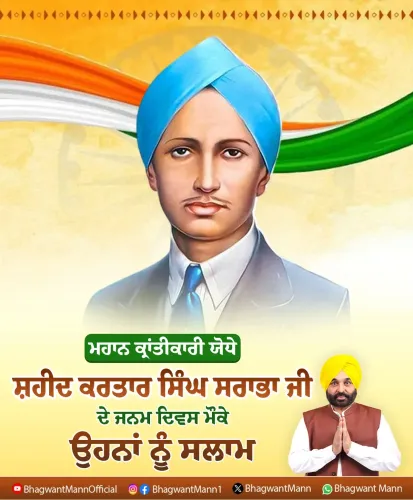
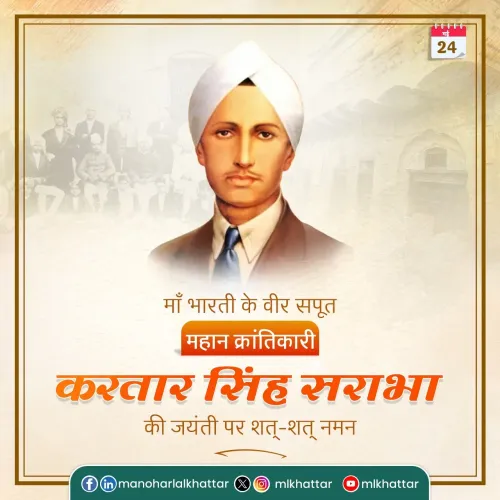
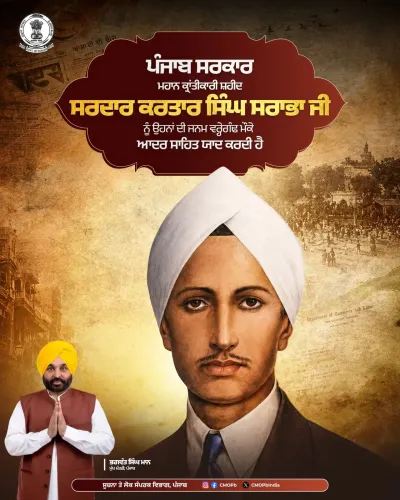
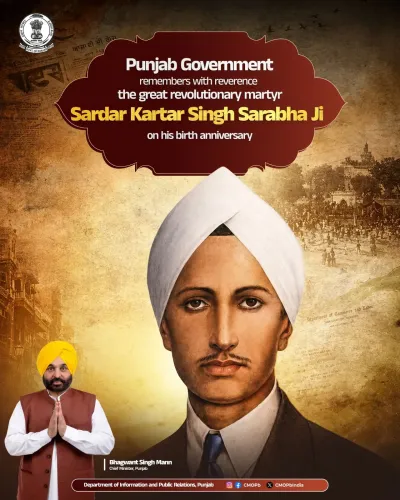
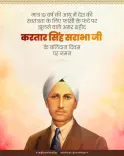
CM Bhagwant Mann pays tribute to Shaheed Kartar Singh Sarabha
Synopsis
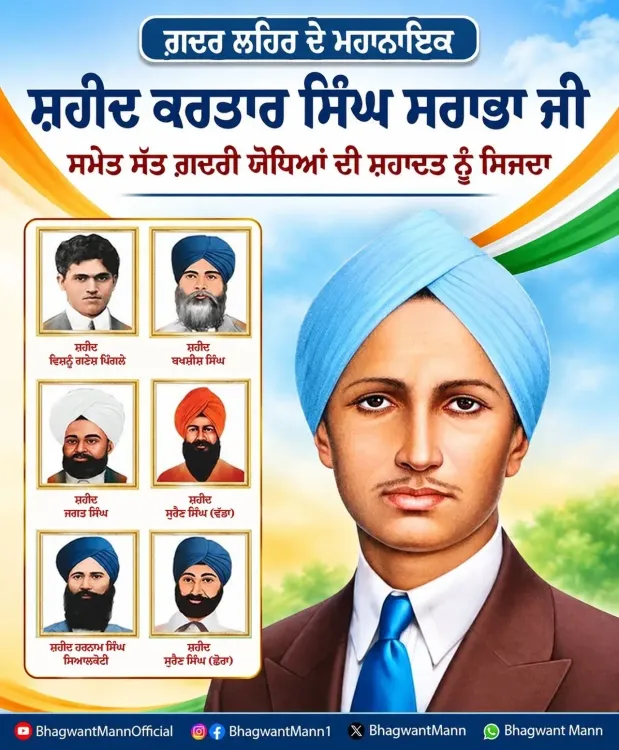
Punjab Chief Minister Bhagwant Mann marked the martyrdom anniversary of Ghadar hero Kartar Singh Sarabha and six comrades on 16 November 2026, paying tribute in Punjabi and calling on youth to build a vibrant 'Rangla Punjab' in fulfilment of the freedom fighters' dreams.
Key Takeaways
Kartar Singh Sarabha and six Ghadar comrades were executed by British colonial authorities on 16 November 1915 at Lahore Central Jail.
CM Bhagwant Mann paid tribute on 16 November 2026 , offering koti-koti pranam to the martyrs on their death anniversary.
Sarabha was just 19 years old when hanged — his story inspired later revolutionaries including Bhagat Singh .
The Ghadar movement was founded by Indian expatriates, predominantly Punjabis, to overthrow British rule through armed uprising during World War I.
Mann invoked the vision of 'Rangla Punjab' — a prosperous, vibrant Punjab — as the living legacy the youth must build in honour of the martyrs.
Commemorating Ghadar martyrs is a recurring political tradition in Punjab, with centenary events held around 2015 .
At just nineteen, Kartar Singh Sarabha walked to the gallows smiling — and more than a century later, his sacrifice still echoes across Punjab. On Monday, 16 November 2026, Punjab Chief Minister Bhagwant Mann posted a solemn tribute on X, bowing to the martyr of the Ghadar movement and his six comrades who were executed by British colonial authorities in 1915 for daring to dream of a free India.
Writing in Punjabi, CM Mann offered koti-koti pranam — 'a crore salutations' — to the young revolutionary and his fellow Ghadarites, calling their sacrifice an everlasting source of inspiration for today's youth. 'Those who gave their lives laughing for the country's freedom,' he wrote, 'their sacrifice will always be a guiding light for the young generation.' He closed with a call to build a 'Rangla Punjab' — a vibrant, prosperous Punjab — in fulfilment of the martyrs' dreams, signing off with the timeless revolutionary cry: Inquilab Zindabad!
Who was Kartar Singh Sarabha — and why Punjab never forgets him
Kartar Singh Sarabha, born in Ludhiana district in 1896, was barely in his teens when he travelled to the United States and joined the Ghadar Party, a movement founded by Indian — predominantly Punjabi — expatriates who sought to overthrow British rule through armed revolt. When the First World War broke out in 1914, Sarabha returned to India to ignite an uprising. Arrested before the revolt could fully take shape, he was tried and hanged on 16 November 1915 at Lahore Central Jail, alongside six fellow Ghadarites. He was nineteen.
The Ghadar movement's legacy runs deep in Punjab's political consciousness. Bhagat Singh, himself a towering symbol of revolutionary nationalism, reportedly carried a photograph of Sarabha with him at all times — a detail that has cemented Sarabha's image as the martyr who inspired martyrs. Punjab governments of successive eras have held commemorations, with major centenary observances mounted around 2015.
The 'Rangla Punjab' vision — linking sacrifice to governance
CM Mann's tribute is not merely ceremonial. By invoking Rangla Punjab — a phrase evoking a colourful, flourishing Punjab — he draws a direct line between the martyrs' vision of a free, dignified homeland and his government's stated development agenda. It is a rhetorical device Punjab leaders across political lines have used for decades: anchor the present in the sacrifice of the past to give policy a moral urgency no budget speech alone can manufacture.
For the Aam Aadmi Party, which came to power in Punjab on a wave of anti-establishment sentiment in 2022, the Ghadar heritage carries particular resonance — a movement of ordinary people, many of them farmers and labourers, who defied an empire. The party has sought to position itself as the inheritor of that spirit of radical, grassroots change.
What the youth of Punjab make of that claim — and whether state programmes actually translate the martyrs' dreams into opportunity — is the question that will outlast any single tribute post.
Point of View
Invoking Sarabha — a young, working-class revolutionary who defied an empire — reinforces its self-image as a grassroots anti-establishment force. The 'Rangla Punjab' call is both homage and political signalling: it frames the party's development agenda as the fulfilment of a century-old promise, raising the bar for what any shortfall in delivery will cost it among a youth electorate that takes the martyrs' legacy seriously.
NationPress
16 Nov 2026
Frequently Asked Questions
Who was Kartar Singh Sarabha?
Kartar Singh Sarabha was a young Punjabi revolutionary and key figure of the Ghadar movement, born in 1896 in Ludhiana district. He was executed by British colonial authorities on 16 November 1915 at Lahore Central Jail at the age of 19 for his role in planning an armed uprising against British rule.
What was the Ghadar movement?
The Ghadar movement was an early 20th-century revolutionary effort founded primarily by Indian — and predominantly Punjabi — expatriates in North America who sought to overthrow British colonial rule in India through armed revolt. The movement gained momentum during World War I when many members returned to India to trigger an uprising.
Why did Bhagwant Mann pay tribute to Kartar Singh Sarabha on 16 November?
16 November marks the martyrdom anniversary of Kartar Singh Sarabha and six Ghadar comrades who were hanged on this date in 1915. Punjab CM Bhagwant Mann posted a tribute on X to mark the occasion, honoring their sacrifice for India's independence.
What does 'Rangla Punjab' mean?
'Rangla Punjab' is a Punjabi phrase meaning a colourful, vibrant, and prosperous Punjab. Punjab CM Bhagwant Mann used the term in his tribute to call upon youth to build such a Punjab in fulfilment of the dreams the Ghadar martyrs gave their lives for.
What is the connection between Bhagat Singh and Kartar Singh Sarabha?
Kartar Singh Sarabha was a major inspiration for Bhagat Singh, the celebrated revolutionary. Bhagat Singh reportedly carried a photograph of Sarabha with him, and historians consider Sarabha one of the figures who most deeply shaped Singh's revolutionary worldview.