CM Bhagwant Mann joins Chhath Pooja, hails Punjab's communal harmony
Synopsis
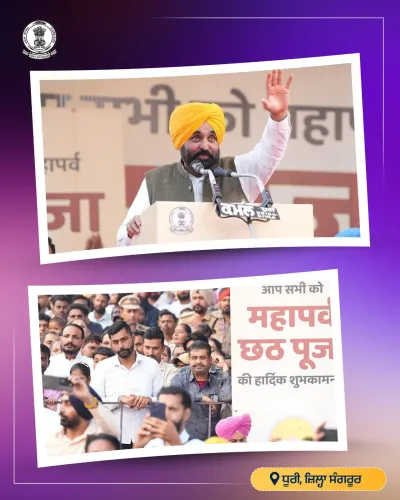
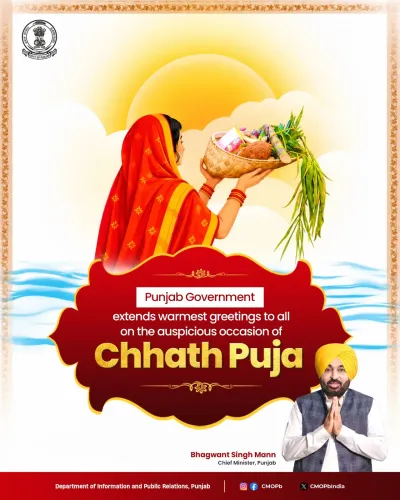
Chief Minister Bhagwant Mann joined Chhath Pooja observances across Punjab on 16 November 2026, calling the festival a living expression of the state's communal harmony and praying for the happiness, health and prosperity of all devotees.
Key Takeaways
CM Bhagwant Singh Mann participated in Chhath Pooja celebrations across Punjab on 16 November 2026 .
He prayed for 'happiness, prosperity, good health and well-being for all' and praised the festival's message of faith, gratitude and togetherness.
Mann stated that thousands of people across the state observed the festival with devotion and religious fervour.
He framed communal participation in each other's festivals as central to Punjab's heritage of communal harmony .
Chhath Pooja is primarily observed by migrant communities from Bihar, Uttar Pradesh and Jharkhand living in Punjab.
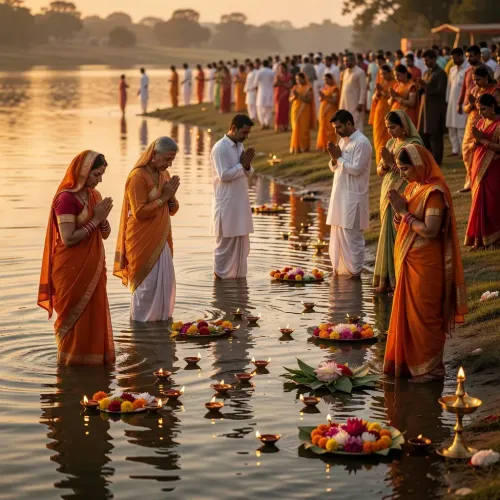
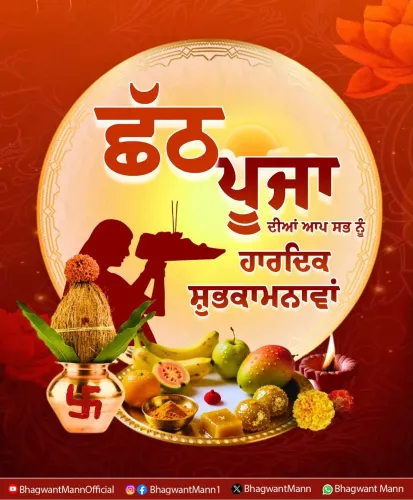
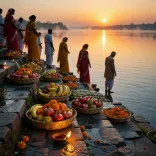
When thousands of devotees stood at water's edge at dawn across Punjab, offering arghya to the rising sun, Chief Minister Bhagwant Singh Mann stood among them — not as a bystander, but as a participant. The Chief Minister's Office of Punjab announced on Monday, 16 November 2026 that CM Mann joined devotees in celebrating Chhath Pooja, extending greetings and praying for 'happiness, prosperity, good health and well-being for all.'
What CM Mann said at the gathering
Addressing the gathering, Mann underscored the festival's message of 'faith, gratitude and togetherness.' He noted that thousands of people across the state were observing Chhath Pooja with 'immense devotion, enthusiasm and religious fervour.' His central argument was direct: Punjab's heritage of communal harmony deepens when communities celebrate each other's festivals with collective enthusiasm — not polite tolerance, but active participation.
Chhath Pooja in Punjab: a migrant community's festival goes mainstream
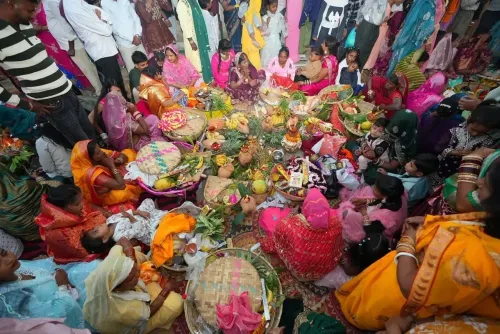
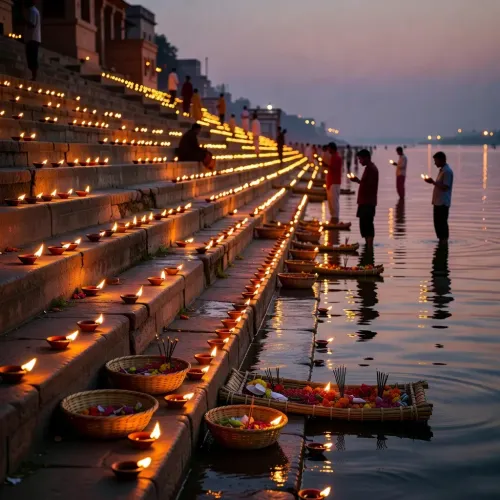
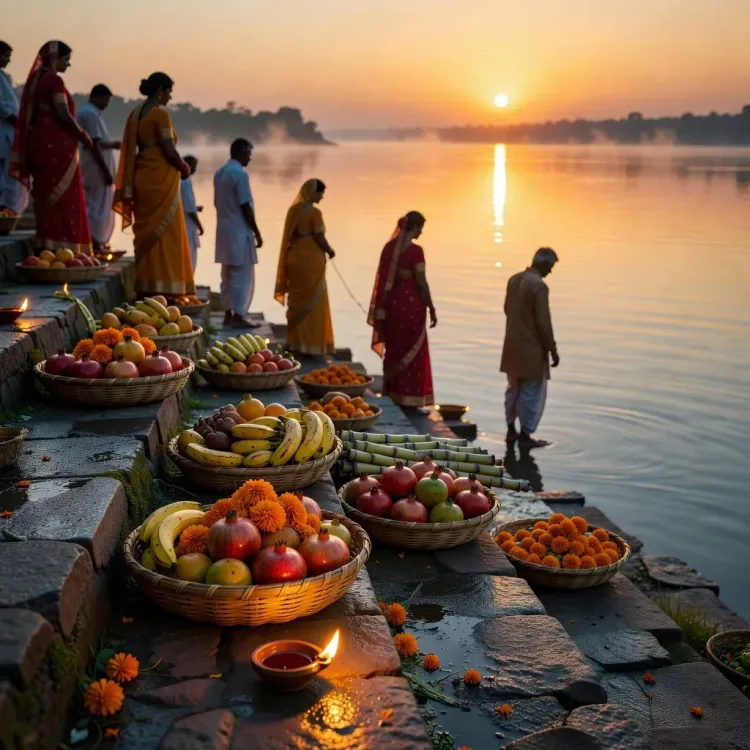
Chhath Pooja is a four-day festival dedicated to the Sun God, observed with strict fasting, ritual bathing and sunrise-sunset offerings. It is rooted primarily in the traditions of communities from Bihar, Uttar Pradesh and Jharkhand. Its growing visibility in Punjab tracks the state's significant migrant population from these regions, who have brought the festival's elaborate rituals — the clay lamps, the bamboo baskets of seasonal fruits, the thekua sweets — into cities and towns across the state.
That a Punjabi Chief Minister publicly joined those observances carries a pointed signal: the festival is no longer a cultural enclave but a shared public event on Punjab's civic calendar.
A pattern of plural participation in Punjab's festival calendar
Punjab governments across administrations have consistently issued greetings and attended events across faiths — Eid, Christmas, Diwali and Sikh festivals alike. For Bhagwant Mann and the Aam Aadmi Party government, which assumed office in 2022, participation in Chhath fits a broader secular-outreach approach in a state whose population includes Sikhs, Hindus, and a substantial eastern-Indian migrant community whose electoral weight is not negligible. The constitutional emphasis on state-level secular practice finds its most visible expression in exactly these moments.
The gesture costs little politically and signals much — that the state's administration recognises every community's festivals as belonging to Punjab's shared calendar, not as minority observances to be merely acknowledged from a distance.
Point of View
Which built its 2022 Punjab mandate partly on promises of inclusive administration, being visibly present at a festival rooted in Bihar-UP migrant tradition reinforces that covenant. It also reflects a broader national pattern: in states with electorally significant migrant populations, chief ministers increasingly treat festival participation as a governance obligation, not merely a courtesy. The question going forward is whether this symbolic warmth translates into tangible policy support — better infrastructure at ghats, civic planning for large riverbank gatherings — for the communities who celebrate it.
NationPress
16 Nov 2026
Frequently Asked Questions
Did CM Bhagwant Mann attend Chhath Pooja 2026?
Yes. Chief Minister Bhagwant Singh Mann joined Chhath Pooja celebrations across Punjab on 16 November 2026 , extending greetings and praying for the well-being of all devotees.
What is Chhath Pooja and why is it celebrated in Punjab?
Chhath Pooja is a four-day Hindu festival dedicated to the Sun God, involving fasting, ritual bathing and sunrise-sunset offerings. It is celebrated in Punjab primarily by migrant communities from Bihar, Uttar Pradesh and Jharkhand .
What did CM Mann say about communal harmony at Chhath Pooja?
Mann said that Punjab's heritage of communal harmony and mutual respect is strengthened when people celebrate each other's festivals with collective enthusiasm, calling Chhath's message one of faith, gratitude and togetherness.
Which party governs Punjab and who is the current Chief Minister?
Punjab is governed by the Aam Aadmi Party (AAP) , and Bhagwant Singh Mann has been Chief Minister since 2022 .
Does the Punjab government participate in festivals of all communities?
Yes. Punjab governments across administrations have consistently participated in and issued greetings for festivals across faiths — including Eid, Christmas, Diwali and Sikh occasions — reflecting the state's constitutional secular practice.