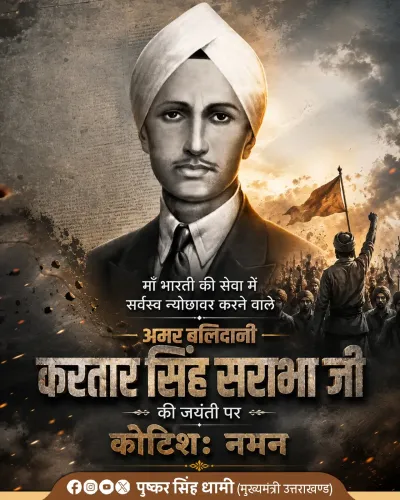
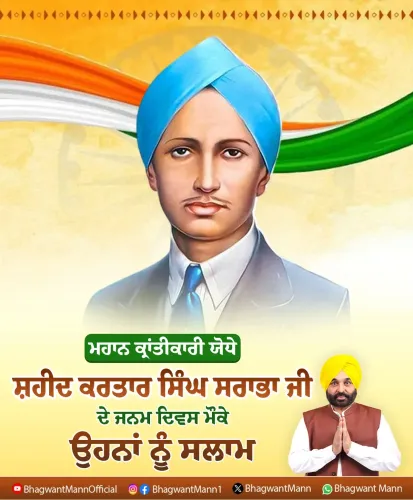
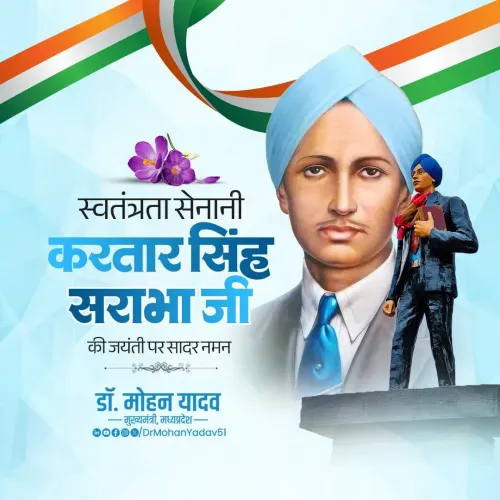
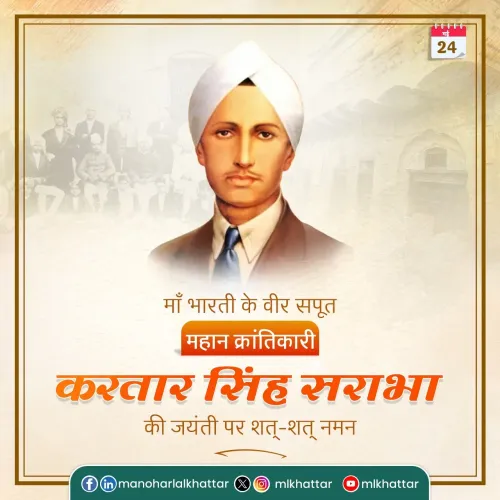
Rajnath Singh pays tribute to martyr Kartar Singh Sarabha
Synopsis
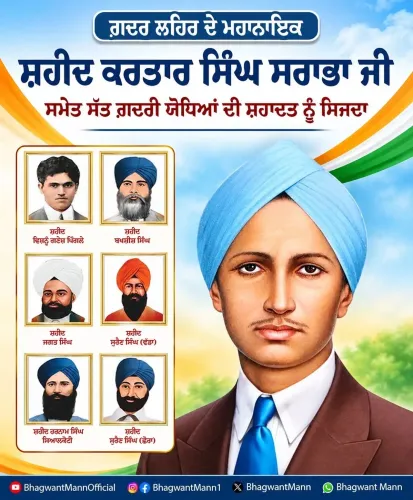
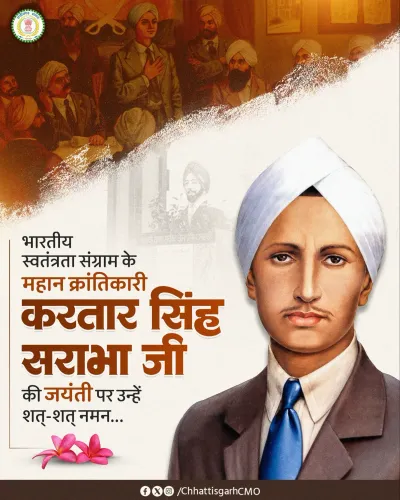
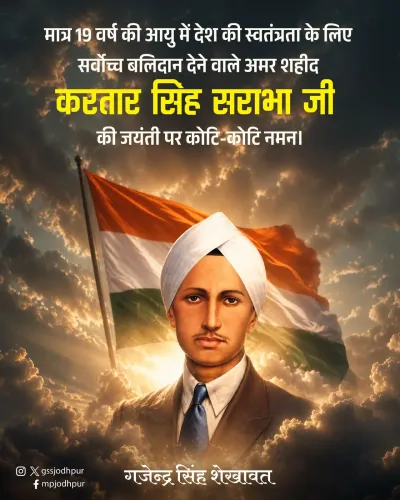
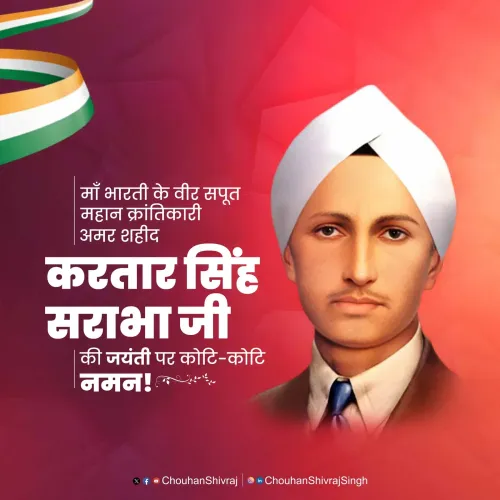
Union Defence Minister Rajnath Singh on 16 November 2026 paid solemn tribute to Ghadar movement revolutionary Kartar Singh Sarabha on his martyrdom anniversary, honouring the 19-year-old freedom fighter hanged by British authorities in 1915 for his role in India's anti-colonial armed uprising.
Key Takeaways
Rajnath Singh posted a tribute to Kartar Singh Sarabha on his martyrdom day, 16 November 2026 .
Sarabha was executed by British authorities on 16 November 1915 at Lahore Central Jail , aged just 19 .
He was a key organiser of the Ghadar Party , a revolutionary network of Indian expatriates in North America that sought armed uprising against colonial rule.
Singh called Sarabha's courage and devotion to the motherland 'indomitable' and said it would 'continue to inspire coming generations.' The Ghadar movement's legacy remains actively commemorated in Punjab , and the martyrdom anniversary draws tributes from across India's political spectrum each year.
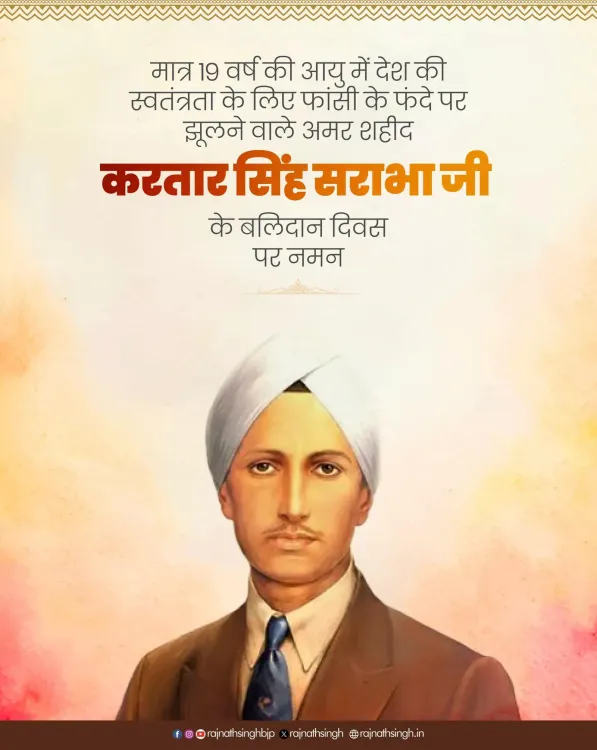
A teenager who chose the gallows over submission — Kartar Singh Sarabha was only 19 years old when British authorities hanged him on 16 November 1915 for his role in the Ghadar movement's armed uprising against colonial rule. More than a century later, Union Defence Minister Rajnath Singh marked the martyr's sacrifice day with a solemn tribute on Monday, calling Sarabha's courage and devotion to the motherland an enduring inspiration for generations to come.
Posting in Hindi, Singh wrote: 'महान क्रांतिकारी और गदर आंदोलन के प्रमुख सेनानी शहीद करतार सिंह सराभा जी के बलिदान दिवस पर उन्हें विनम्र श्रद्धांजलि और नमन' — 'Humble tribute and salute to the great revolutionary and prominent fighter of the Ghadar movement, martyr Kartar Singh Sarabha, on his martyrdom day.' He added that Sarabha's 'indomitable courage and dedication to the motherland will always be remembered and will continue to inspire coming generations.'
Who was Kartar Singh Sarabha — and why the Ghadar movement still matters
Kartar Singh Sarabha was born in the village of Sarabha, Ludhiana district in present-day Punjab. He had travelled to the United States for higher education when the seeds of radical anti-colonial thought took root. He became a key organiser of the Ghadar Party — a revolutionary network founded largely by Indian immigrants in North America — which sought to trigger an armed mutiny within the British Indian Army and end imperial rule by force. When World War I broke out in 1914, Sarabha and hundreds of Ghadarites sailed back to India, convinced the moment had arrived. The planned uprising was suppressed, its conspirators arrested. Sarabha was tried under the Defence of India Act, convicted, and executed at Lahore Central Jail on 16 November 1915 — a date that has since been observed as his martyrdom anniversary. His youth, his fearlessness in court, and the scale of his sacrifice made him a legendary figure, one that the later revolutionary Bhagat Singh explicitly cited as a personal hero.A pattern of official remembrance — and what it signals
Singh's tribute follows a well-established pattern in Indian political life: senior leaders across parties mark the martyrdom anniversaries of independence-era revolutionaries, particularly those associated with Punjab's Ghadar tradition, as acts of both historical reverence and national reaffirmation. For a Defence Minister, invoking a figure who gave his life at 19 in defiance of a colonial military apparatus carries particular resonance — the idea that the highest form of service to the nation is sacrifice itself. The Ghadar movement's legacy remains actively taught in Punjab's schools and commemorated at heritage sites linked to the party's history. Each November 16, tributes from political, cultural, and civil-society quarters renew public memory of a chapter in India's freedom struggle that often receives less mainstream attention than the later non-cooperation and civil disobedience movements. Sarabha died at an age when most young Indians today are finishing their undergraduate degrees. That contrast — between youth squandered by colonial violence and youth shaped by the freedoms that violence helped secure — is precisely what makes his story land differently every year.Point of View
Bipartisan tradition of official remembrance for Ghadar-era revolutionaries — one that serves both genuine historical reverence and the political function of anchoring the ruling establishment's nationalist credentials in pre-independence sacrifice. For a Defence Minister specifically, invoking a figure who took up arms against a colonial military power reinforces a narrative connecting India's armed forces and defence establishment to a long lineage of patriotic sacrifice. Punjab's centrality to both the Ghadar legacy and contemporary Indian defence recruitment gives the tribute added geographic and demographic salience. The choice to post on the martyrdom day itself — rather than a birth anniversary — underscores the focus on sacrifice as the defining act.
NationPress
16 Nov 2026
Frequently Asked Questions
Who was Kartar Singh Sarabha?
Kartar Singh Sarabha was a young Indian revolutionary and a leading figure of the Ghadar Party who was hanged by British authorities at Lahore Central Jail on 16 November 1915 at the age of 19 for his role in organising an armed uprising against colonial rule.
What was the Ghadar movement?
The Ghadar movement was an early 20th-century revolutionary effort led largely by Indian immigrants in North America who formed the Ghadar Party and sought to end British rule in India through armed mutiny, particularly targeting the British Indian Army during World War I.
Why did Rajnath Singh pay tribute to Kartar Singh Sarabha?
Union Defence Minister Rajnath Singh paid tribute on 16 November 2026 to mark Sarabha's martyrdom anniversary — the date in 1915 on which British authorities executed him — calling his courage and dedication to the motherland an enduring inspiration for future generations.
How old was Kartar Singh Sarabha when he was executed?
Kartar Singh Sarabha was only 19 years old when he was hanged at Lahore Central Jail on 16 November 1915.
What is the significance of 16 November in Indian history?
16 November is observed as the martyrdom day of Kartar Singh Sarabha, the Ghadar movement revolutionary executed by British colonial authorities in 1915. The date is commemorated annually with tributes from political leaders, civil society groups, and cultural organisations, particularly in Punjab.