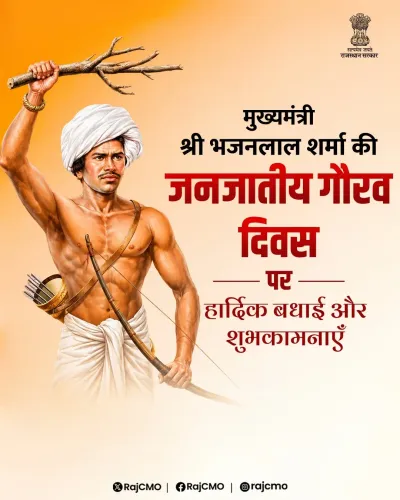
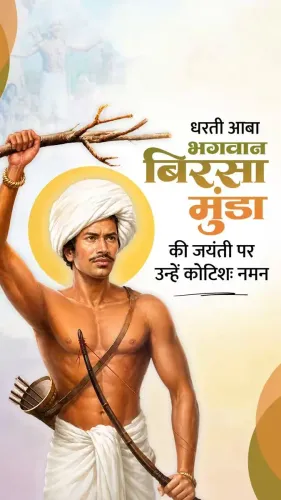
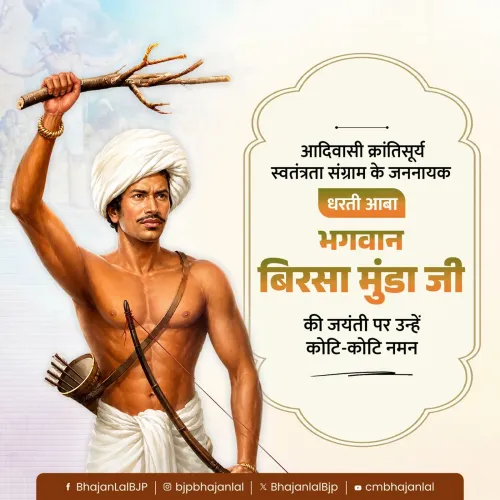
CM Bhajanlal Honours Birsa Munda on 151st Birth Anniversary
Synopsis
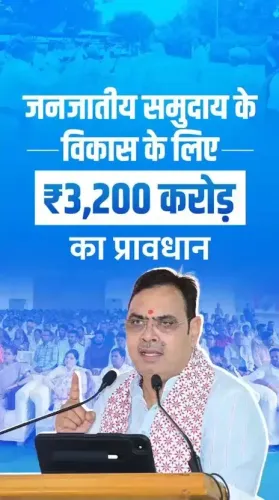
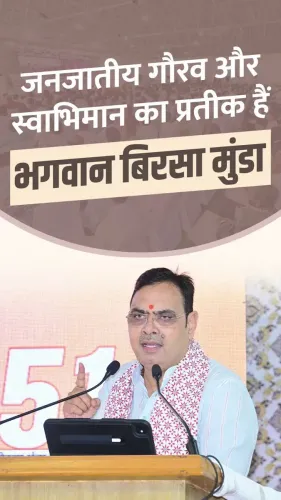
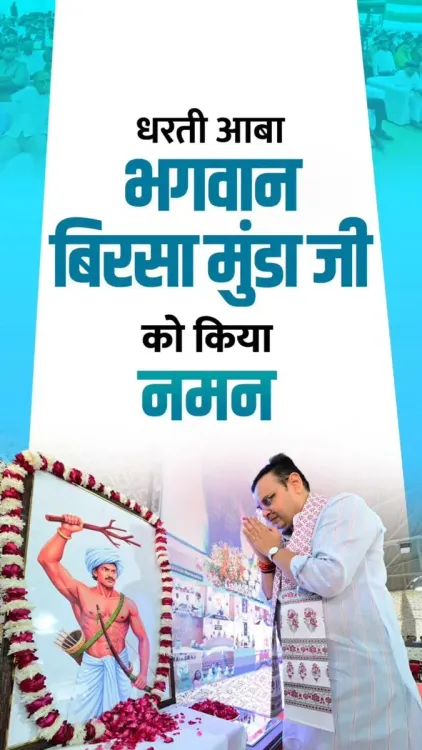
Rajasthan CM Bhajanlal Sharma marked Birsa Munda's 151st birth anniversary at the Chief Minister's residence on Janjatiya Gaurav Divas, engaging tribal youth in dialogue and urging them to draw inspiration from the tribal icon's legacy of resistance and service.
Key Takeaways
Janjatiya Gaurav Divas is observed annually on 15 November to mark Birsa Munda's birth anniversary, instituted by the Government of India in 2021 .
CM Bhajanlal Sharma hosted the state event at the Chief Minister's residence in Jaipur, holding a direct dialogue with tribal youth.
Birsa Munda, born in 1875 , led the Munda Ulgulan uprising against British colonial rule and died in custody at age 25.
Sharma described Munda's sacrifice as a symbol of tribal self-respect, culture, and rights, calling for inspiration toward national service and social upliftment.
Rajasthan's tribal belt in Udaipur , Banswara , and Dungarpur gives the state significant stakes in tribal engagement events.
A hundred and fifty-one years after Birsa Munda was born into a world that would come to fear and revere him, Rajasthan Chief Minister Bhajanlal Sharma gathered tribal youth at the Chief Minister's residence on 16 November 2026 and asked them to carry that defiant flame forward. The occasion was Janjatiya Gaurav Divas — the national observance anchored to Munda's birth anniversary — and in Jaipur, it became a moment of direct, personal dialogue between a government and the communities it has historically struggled to reach.
Who Was Birsa Munda — and Why 151 Still Matters
Born in 1875 in what is now Jharkhand, Birsa Munda led the Munda Ulgulan — the Great Tumult — a fierce uprising against British colonial dispossession of tribal land and culture. He died in British custody at just 25, but his resistance became a founding myth of tribal self-determination in India. CM Sharma described his sacrifice, struggle, and 'indomitable courage' as a symbol of tribal dignity, culture, and the protection of rights — a framing that links a 19th-century revolutionary to 21st-century policy priorities.
From New Delhi to CM's Residence: How Janjatiya Gaurav Divas Reached Jaipur
The Government of India instituted Janjatiya Gaurav Divas in 2021 as a formal national observance, bringing tribal freedom fighters from the margins of the official calendar to its centre. State governments across India now organise parallel events each 15 November, turning what began as a central directive into a layered civic moment replicated in state capitals, district headquarters, and village blocks.
Rajasthan has particular stakes in this calendar. The state's tribal belt — spanning Udaipur, Banswara, and Dungarpur districts — holds a large Scheduled Tribe population whose political and social engagement successive governments have prioritised. Hosting the event at the CM's own residence, rather than a convention hall, was a deliberate signal of proximity.
The Appeal to Tribal Youth
CM Sharma did not merely preside — he held what the Chief Minister's Office described as an aatmiya samvad ('heartfelt dialogue') with young members of the tribal community. His public address called on attendees to draw inspiration from Birsa Munda's life for rashtraseva (service to the nation) and samaj ka utthan (upliftment of society). The dual emphasis — heritage and forward momentum — is a consistent thread in how Indian governments have framed tribal commemoration since 2021. The question now is whether such dialogue translates into concrete announcements on welfare schemes or youth programmes for Rajasthan's tribal districts.
Birsa Munda belonged to no one party and to every tribe. That is precisely why invoking him carries weight — and why how governments follow up matters far more than how well they commemorate.
Point of View
A demographic that swings key seats across Rajasthan, Madhya Pradesh, and Jharkhand. By rooting the commemoration in the household space of the Chief Minister — rather than a government auditorium — the Sharma administration signals personal proximity to communities that have historically felt institutionally distant. The 'heartfelt dialogue' framing also suggests an awareness that symbolic commemoration alone no longer satisfies tribal constituencies demanding welfare delivery. Whether this event seeds tangible policy follow-through, or remains a well-staged annual ritual, will determine how effectively the BJP consolidates these gains heading into future assembly cycles.
NationPress
16 Nov 2026
Frequently Asked Questions
What is Janjatiya Gaurav Divas and when is it celebrated?
Janjatiya Gaurav Divas is a national observance held every year on 15 November to mark the birth anniversary of tribal freedom fighter Birsa Munda . The Government of India instituted it in 2021 to recognise tribal contributions to India's independence struggle.
Who was Birsa Munda?
Birsa Munda was a 19th-century tribal leader born in 1875 in present-day Jharkhand who led the Munda Ulgulan , a revolt against British colonial dispossession of tribal land. He died in British custody at the age of 25 and is revered as a symbol of tribal resistance and self-determination.
What did CM Bhajanlal Sharma do on Janjatiya Gaurav Divas 2026?
CM Bhajanlal Sharma hosted the Janjatiya Gaurav Divas event at the Chief Minister's residence in Jaipur, held an aatmiya samvad (heartfelt dialogue) with tribal youth, and addressed the gathering, urging them to draw inspiration from Birsa Munda's legacy for national service and social upliftment.
Which districts in Rajasthan have a large tribal population?
Rajasthan's major tribal districts include Udaipur , Banswara , and Dungarpur , which together hold a significant Scheduled Tribe population and are central to the state government's tribal engagement efforts.
When did the Indian government start Janjatiya Gaurav Divas?
The Government of India instituted Janjatiya Gaurav Divas in 2021 to bring tribal freedom fighters into formal national commemoration and highlight their role in the country's history and nation-building.