CM Yogi: UP's 57,600 Gram Sachivalyas delivering village self-rule
Synopsis
On Gandhi Jayanti 2026, UP CM Yogi Adityanath highlighted that 57,600 Gram Sachivalyas now deliver digital, transparent village governance — with 5-7 jobs per village and digital libraries in 11,350 panchayats — calling it the real realisation of Mahatma Gandhi's vision of village self-rule.
Key Takeaways
57,600 Gram Sachivalyas in Uttar Pradesh now provide e-services, digital payments, and online monitoring to village residents.
Each secretariat has generated an estimated 5 to 7 employment opportunities locally, per CM Yogi's claim.
Digital libraries are being set up in 11,350 gram panchayats to expand rural access to knowledge and skills.
CM Yogi credits the changes to nine-and-a-half years of his government's reforms since 2017 , contrasting them with pre-2017 opacity and lack of accountability.
The post, timed to Gandhi Jayanti (2 October) , frames village self-rule as fulfilment of Mahatma Gandhi's vision — while explicitly rejecting what CM Yogi calls the 'dynastic' political model.
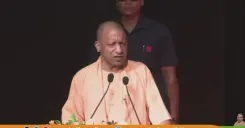
For decades, India's villages were promised development but handed politics. On Friday, 2 October 2026 — Gandhi Jayanti, the day that makes the subtext unmissable — Uttar Pradesh Chief Minister Yogi Adityanath declared that his government has spent the last nine-and-a-half years dismantling that old order, brick by bureaucratic brick, replacing it with a digital, accountable village governance architecture under the banner of Gram Swaraj (village self-rule).
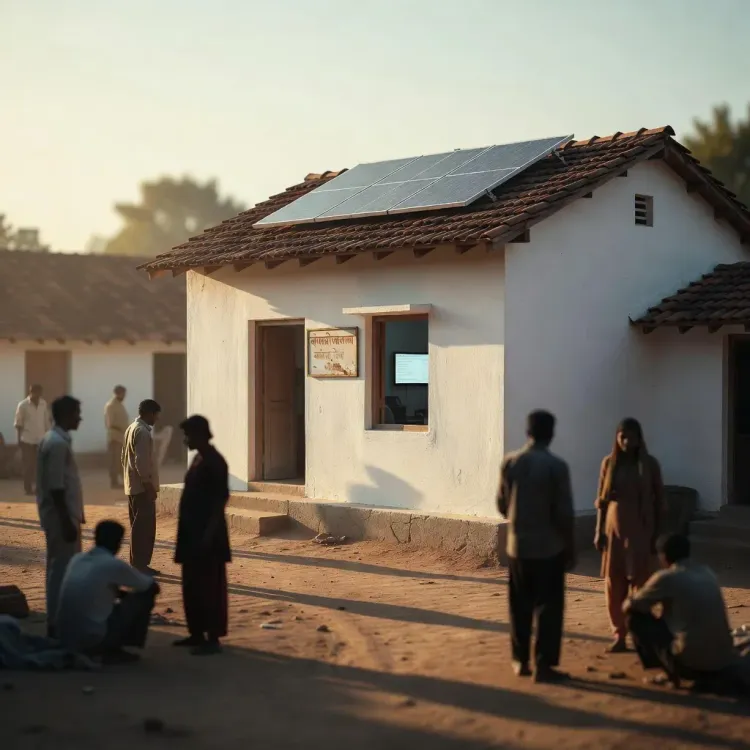
Posting under the hashtag #GramSwarajSeSamriddhi, CM Yogi drew a sharp before-and-after: before 2017, villagers had to shuttle between tehsils, police stations, and district headquarters just to obtain an income or caste certificate. Today, he says, 57,600 Gram Sachivalyas (village secretariats) provide those services — and much more — at the doorstep, powered by e-Gram Swaraj, digital payments, and online monitoring.
What 57,600 Gram Sachivalyas actually deliver
The scale is striking. Spread across Uttar Pradesh, each village secretariat is designed as a single-window service counter for rural residents — issuing certificates, processing entitlements, and logging panchayat finances on a transparent digital ledger. CM Yogi claims that the rollout has created 5 to 7 jobs per village, turning governance infrastructure into a local employment engine. If that figure holds across all secretariats, the implied job creation runs into the hundreds of thousands statewide.
Panchayat finances, he says, are now logged on e-Gram Swaraj — a central government platform that maps every rupee from fund release to expenditure — ending the opacity that allowed leakages to persist for generations. Online monitoring means both citizens and supervisory officials can track whether a village road or a drainage project is on schedule or stuck.
Digital libraries in 11,350 gram panchayats
Alongside the secretariat network, CM Yogi announced that digital libraries are being established in 11,350 gram panchayats — a move aimed at bridging the information and skills gap between rural and urban youth. The initiative signals a deliberate push to make the village secretariat not just an administrative node but a knowledge hub, potentially unlocking access to competitive-exam preparation, government scheme information, and digital literacy for residents who have never had a nearby public library.
Gandhi's village republic — and a dig at 'dynastic' politics
The choice of Gandhi Jayanti as the moment to articulate this vision is pointed. CM Yogi explicitly invoked Mahatma Gandhi's dream of self-sufficient village republics, framing Gram Swaraj not as a political slogan but as a constitutional and civilisational commitment. 'For us, Gram Swaraj is not a political slogan,' he wrote; 'it is the resolve for Gandhi's dream village and its self-reliance.'
He closed with a barb: 'There is no place for the parivarvadi model in our Gram Swaraj' — a reference to dynastic or family-led political parties, a recurring BJP critique of the Samajwadi Party and Congress. By tying village empowerment to anti-dynastic governance, the post weaves together a welfare narrative and an electoral argument in a single breath — exactly the kind of framing that defines UP's competitive political terrain ahead of the next assembly cycle.
Empowered panchayats or not, the test for Uttar Pradesh's villages will ultimately be in the data: whether income levels, institutional trust, and service delivery timelines have genuinely shifted for the rural majority — and that ledger is still being written.
Point of View
The messaging attempts to neutralise the traditional Opposition charge that BJP neglects the rural poor, while the 'no room for dynastic politics' line keeps the competitive framing alive. The post fits a broader BJP pattern of using welfare delivery data to make the case for incumbency ahead of the 2027 UP assembly elections. Whether the metrics translate into rural sentiment will depend on ground-level verification of service quality — something no X post can settle.
NationPress
2 Oct 2026
Frequently Asked Questions
What is a Gram Sachivalay in Uttar Pradesh?
A Gram Sachivalay is a village-level secretariat set up by the Uttar Pradesh government to deliver government services — such as income and caste certificates — directly in the village, eliminating the need for residents to visit district or tehsil offices. CM Yogi says 57,600 such secretariats are now operational across UP.
What is e-Gram Swaraj and how is it used in UP?
e-Gram Swaraj is a central government digital platform that maps panchayat funds and expenditures in real time, enabling transparency and online monitoring of village-level governance. UP's Gram Sachivalyas use it alongside digital payments to make panchayat finances publicly accountable.
How many gram panchayats in UP are getting digital libraries?
According to CM Yogi Adityanath's post on 2 October 2026 , digital libraries are being established in 11,350 gram panchayats across Uttar Pradesh.
Why did CM Yogi post about village development on Gandhi Jayanti?
CM Yogi explicitly linked the concept of Gram Swaraj to Mahatma Gandhi's vision of self-sufficient village republics. Posting on Gandhi Jayanti (2 October) allowed him to frame the UP government's rural governance reforms as a continuation of Gandhi's legacy of village self-rule.
What does CM Yogi mean by the 'parivarvadi model' having no place in Gram Swaraj?
Parivarvadi literally means 'dynastic' or 'family-centric.' CM Yogi's remark is a political critique directed at Opposition parties — primarily the Samajwadi Party and Congress — which BJP routinely accuses of running politics as a family enterprise at the expense of genuine public welfare.