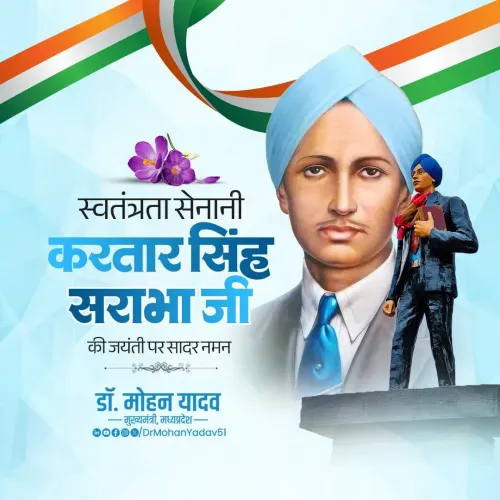
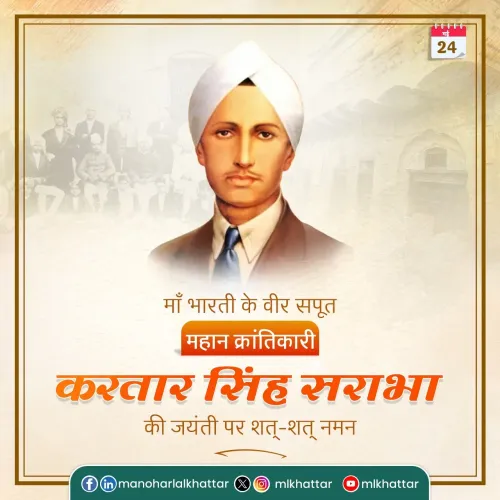
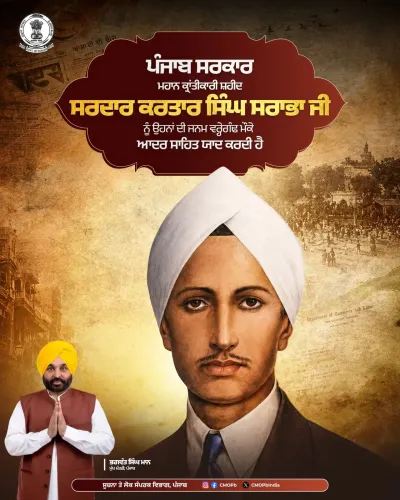
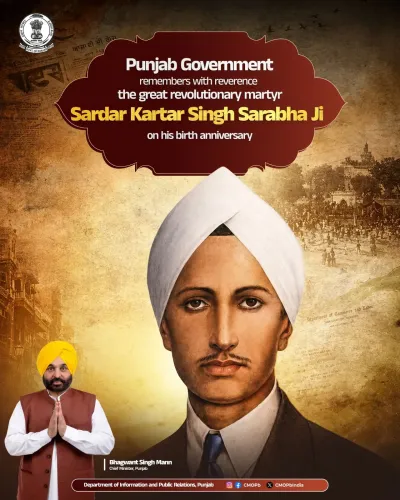
CM Mohan Yadav pays tribute to Kartar Singh Sarabha on martyrdom day
Synopsis
Madhya Pradesh Chief Minister Dr. Mohan Yadav paid solemn tribute to Ghadar Party revolutionary Kartar Singh Sarabha on his martyrdom anniversary, calling his sacrifice at age 19 an eternal source of patriotic inspiration.
Key Takeaways
Madhya Pradesh CM Dr.
Mohan Yadav posted a tribute to Kartar Singh Sarabha on 16 November 2026 , his martyrdom anniversary.
Kartar Singh Sarabha was a Ghadar Party revolutionary executed on 16 November 1915 at Lahore Central Jail at the age of 19 .
Sarabha was arrested for leading an armed uprising against British rule during World War I .
Bhagat Singh reportedly kept a photograph of Sarabha as a source of personal inspiration, illustrating Sarabha's lasting influence on India's revolutionary tradition.
Tributes to martyred freedom fighters on death anniversaries are a cross-party practice in Indian politics, keeping lesser-known revolutionary histories in public memory.
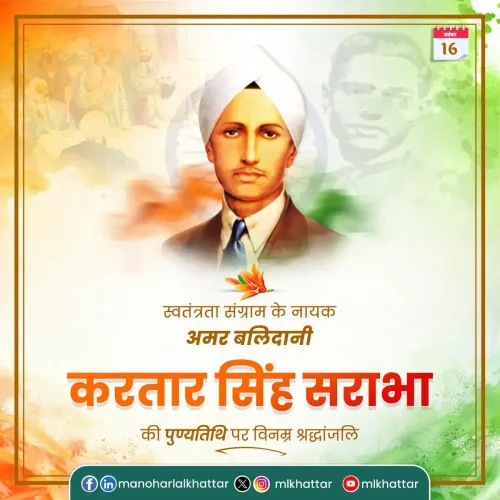
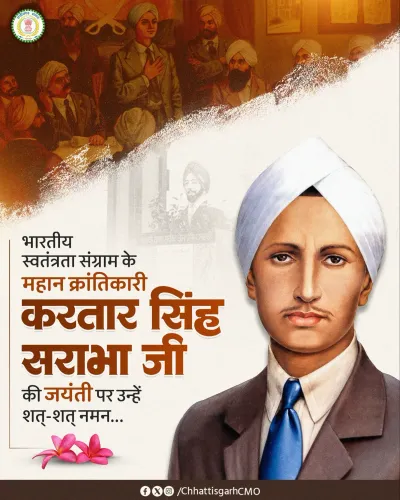
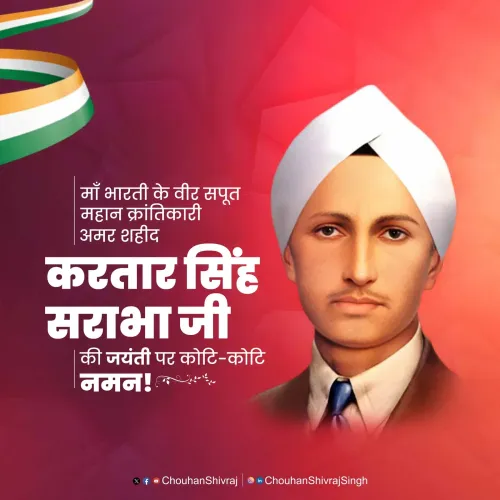
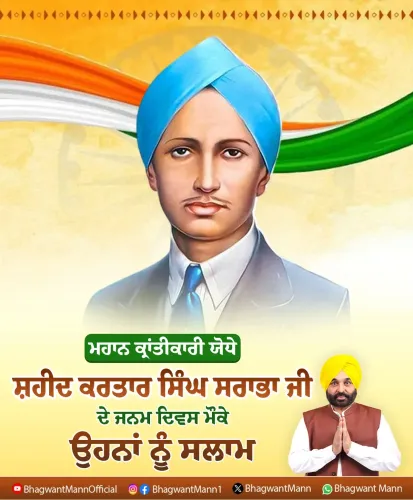
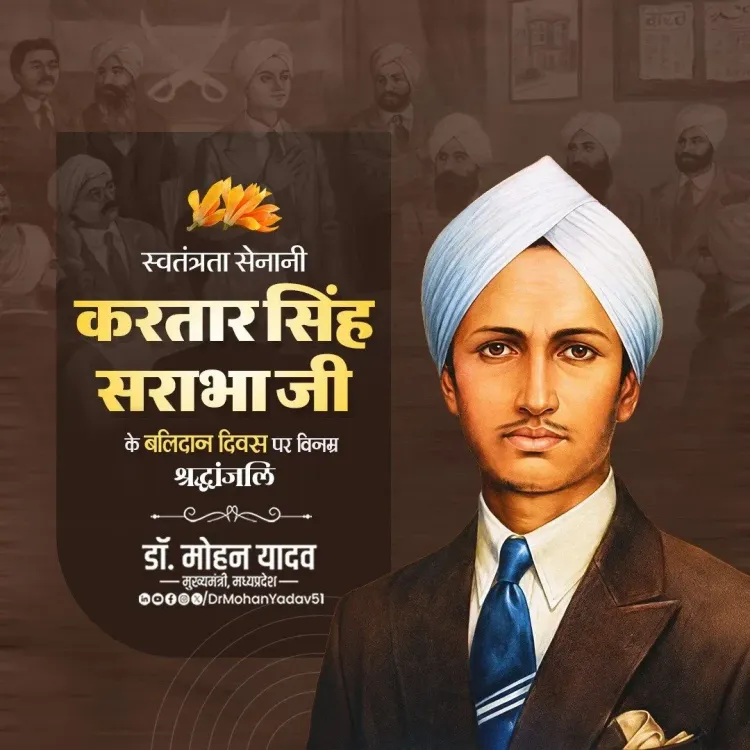
A young revolutionary who walked to the gallows at 19 is remembered today — Madhya Pradesh Chief Minister Dr. Mohan Yadav paid tribute to Kartar Singh Sarabha on his martyrdom anniversary, Monday, 16 November 2026, honouring the Ghadar Party fighter's sacrifice for India's freedom.
In his tribute post, Dr. Yadav wrote: 'मातृभूमि की स्वतंत्रता के लिए सर्वस्व अर्पित करने वाले अमर स्वतंत्रता सेनानी, करतार सिंह सराभा जी के बलिदान दिवस पर विनम्र श्रद्धांजलि अर्पित करता हूं।' — 'I humbly pay tribute to the immortal freedom fighter who sacrificed everything for the liberation of the motherland, on the martyrdom day of Kartar Singh Sarabha.' He added that even at a young age, Sarabha demonstrated 'indomitable courage and spirit of sacrifice,' and that his martyrdom 'will forever inspire patriotism and service to the nation.'
Who was Kartar Singh Sarabha — and why his age still stuns
Kartar Singh Sarabha was a leading figure of the Ghadar Party, a revolutionary organisation formed largely among the Indian diaspora in North America in the early twentieth century. Born in the village of Sarabha in present-day Punjab, he returned to India to mobilise an armed uprising against British colonial rule during World War I. He was arrested, tried, and executed on 16 November 1915 at Lahore Central Jail — aged just 19.
His youth, conviction, and defiance at the gallows left a deep imprint on the independence movement. Bhagat Singh, himself one of India's most iconic revolutionaries, is said to have kept a photograph of Sarabha as a constant source of inspiration — a detail that underscores the generational chain of courage Sarabha set in motion.
A tradition of remembrance across Indian politics
Tributes to martyred freedom fighters on their death anniversaries are a consistent feature of Indian political life, observed across party lines and state boundaries. These commemorations carry no direct policy weight, but they perform an important civic function — anchoring public memory to lesser-known chapters of the independence struggle, particularly figures from the revolutionary tradition who operated outside the mainstream Congress-led movement.
Sarabha's story belongs to a generation that chose armed resistance over petition. Remembering him publicly is also an implicit acknowledgement that India's freedom was won through plural, often radical, streams of struggle — not a single narrative.
At 19, Kartar Singh Sarabha had already lived a life of consequence. More than a century later, a sitting Chief Minister pauses to say so — and that, in itself, is the point.
Point of View
As a Punjabi Sikh revolutionary executed in his teens, also carries cross-regional resonance, making such tributes politically significant beyond mere ceremony. The gesture costs nothing legislatively but continuously reinforces the party's framing of patriotism as sacrifice and direct action. As India moves further from living memory of the freedom struggle, these annual digital commemorations increasingly serve as the primary site of public historical education.
NationPress
16 Nov 2026
Frequently Asked Questions
Who was Kartar Singh Sarabha?
Kartar Singh Sarabha was a revolutionary freedom fighter and member of the Ghadar Party, executed by British colonial authorities on 16 November 1915 at Lahore Central Jail at the age of 19 for his role in organising an armed uprising against British rule in India.
Why is 16 November significant for Kartar Singh Sarabha?
16 November 1915 is the date on which Kartar Singh Sarabha was executed in Lahore, making it his martyrdom anniversary, observed annually as 'Balidan Diwas' by those honouring his sacrifice.
What was the Ghadar Party?
The Ghadar Party was a revolutionary organisation founded primarily among the Indian diaspora in North America in the early twentieth century. It sought to overthrow British colonial rule in India through armed uprising, with many of its members returning to India during World War I to foment rebellion.
What is Kartar Singh Sarabha's connection to Bhagat Singh?
Bhagat Singh, one of India's most iconic revolutionaries, is widely reported to have kept a photograph of Kartar Singh Sarabha as a personal source of inspiration, illustrating how Sarabha's courage influenced the next generation of India's independence fighters.
Why did Madhya Pradesh CM Mohan Yadav post a tribute to Kartar Singh Sarabha?
Dr. Mohan Yadav posted the tribute on 16 November 2026 to mark the martyrdom anniversary of Kartar Singh Sarabha, calling his sacrifice at a young age an enduring inspiration for patriotism and service to the nation — a practice common among Indian political leaders on freedom fighters' death anniversaries.