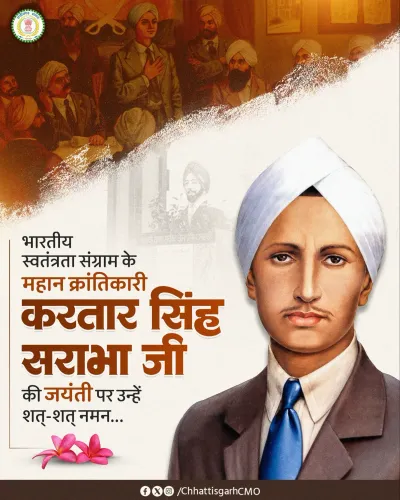
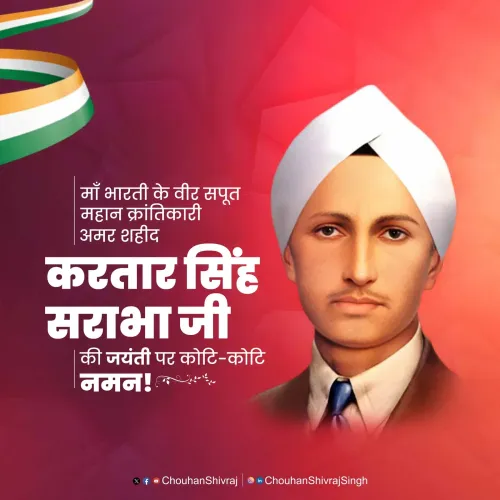
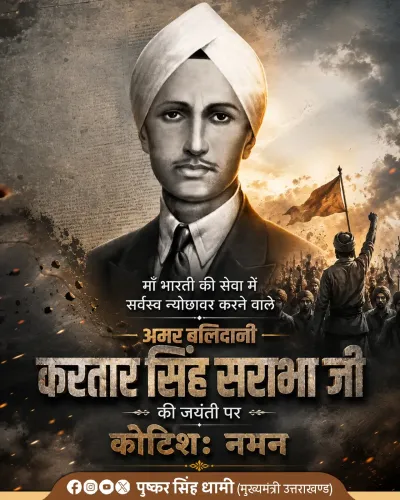
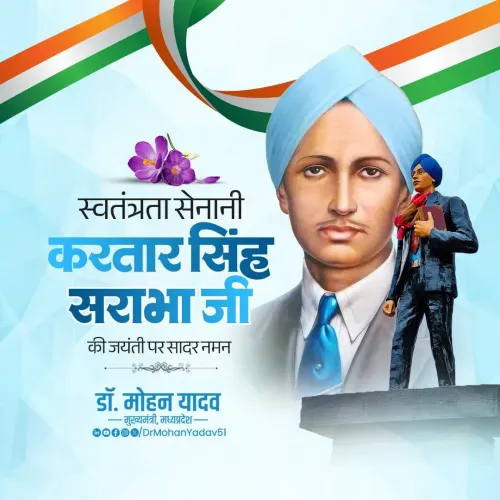
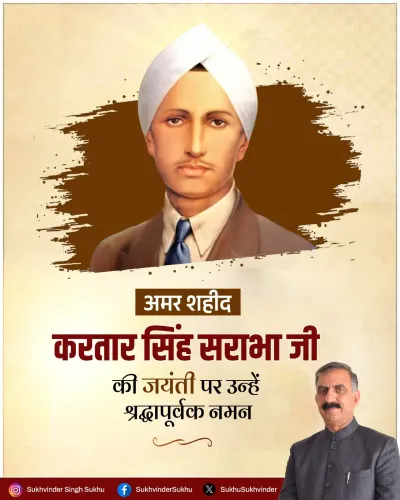
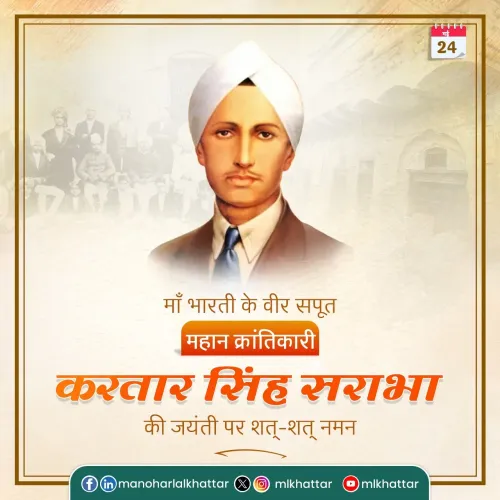
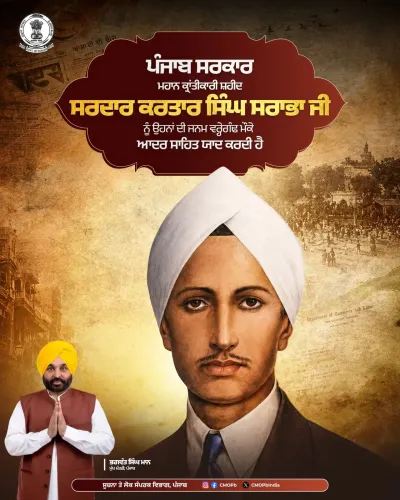
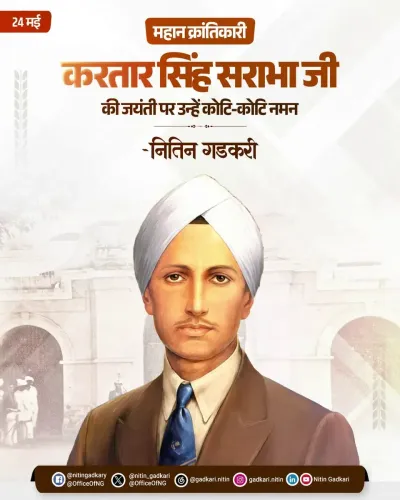
Khattar pays tribute to revolutionary Kartar Singh Sarabha
Synopsis
Union Power Minister Manohar Lal Khattar honoured Ghadar Party revolutionary Kartar Singh Sarabha on his death anniversary, calling him an embodiment of valour and sacrifice whose devotion to India's freedom will inspire generations.
Key Takeaways
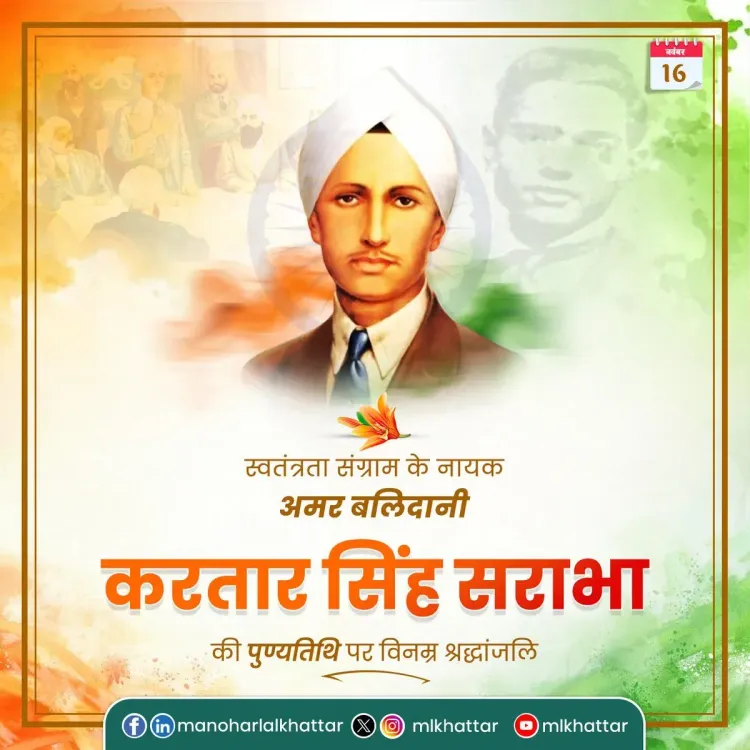
Manohar Lal Khattar , Union Power Minister and former Haryana Chief Minister, posted a Hindi tribute to Kartar Singh Sarabha on 16 November 2026 .
Kartar Singh Sarabha was a Ghadar Party revolutionary executed by British authorities in Lahore in November 1915 at the age of 19 .
Khattar described Sarabha as an embodiment of 'valour, courage, renunciation, and sacrifice' and said his struggle would inspire future generations.
Sarabha was among the earliest organised armed-resistance figures against British colonial rule, operating from the Indian diaspora in North America.
Senior Indian ministers routinely mark the anniversaries of Ghadarite martyrs, connecting pre-1947 sacrifice to contemporary themes of nationalism and national service.
A martyr who was barely nineteen when the British hanged him, yet old enough to have shaken an empire — Union Power Minister Manohar Lal Khattar on Monday, 16 November 2026, paused to honour Kartar Singh Sarabha on his death anniversary, calling him a timeless symbol of courage, sacrifice, and unflinching dedication to India's freedom.
Posting in Hindi on X, Khattar wrote: 'शौर्य, साहस, त्याग और बलिदान की प्रतिमूर्ति' — 'an embodiment of valour, courage, renunciation, and sacrifice' — and added that Sarabha's fearless struggle and unbreakable devotion would continue to inspire future generations toward national service and patriotism.
Who was Kartar Singh Sarabha — and why he still matters
Kartar Singh Sarabha was born in the village of Sarabha in Ludhiana district, Punjab, and joined the Ghadar Party as a teenager while studying in the United States. The Ghadar movement was among the earliest organised armed-resistance efforts against British colonial rule, drawing on the Indian diaspora in North America to plan and fund an uprising on Indian soil.
Sarabha threw himself into the work of distributing revolutionary literature, recruiting fighters, and planning insurrection. The British authorities arrested him, tried him for sedition and conspiracy, and executed him in Lahore in November 1915 — when he was just 19 years old. Bhagat Singh, himself one of independent India's most celebrated martyrs, reportedly kept a photograph of Sarabha and drew inspiration from him.
A pattern of Ghadarite commemoration by Union ministers
Khattar's tribute fits a consistent pattern in Indian political culture: senior Union and state ministers mark the death anniversaries of pre-1947 revolutionaries — particularly Ghadarites and armed-resistance figures — with public posts that frame their sacrifice as a living call to national duty. November 16 each year serves as a focal point for remembering Sarabha, and tributes from across the political spectrum are routine on this date.
For Khattar, a former Chief Minister of Haryana and a senior BJP leader, honouring a Punjabi revolutionary also carries a natural regional resonance — both Haryana and Punjab share deep roots in the Ghadar movement's history and geography.
A teenager who chose a gallows over surrender still, more than a century later, draws the attention of the nation's most powerful ministers. That is the measure of what Kartar Singh Sarabha left behind.
Point of View
Broadening the ideological canvas of India's freedom movement. For a minister with a Haryanvi political base, acknowledging a Punjabi Ghadarite also signals pan-regional solidarity in the Hindi-belt narrative of sacrifice. At a moment when the politics of historical memory is sharply contested, these annual tributes serve a dual purpose: cultural continuity and political signalling to constituencies that value assertive nationalism. The choice of Sarabha — executed at 19, lionised by Bhagat Singh — keeps the emphasis squarely on youthful, fearless resistance.
NationPress
16 Nov 2026
Frequently Asked Questions
Who was Kartar Singh Sarabha?
Kartar Singh Sarabha was a teenage revolutionary and member of the Ghadar Party who was executed by British colonial authorities in Lahore in November 1915 at the age of 19 for his role in organising armed resistance against British rule in India.
When is Kartar Singh Sarabha's death anniversary?
Kartar Singh Sarabha's death anniversary, known as his punyatithi , falls on 16 November each year, marking his execution in Lahore in 1915.
What was the Ghadar Party?
The Ghadar Party was a revolutionary organisation founded largely by Indian immigrants in North America in the early 20th century. It aimed to overthrow British colonial rule in India through armed uprising and distributed revolutionary literature to recruit fighters.
What did Manohar Lal Khattar say about Kartar Singh Sarabha?
Khattar called Sarabha an embodiment of 'valour, courage, renunciation, and sacrifice' and said his fearless struggle and unbreakable devotion to India's freedom would continue to inspire future generations toward national service and patriotism.
Why do Indian ministers tribute Ghadar Party martyrs?
Indian ministers regularly pay public tribute to Ghadarites and other pre-1947 armed-resistance figures on their death anniversaries as part of a broader practice of honouring the full spectrum of the freedom movement and reinforcing themes of nationalism and sacrifice.