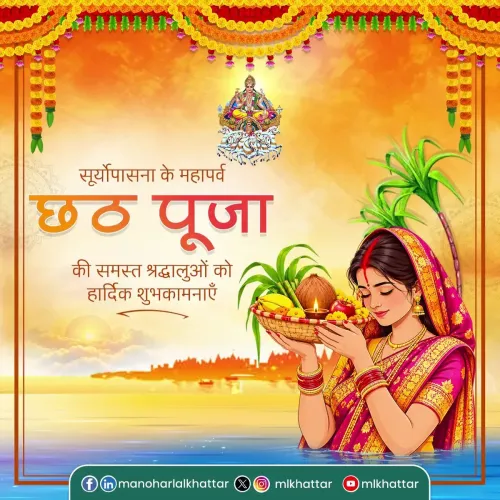
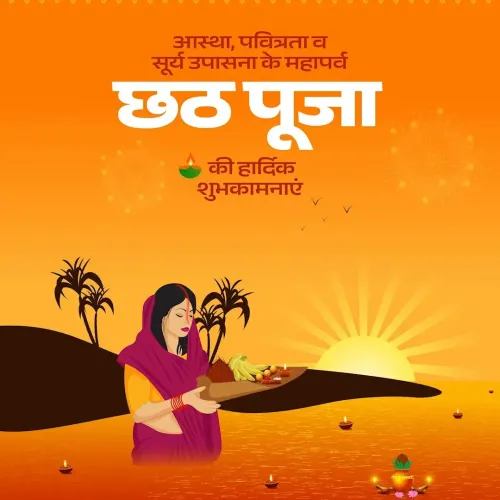
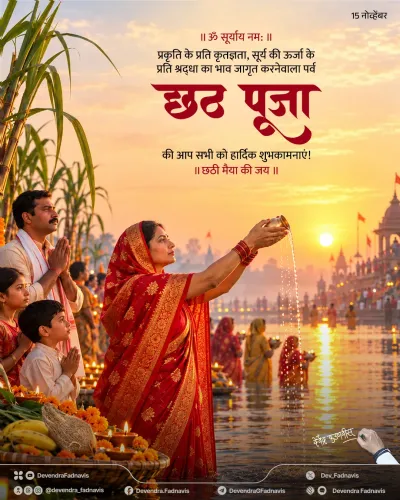
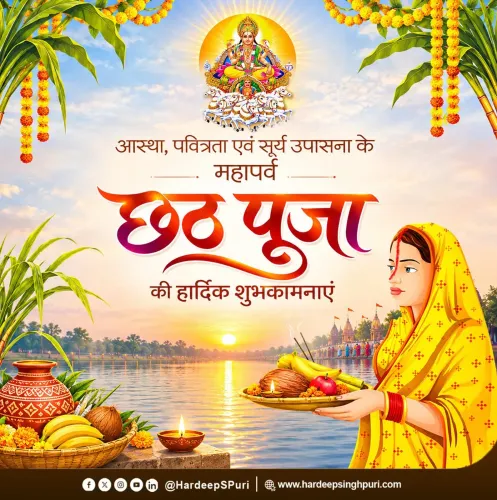
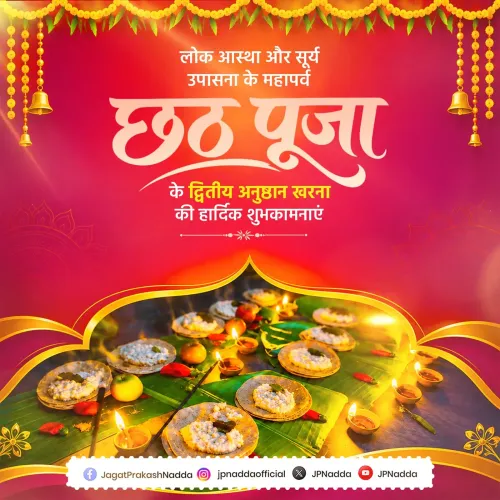
Nadda extends Chhath Puja greetings, hails festival of faith
Synopsis
Union Health Minister and BJP president J. P. Nadda greeted the nation on the conclusion of Chhath Puja, calling it a symbol of social harmony, folk faith, and gratitude to nature, as devotees offered arghya to the rising sun on Monday morning.
Key Takeaways
Nadda , Union Health Minister and BJP national president, posted Chhath Puja greetings on X on Monday, 16 November 2026 .
The message marked the conclusion of the four-day Chhath Puja festival with the sunrise arghya offering.
Nadda described the festival as a symbol of 'social harmony, folk faith, and gratitude to nature.' He prayed for the fulfilment of vratis' wishes and happiness in every household.
Chhath Puja is rooted in Bihar, eastern Uttar Pradesh, and Jharkhand and has grown into a pan-India and diaspora observance.
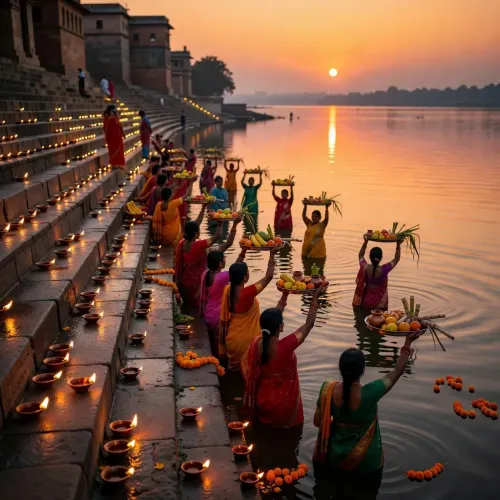
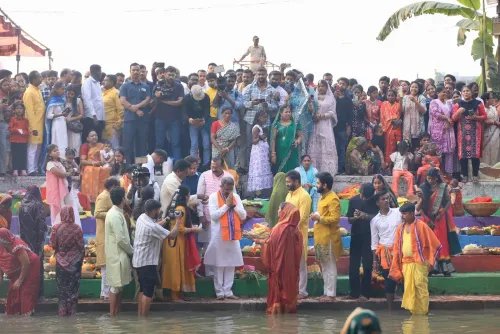
As devotees across Bihar, eastern Uttar Pradesh, and Jharkhand offered the final arghya (ritual water offering) to the rising sun on Monday morning, Union Health Minister J. P. Nadda marked the conclusion of the four-day Chhath Puja festival with warm wishes to the nation.
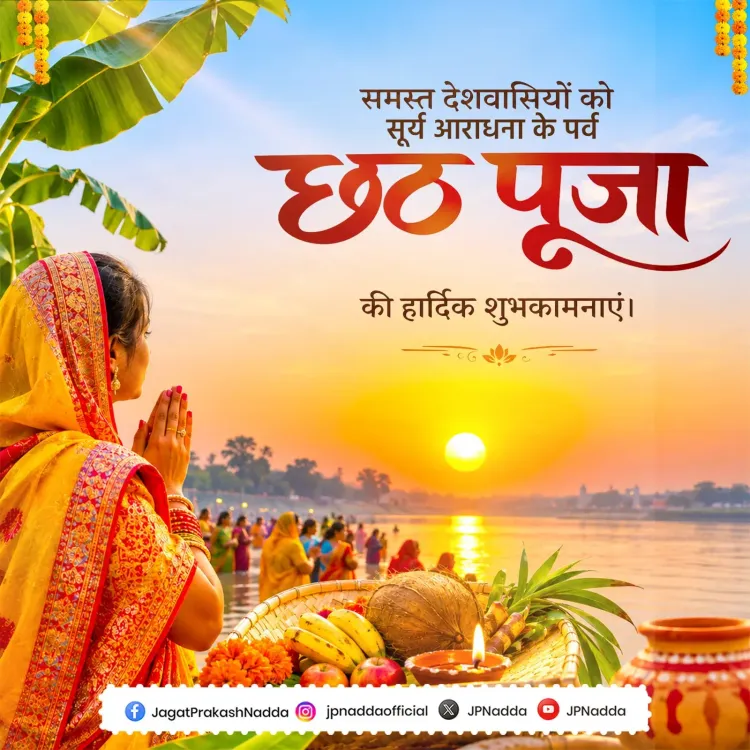
Posting on X in Hindi, Nadda wrote: 'Heartfelt greetings to all fellow citizens on the occasion of Chhath Puja, the great festival of sun worship. With the offering of arghya to the rising Sun God, the four-day sacred observance of Chhath — the great festival of folk faith — has been completed today with devotion and reverence.' He prayed that the festival 'spread happiness, peace, and prosperity in everyone's life' and that Lord Surya Dev and Chhathi Maiya fulfil the wishes of all vratis (fasting devotees).
Chhath: a four-day vigil from riverbank to sunrise
Chhath Puja is one of the most demanding folk observances in the Hindu calendar — a continuous four-day ritual of fasting, standing in water, and offering prayers to the sun at both sunset and sunrise. Rooted primarily in Bihar, eastern Uttar Pradesh, and Jharkhand, the festival has grown well beyond its regional origins, with large celebrations now held wherever diaspora communities from these states have settled, including Delhi, Mumbai, and cities across the world.
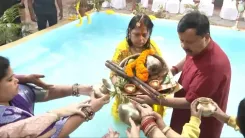
The final morning — when fasting devotees wade into rivers, ponds, and makeshift water bodies before dawn to offer arghya to the rising sun — is the festival's most visually striking moment. It is also its emotional climax: the break of a multi-day fast and the fulfilment of vows made to Chhathi Maiya.
Why national leaders mark Chhath every year
For senior political figures, acknowledging Chhath Puja publicly carries significant electoral and cultural weight. The festival draws its core following from Bihar and the broader eastern Gangetic belt — regions that together send a large contingent to both the Lok Sabha and state assemblies. Nadda's message, framed around social harmony, folk faith, and gratitude to nature, reflects the standard register Indian leaders adopt for major cultural observances.
As BJP national president and a Union Cabinet minister, Nadda's greetings carry a dual institutional voice — party and government — reinforcing the ruling formation's consistent effort to publicly honour regional folk traditions alongside mainstream religious festivals.
Point of View
Greeting Chhath publicly is both a cultural gesture and a signal of continued attention to Bihar and eastern UP. The framing around 'social harmony' and 'gratitude to nature' is deliberate, positioning the festival — and by extension the party — as inclusive and ecologically conscious. Expect similar messaging from virtually every major political formation, underlining how thoroughly Chhath has moved from regional observance to national political calendar.
NationPress
16 Nov 2026
Frequently Asked Questions
What is Chhath Puja and when is it celebrated?
Chhath Puja is a four-day Hindu festival dedicated to Surya Dev (the Sun God) and Chhathi Maiya, observed primarily in Bihar, eastern Uttar Pradesh, and Jharkhand. It falls in the month of Kartik and culminates with devotees offering arghya to the rising sun on the final morning.
What did J. P. Nadda say about Chhath Puja?
Nadda extended greetings to all citizens, described Chhath as a symbol of social harmony, folk faith, and gratitude to nature, and prayed that Lord Surya Dev and Chhathi Maiya fulfil the wishes of all fasting devotees.
Why do Indian politicians issue Chhath Puja greetings?
Chhath Puja is deeply significant to voters in Bihar, eastern UP, and Jharkhand — a large and electorally important bloc. Senior leaders across parties publicly acknowledge the festival to connect with these communities and honour a major folk tradition.
What is arghya in Chhath Puja?
Arghya is the ritual offering of water — often mixed with fruits, flowers, and other offerings — made by fasting devotees while standing in a river or water body. It is offered to the setting sun on the third day and to the rising sun on the final day of Chhath Puja.