Assam CM Office: 4 Dhemaji villages build 1,044-bigha deer reserve
Synopsis
Four villages in Assam's Dhemaji district have jointly developed a 1,044-bigha community forest reserve sheltering 150 deer, a grassroots conservation model highlighted by the Chief Minister's Office on 16 November 2026.
Key Takeaways
Four villages in Dhemaji district , upper Assam, have pooled resources to develop a community-managed forest reserve.
The reserve spans 1,044 bighas (approximately 346 acres ), making it a substantial habitat zone.
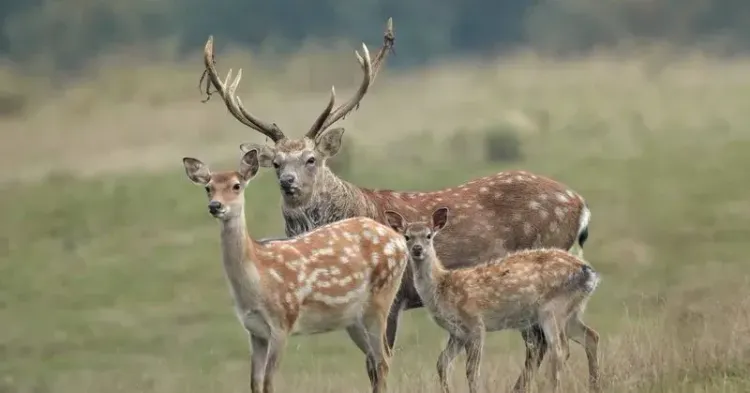
The reserve currently shelters a population of 150 deer .
The initiative fits a broader Assam pattern of village-level conservation along flood-fringe forest edges.
Formal Community Reserve designation under India's Wildlife Protection Act remains a key open question for the project's long-term viability.
The Chief Minister's Office of Assam highlighted the initiative on 16 November 2026 .
In a quiet corner of upper Assam, four villages in Dhemaji district have done what policy alone rarely achieves — they have collectively pooled land, labour, and local will to carve out a 1,044-bigha forest reserve sheltering 150 deer. The Chief Minister's Office of Assam shared the development on Monday, 16 November 2026, spotlighting the initiative as a model of grassroots conservation.
A community-drawn boundary in Dhemaji's flood-fringe forests
Dhemaji, a district in upper Assam perennially shaped by the Brahmaputra's annual floods, sits at a fragile ecological edge where cultivated land, human settlements, and forest fragments bleed into each other. It is precisely this pressure that makes the four-village pact remarkable — rather than fragmenting the remaining green cover through competing land claims, the communities chose to consolidate it. The 1,044-bigha reserve now functions as a contiguous habitat corridor managed not by the state but by the people who live alongside it.
Assam has seen scattered village-level efforts over the years to protect small forest patches alongside larger state reserves — many of them centred on deer, elephants, and other species under stress from shrinking habitat and seasonal flooding. This Dhemaji initiative fits that broader pattern but stands out in scale: 1,044 bighas (roughly 346 acres) is not a token patch; it is a functioning wildlife zone.
150 deer and the question of formal recognition
The reserve currently supports a population of 150 deer — a figure that speaks to the habitat's carrying capacity and the villagers' restraint in keeping the land undisturbed. The critical next question is whether this community-managed reserve earns formal status. Under India's Wildlife Protection Act, a 'Community Reserve' designation can unlock legal protection, government technical support, and eco-development funds — none of which flows automatically to an informal village compact, however well-intentioned.
Whether the Assam Forest Department steps in with funding or formal classification will largely determine whether this effort scales or quietly fades over the next decade as land-use pressures mount.
Why village conservation models matter in Assam
Assam hosts some of India's most biodiverse landscapes — from Kaziranga National Park to the wetlands of the Brahmaputra valley — but the forest fringe between protected areas and human settlements remains chronically under-protected. Community-managed reserves fill exactly that gap, offering a buffer the state apparatus cannot always staff or fund. When four villages agree on a shared boundary and enforce it themselves, they are, in effect, doing the hard political work of conservation: negotiating competing livelihoods, absorbing short-term sacrifice, and betting on long-term ecological return.
The Dhemaji example, if it receives institutional backing, could become a replicable template for the dozens of similar fringe-forest communities across upper and lower Assam.
Point of View
Amplifying such stories serves a dual purpose: it signals environmental stewardship without committing state resources, while building a political case for community reserve notifications. The real test of institutional sincerity will come when these villages apply for formal legal status or funding — that moment will reveal whether the CM's Office spotlight is policy signal or simply good optics.
NationPress
16 Nov 2026
Frequently Asked Questions
Where is the Dhemaji community forest reserve in Assam?
The reserve is located in Dhemaji district in upper Assam, a flood-prone region along the Brahmaputra valley where human settlements border fragile forest fringe areas.
How large is the 4-village forest reserve in Dhemaji?
The reserve covers 1,044 bighas , equivalent to approximately 346 acres , making it a substantial community-managed wildlife habitat.
How many deer live in the Dhemaji community reserve?
The reserve currently shelters 150 deer , according to information shared by the Chief Minister's Office of Assam.
What is a Community Reserve under Indian wildlife law?
A Community Reserve is a formal conservation category under India's Wildlife Protection Act that recognises and legally protects habitats managed by local communities, potentially unlocking government support and eco-development funds.
Why is village-level forest conservation important in Assam?
Assam's biodiversity hotspots are surrounded by forest-fringe zones that formal protected areas cannot fully cover. Community-managed reserves fill this critical buffer, protecting species like deer from habitat loss and human-wildlife conflict.