CM Dhami launches Badri cow Growth Centers for rural jobs
Synopsis
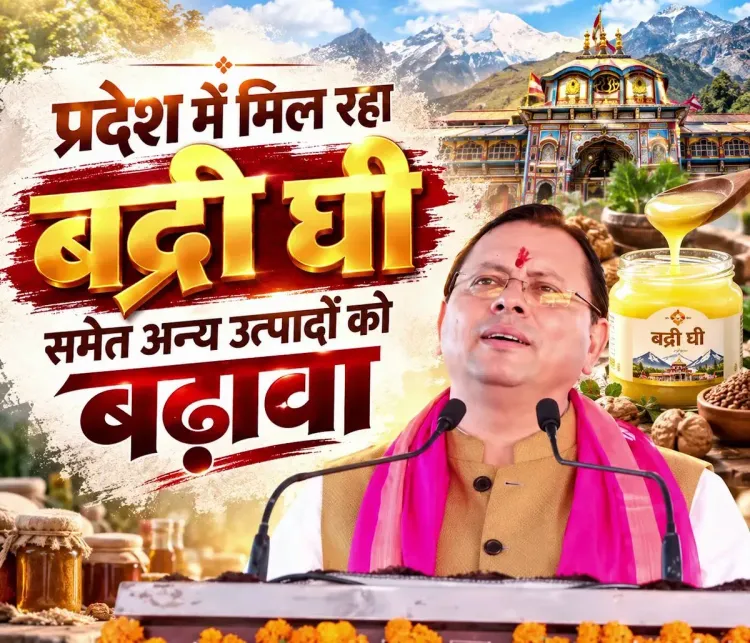
Uttarakhand CM Pushkar Singh Dhami has announced state-developed Growth Centers to conserve the indigenous Badri cow and boost its milk and ghee output, connecting hill communities to self-employment and strengthening the rural economy of Himalayan districts.
Key Takeaways
Growth Centers have been developed by the Uttarakhand government specifically for Badri cow conservation and milk-and-ghee production.
The Badri cow is an indigenous high-altitude breed prized for A2 milk and premium-quality ghee.
Centers are designed to provide self-employment and livelihood opportunities to local hill residents.
The initiative aims to strengthen traditional pahari animal husbandry while giving momentum to the rural economy.
The program addresses chronic out-migration from Uttarakhand's Himalayan districts by making village-based income viable.
Uttarakhand has pursued indigenous livestock promotion since state formation in 2000 , with the Growth Center model representing a value-chain upgrade.
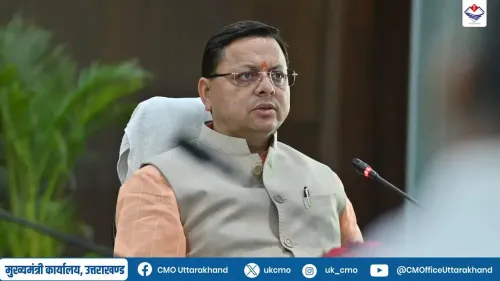
In the high-altitude villages of Uttarakhand, an ancient hill breed is becoming the engine of a modern rural economy. Uttarakhand Chief Minister Pushkar Singh Dhami announced on Thursday, 24 September 2026, that the state has developed dedicated Growth Centers to conserve and promote the indigenous Badri cow — and to turn its milk and ghee into a livelihood ladder for mountain communities.
In his post, CM Dhami stated: 'Growth Centers have been developed in the state for the conservation and promotion of the Badri cow, as well as to boost the production of its milk and ghee. Through these centers, local people are being connected to new self-employment and livelihood opportunities, which is strengthening the traditional animal husbandry system of the hills while also giving momentum to the rural economy.'
What makes the Badri cow worth protecting
The Badri cow is no ordinary cattle breed. Native to the Himalayan ranges of Uttarakhand, it is genetically adapted to high altitudes, harsh winters, and sparse grazing — conditions that would exhaust most crossbred animals. The breed is prized for producing A2 milk, a variant increasingly in demand across urban markets for its perceived digestive and nutritional benefits, along with high-quality ghee that commands a premium. That combination of ecological resilience and market value makes the Badri cow a rare asset — one the state had long struggled to leverage at scale.
Uttarakhand has pursued indigenous livestock promotion since its formation as a separate state in 2000, but converting conservation intent into household income has historically been the harder half of the equation. The Growth Center model is the state's answer to that gap: purpose-built facilities that cluster breeding support, processing capacity, and market linkages under one roof.
Self-employment in the hills — and the out-migration problem it targets
The stakes behind this initiative run deeper than dairy economics. Uttarakhand's Himalayan districts have faced persistent out-migration for decades, as younger residents leave for plains cities in search of stable income. Traditional pahari — or hill — animal husbandry has gradually weakened as a result, eroding both a cultural practice and a food-production system. By anchoring self-employment opportunities directly to a breed and a product with genuine market demand, the Growth Centers are designed to make staying in the village a financially viable choice.
The broader pattern is deliberate: connect a high-altitude genetic resource to a value chain, let local households capture more of that value, and the economic logic of migration starts to shift. Rural women, who have historically been the primary caregivers of hill cattle, stand to be among the direct beneficiaries of formalised income through these centers.
What to watch as the program scales
The immediate questions are operational: how many Growth Centers are now functional, how many additional ones are planned, and whether the program is generating measurable changes in milk output or household incomes. Those numbers are expected to surface in upcoming state animal husbandry department reports and the next budget cycle. The Badri cow's story — from endangered hill breed to rural employment anchor — is only at its first chapter.
Point of View
It serves a dual political purpose: it can be framed as both a cultural revival of pahari identity and a concrete answer to the out-migration crisis that haunts Himalayan constituencies. The A2 milk and premium ghee market adds a commercially credible backbone that earlier conservation schemes lacked. Whether the model translates into measurable income gains at the household level — rather than remaining a well-intentioned infrastructure story — will determine how significant a template this becomes for other hill states.
NationPress
24 Sept 2026
Frequently Asked Questions
What is the Badri cow and why is it important for Uttarakhand?
The Badri cow is an indigenous cattle breed native to the Himalayan hills of Uttarakhand, adapted to high altitudes and valued for A2 milk and high-quality ghee. It is ecologically resilient and holds cultural significance for hill farming communities.
What are the Growth Centers announced by CM Dhami?
Growth Centers are state-developed facilities in Uttarakhand designed to support Badri cow conservation, boost milk and ghee production, and connect local residents to self-employment and livelihood opportunities.
How do the Badri cow Growth Centers help reduce out-migration from Uttarakhand hills?
By creating locally-rooted self-employment anchored to a high-value product — A2 milk and ghee from the Badri cow — the Growth Centers aim to make staying in hill villages a financially viable choice, addressing one of the root causes of out-migration.
What is A2 milk and why does it matter for the Badri cow scheme?
A2 milk is a variant of cow's milk produced by breeds with a specific beta-casein protein type. It is in growing demand in urban markets for perceived health benefits, giving Badri cow milk and ghee a premium market positioning that strengthens the economic case for the scheme.
When did Uttarakhand start promoting indigenous livestock breeds?
Uttarakhand has pursued indigenous livestock promotion since the state's formation in 2000, with the Growth Center model representing a more structured, value-chain-linked evolution of those earlier efforts.