Puri Highlights Modi's Global Sikh Heritage Outreach
Synopsis
Union Petroleum Minister Hardeep Singh Puri has catalogued PM Modi's decade-long engagement with global Sikh heritage — spanning gurdwara visits across seven countries, commemorative anniversaries, and the high-stakes evacuation of Afghan Sikhs and sacred scriptures between 2021 and 2022.
Key Takeaways
Seven countries, one pattern: PM Modi has incorporated Sikh heritage engagements — gurdwara visits, community meetings, commemorative releases — into bilateral visits across Canada, Iran, Thailand, Afghanistan, Italy, the USA, and New Zealand.
Vancouver, 2015: Modi visited Gurdwara Khalsa Diwan and the Komagata Maru Museum alongside Canadian PM Stephen Harper .
Tehran, 2016: Modi opened his Iran visit at a gurdwara and announced global celebrations of Guru Gobind Singh Ji's 350th birth anniversary .
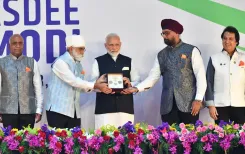
Bangkok, 2019: Released commemorative coins marking Guru Nanak Dev Ji's 550th birth anniversary ; same year held a dedicated Sikh community interaction in Houston .
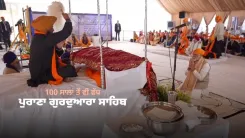
Afghanistan, 2021–22: India facilitated the evacuation of Afghan Sikhs and sacred Saroops of Sri Guru Granth Sahib Ji with due reverence amid the Taliban takeover.
Petroleum Minister Hardeep Singh Puri framed the cumulative record as bringing 'Sikh heritage, sacrifice and Seva into the global spotlight.'
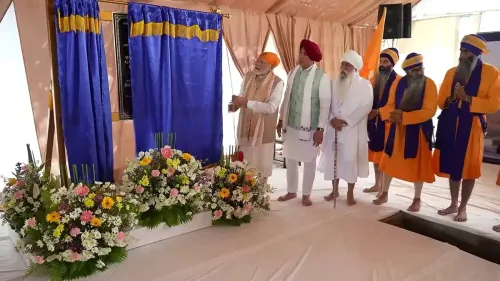
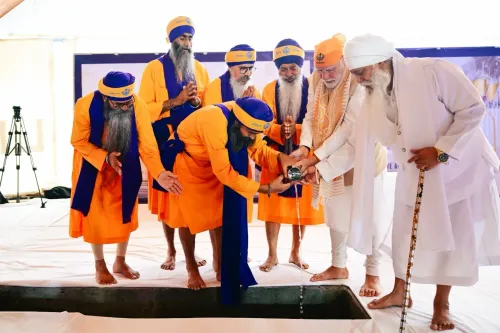
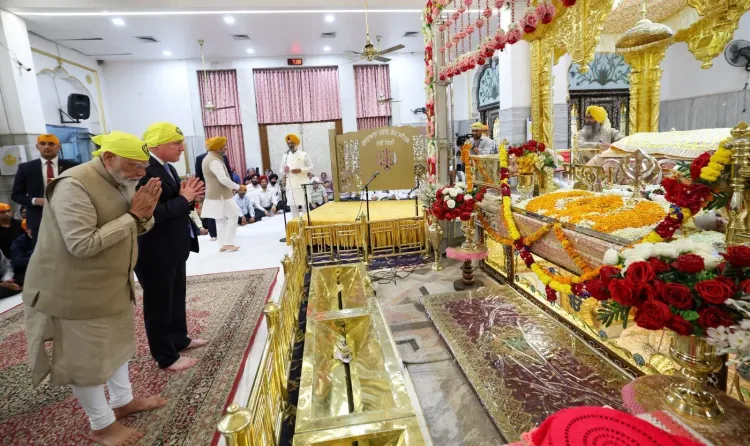
From a Vancouver gurdwara visited alongside a Canadian prime minister to the emergency evacuation of sacred scriptures from Taliban-ruled Afghanistan, Union Petroleum Minister Hardeep Singh Puri has catalogued what he describes as Prime Minister Narendra Modi's sustained, globe-spanning engagement with Sikh heritage — a record stretching more than a decade of foreign visits.
A Decade of Gurdwara Diplomacy, Country by Country
Puri's post, published on Tuesday, November 17, 2026, lists seven distinct engagements across as many countries. The earliest on record: a 2015 visit to Gurdwara Khalsa Diwan and the Komagata Maru Museum in Canada, with then-Prime Minister Stephen Harper in tow — a moment that fused religious symbolism with a pointed acknowledgement of a painful chapter in South Asian immigration history.
The following year, Modi opened his 2016 state visit to Tehran not at a presidential palace but at a local gurdwara, before formally announcing joint celebrations of Guru Gobind Singh Ji's 350th birth anniversary in India and abroad — a signal, delivered from Iranian soil, that the observance would carry international weight.
Commemorative Coins, Houston Gatherings, and a War Memorial in Italy
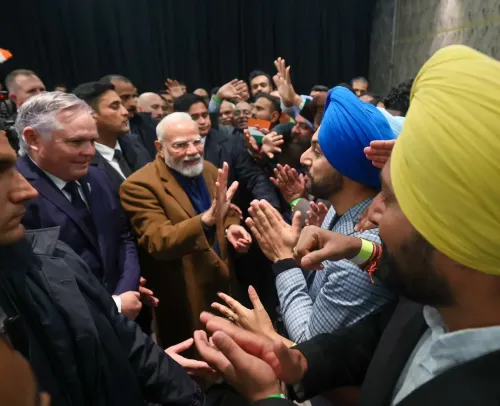
In Bangkok in 2019, Modi released commemorative coins marking Guru Nanak Dev Ji's 550th birth anniversary, tying a bilateral visit to a milestone the Government of India was marking with a year-long national and international programme. That same year, in Houston, he held a dedicated interaction with the American Sikh community — one of several diaspora touchpoints embedded in an otherwise high-profile US trip.
In Italy in 2021, Modi met Sikh representatives and organisations preserving the memory of Indian soldiers — many of them Sikh — who fought in the World Wars, connecting present-day diplomacy to a century-old story of sacrifice on European soil.
Afghanistan: When Heritage Became a Rescue Mission
The most consequential entry on Puri's list is also the starkest departure from ceremonial diplomacy. Between 2021 and 2022, as Afghanistan fell to the Taliban, India facilitated the evacuation of Afghan Sikhs along with the sacred Saroops of Sri Guru Granth Sahib Ji — the physical copies of the scripture — handled, Puri notes, 'with due reverence.' The operation blended humanitarian urgency with the kind of religious sensitivity that would have been impossible to improvise without prior diplomatic groundwork.
Puri also references a 2025 engagement in which New Zealand Prime Minister Christopher Luxon was accompanied to Gurdwara Rakab Ganj Sahib in Delhi, turning a bilateral visit into a moment of Sikh heritage outreach on home soil. (Note: the research background flags the 2025 New Zealand visit as unverified from prior training data.)
Cultural Diplomacy as a Long-Game Strategy
Successive Indian governments have used diaspora outreach and religious-site visits as instruments of soft power — but Puri's catalogue argues that Modi has systematised the practice, making gurdwara visits a near-standard feature of bilateral programmes rather than an occasional gesture. The pattern spans crisis response (Afghanistan), anniversary diplomacy (Guru Nanak's 550th), war memory (Italy), and community engagement (Houston) — a breadth that is harder to dismiss as coincidental.
For the global Sikh diaspora — estimated at several million, with large concentrations in Canada, the United Kingdom, and the United States — these touchpoints carry weight well beyond their ceremonial surface. Each one is a signal that India's foreign policy apparatus sees their history, their sacrifices, and their faith as assets worth projecting, not footnotes to bilateral agendas.
Eleven years of gurdwara visits catalogued in a single post — the question now is which bilateral stop writes the next chapter.
Point of View
Not a spontaneous tribute — its country-by-country structure is designed to rebut any narrative that the BJP government treats Sikh identity as a domestic electoral tool rather than a foreign-policy asset. The timing, nearly twelve years into Modi's tenure, suggests an intent to anchor a legacy claim on Sikh heritage in the public record. The Afghanistan evacuation entry is particularly significant: it elevates the catalogue from soft-power symbolism to tangible crisis response, a category that is far harder to dismiss. Taken together, the pattern signals that gurdwara diplomacy has been institutionalised within India's bilateral programming — with real implications for how New Delhi manages its relationship with diaspora communities in strategically important countries like Canada, the UK, and the USA.
NationPress
17 Nov 2026
Frequently Asked Questions
Which countries has PM Modi visited gurdwaras in during official foreign trips?
According to Union Petroleum Minister Hardeep Singh Puri's post, PM Modi has visited or engaged with gurdwaras and Sikh heritage sites in Canada (2015), Iran (2016), Thailand (2019), Italy (2021), the USA (2019), and hosted New Zealand PM Christopher Luxon at Gurdwara Rakab Ganj Sahib in Delhi (2025).
What happened to Afghan Sikhs when the Taliban took over Afghanistan?
Between 2021 and 2022, India facilitated the evacuation of Afghan Sikhs along with the sacred Saroops of Sri Guru Granth Sahib Ji from Afghanistan after the Taliban takeover, an operation Puri describes as handled 'with due reverence.'
What commemorative coins did PM Modi release for Guru Nanak's anniversary?
During his 2019 visit to Bangkok, Thailand, PM Modi released commemorative coins marking Guru Nanak Dev Ji's 550th birth anniversary, as part of a year-long national and international celebration programme launched by the Government of India.
What did PM Modi announce during his 2016 visit to Iran regarding Sikh heritage?
PM Modi began his 2016 Tehran visit by offering prayers at a local gurdwara and announced joint celebrations of Guru Gobind Singh Ji's 350th birth anniversary, to be held in India and abroad.
Why is Hardeep Singh Puri posting about PM Modi and the Sikh community?
Hardeep Singh Puri, Union Petroleum Minister and a senior BJP leader, shared a detailed account of PM Modi's global Sikh heritage engagements, apparently to highlight the government's sustained outreach to the Sikh diaspora and to document the Prime Minister's record on Sikh cultural diplomacy.