Puri hails Modi's 12 years as India's longest-serving elected PM
Synopsis
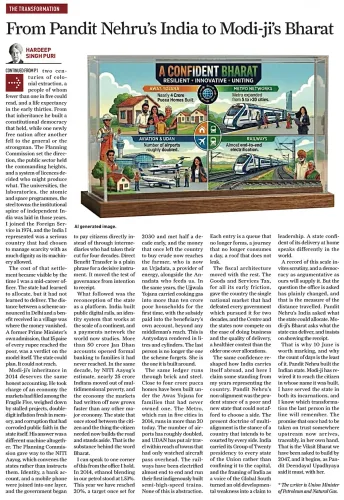
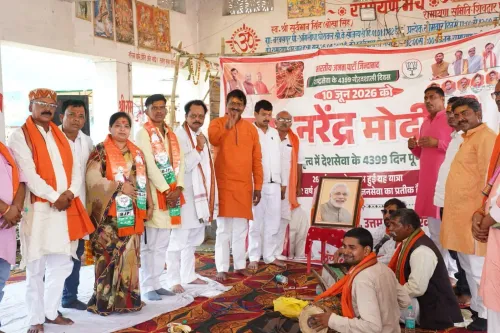
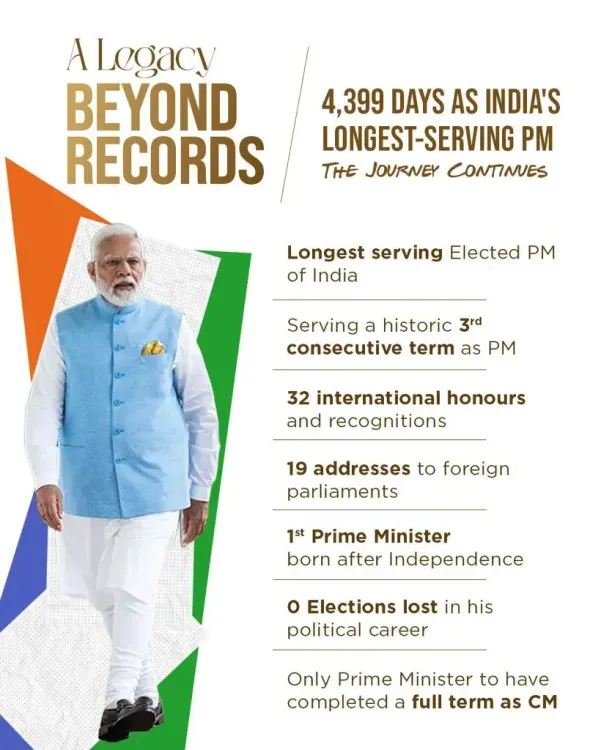
Union Petroleum Minister Hardeep Singh Puri on 10 June 2026 celebrated PM Narendra Modi's 4,399 days in office, hailing him as India's longest-serving elected PM and crediting his leadership for transformative schemes spanning sanitation, air connectivity, urban transport and LPG access for over 10 crore households.
Key Takeaways
PM Narendra Modi has completed 4,399 days as Prime Minister as of 10 June 2026 , making him India's longest-serving elected PM according to Minister Puri's post.
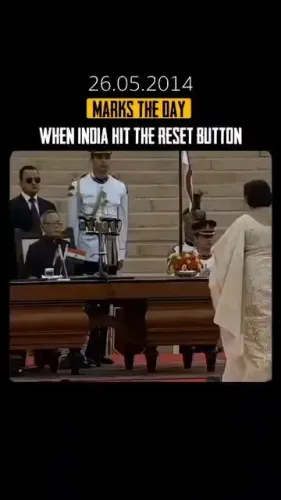
Modi first took office on 26 May 2014 with a full single-party majority — the first in three decades — and has since won two further general elections in 2019 and 2024 .
The Pradhan Mantri Ujjwala Yojana , launched in 2016 , now provides subsidised LPG connections to more than 10 crore beneficiaries, as cited by Puri.
Puri referenced his own roles across three ministries — MoHUA , MoCA and Petroleum — linking schemes such as Swachh Bharat Mission , Smart Cities Mission , UDAN and RRTS to the same development vision.
The post frames the Viksit Bharat @2047 goal as not merely an economic target but an era of 'dignity, opportunity and hope' for citizens on the margins.
India's energy policy is described through the lens of the 'trilemma' of availability, affordability and sustainability , signalling continued emphasis on green transition alongside welfare delivery.
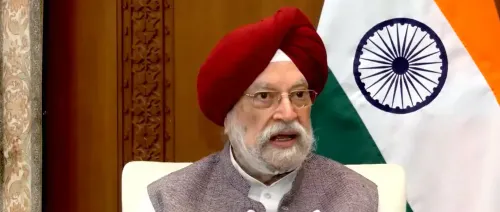
Union Petroleum Minister Hardeep Singh Puri on Wednesday, 10 June 2026 took to X to mark what he described as a historic milestone: Prime Minister Narendra Modi completing 4,399 days in office, making him India's longest-serving elected Prime Minister. Puri called the occasion a moment to reflect on 'service, development and national progress' and expressed pride in being part of Modi's cabinet across three ministries.
Context
Narendra Modi was first sworn in as Prime Minister on 26 May 2014, after the BJP-led National Democratic Alliance secured a full majority in the general election — the first single-party majority in three decades. He was re-elected in 2019 and again in 2024, now serving his third consecutive term. Puri's post frames the 4,399-day count as a landmark that places Modi ahead of all other elected prime ministers in the country's post-independence history.
Puri invoked the government's signature slogan 'Sabka Saath, Sabka Vikas, Sabka Vishwas' (Together with all, development for all, trust of all) to characterise the governing philosophy across these years, describing the period as one of 'transformation across sectors.'
Policy Backdrop
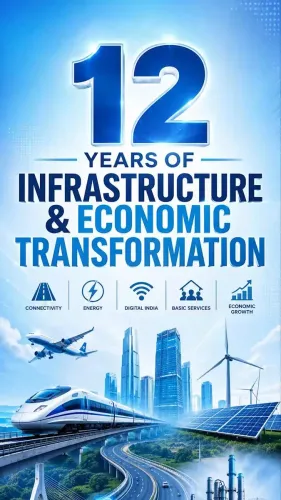
In his post, Puri catalogued several flagship programmes he has been associated with during stints at the Ministry of Housing and Urban Affairs (MoHUA), the Ministry of Civil Aviation (MoCA), and the current Ministry of Petroleum and Natural Gas. These include the Swachh Bharat Mission, launched in 2014 as a national sanitation drive; the Smart Cities Mission; the PMSVANidhi Scheme for street vendors; and the UDAN Scheme, launched in 2017 to make air travel affordable for smaller cities.
Puri gave particular prominence to the Pradhan Mantri Ujjwala Yojana, the LPG connection scheme first launched on 1 May 2016 for below-poverty-line households. He stated the scheme now covers 'more than 10 crore beneficiaries,' offering subsidised connections and cylinders. He also cited India's ongoing push toward green energy and what he called navigating 'the trilemma of energy availability, affordability and sustainability.'
Stakeholders and Impact
The schemes Puri referenced span a wide cross-section of Indian society. Ujjwala Yojana beneficiaries — primarily women from low-income rural and semi-urban households — number over 10 crore by the minister's account, representing one of the largest cooking-fuel welfare programmes globally. Urban commuters across dozens of cities have been touched by metro network expansion and the Rapid Rail Transit System (RRTS), while regional air connectivity under UDAN has brought scheduled flights to previously unserved towns.
Puri framed the broader impact in terms of dignity and inclusion, writing that the Viksit Bharat @2047 vision — the government's goal of attaining developed-nation status by the centenary of independence — 'has made every citizen, particularly those on the margins, an equal stakeholder in India's journey of unprecedented development.'
What's Next
The milestone post arrives as the government continues to pursue the next phase of several programmes Puri mentioned. Expanded targets under Ujjwala 2.0, green-hydrogen mission timelines, and fresh rounds of metro and urban transport funding are among the near-term policy benchmarks that will test the continuity of the development agenda Puri praised. Parliamentary scrutiny of energy transition commitments and urban infrastructure allocations is expected to intensify in the coming sessions.
As India moves closer to the 2047 centenary target, the political and administrative challenge will be translating the momentum of flagship schemes into measurable, last-mile outcomes — particularly for citizens at the economic margins whom Puri identified as the intended primary beneficiaries of this era of governance.
Point of View
Tying his own three-ministry career arc directly to the Modi government's flagship welfare and infrastructure narrative. By listing schemes across sanitation, urban mobility, aviation and energy in a single tribute, he reinforces the BJP's message of integrated, citizen-centric governance ahead of what is likely to be an intensifying political calendar. The invocation of the 'energy trilemma' is notable: it signals that the petroleum ministry intends to keep green transition and affordability concerns simultaneously in frame, rather than treating them as competing priorities. The milestone framing — 'longest-serving elected PM' — is also a deliberate contrast with the instability of coalition governments that preceded 2014, a comparison the BJP has consistently deployed to consolidate its electoral identity.
NationPress
25 Oct 2026
Frequently Asked Questions
How many days has PM Modi served as Prime Minister of India?
As of 10 June 2026 , PM Narendra Modi has served 4,399 days as Prime Minister, according to the figure cited by Union Minister Hardeep Singh Puri in his post marking the milestone.
Is Narendra Modi India's longest-serving Prime Minister?
Hardeep Singh Puri's post describes Modi as India's 'longest-serving, hugely popular and globally admired elected PM.' Modi first took office on 26 May 2014 and is currently in his third consecutive term following victories in 2014, 2019 and 2024.
How many beneficiaries does the Ujjwala Yojana have?
According to Minister Puri's post, the Pradhan Mantri Ujjwala Yojana — which provides subsidised LPG connections to low-income households — has reached more than 10 crore beneficiaries . The scheme was originally launched on 1 May 2016 .
What is the Viksit Bharat 2047 vision?
Viksit Bharat @2047 is the Indian government's official vision to achieve developed-nation status by the centenary of independence in 2047. Puri described it as ushering in 'an era of dignity, opportunity and hope for every ordinary citizen,' beyond purely economic metrics.
What ministries has Hardeep Singh Puri headed under PM Modi?
Hardeep Singh Puri has served as minister in three portfolios under PM Modi: Ministry of Housing and Urban Affairs (MoHUA) , Ministry of Civil Aviation (MoCA) , and currently the Ministry of Petroleum and Natural Gas .