Puri Marks Modi's Record as PM, Cites Energy Gains
Synopsis
Union Petroleum Minister Hardeep Singh Puri, writing as a former IFS officer, marks PM Modi's record tenure with a detailed assessment of governance reforms — from DBT and Jan Dhan to Ujjwala and a landmark 20 per cent ethanol blending achievement — framing 2014 as a structural break in how India delivers welfare.
Key Takeaways
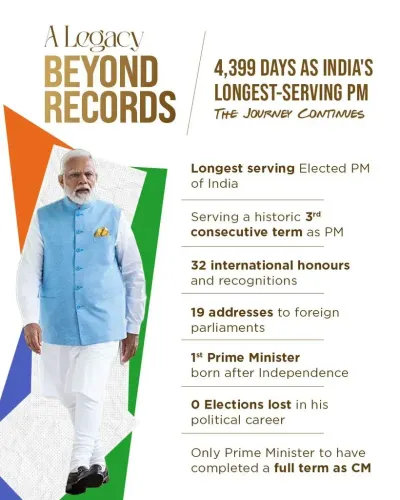
June 10, 2026 marked PM Narendra Modi becoming India's longest-serving elected Prime Minister, the milestone Puri's post anchors on.
Ethanol blending in petrol rose from 1.53 per cent in 2014 to 20 per cent , a target originally set for 2030 under the National Policy on Biofuels 2018 .
Pradhan Mantri Ujjwala Yojana has extended LPG cooking-gas connections to more than 10 crore poor households since its launch in May 2016 .
More than 50 crore Jan Dhan accounts have brought formal banking to previously unbanked families since the scheme launched in August 2014 .
Puri credits the Direct Benefit Transfer system and India's digital public infrastructure — identity and payments rails — as the core delivery mechanism behind welfare outcomes.
Nearly 25 crore Indians are cited as having moved out of multidimensional poverty, a figure subject to ongoing independent verification.
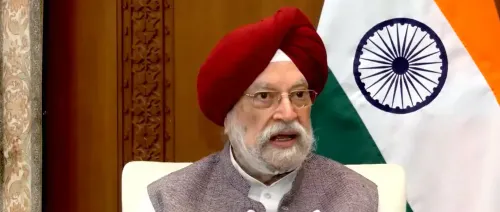
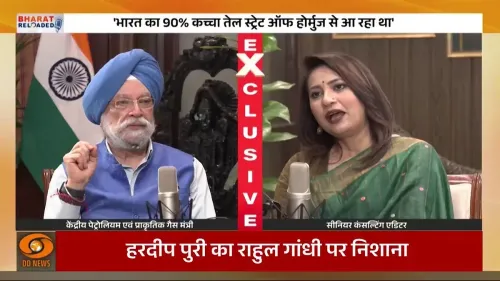
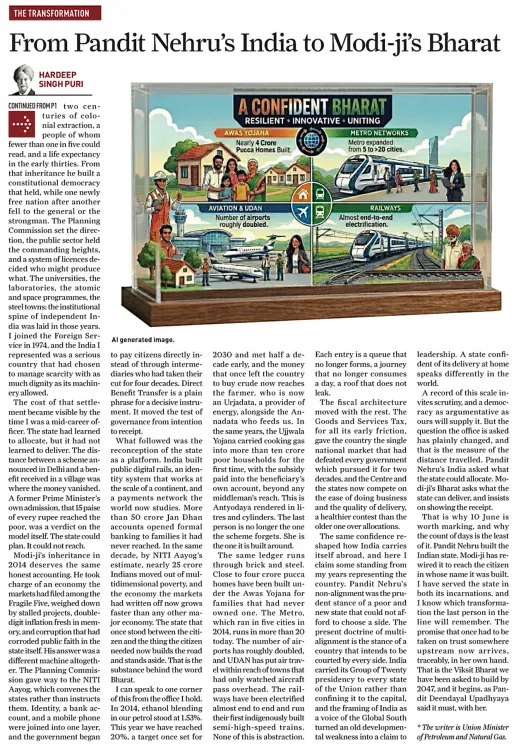
Union Petroleum Minister Hardeep Singh Puri on Sunday, June 14, 2026, published a wide-ranging assessment on X marking June 10, 2026 as the date Prime Minister Narendra Modi became India's longest-serving elected Prime Minister, framing the milestone as a structural turning point in post-Independence governance.
Context
Puri, a former career diplomat who joined the Indian Foreign Service in 1974, drew on personal experience to contrast the India he once represented abroad with the one that exists today. Writing in a reflective, first-person register, he described the pre-2014 state as one that 'had learned to allocate, but had not learned to deliver' — where 'the distance between a scheme announced in Delhi and a benefit received in a village was where the money vanished.'
The minister noted that when Modi assumed office in 2014, the economy was grouped among the so-called Fragile Five — a set of emerging-market economies identified by global investors as vulnerable — burdened by stalled infrastructure projects, residual double-digit inflation, and high-profile corruption cases.
Policy Backdrop
Puri highlighted several structural reforms he attributed to the Modi government. The Planning Commission was dissolved and replaced by NITI Aayog — the National Institution for Transforming India — via a cabinet resolution on 1 January 2015, shifting the federal model from top-down instruction to cooperative coordination with states.
The Direct Benefit Transfer (DBT) system, which routes subsidies directly into Aadhaar-linked bank accounts, was scaled significantly after 2014 to reduce leakage through intermediaries. Puri described DBT as having 'moved the test of governance from intention to receipt.' The Pradhan Mantri Jan Dhan Yojana, launched on 28 August 2014, is credited with opening more than 50 crore bank accounts for previously unbanked households.
On energy, Puri pointed to the Pradhan Mantri Ujjwala Yojana — launched 1 May 2016 — as having extended cooking-gas connections to more than 10 crore poor households, calling it 'Antyodaya rendered in litres and cylinders,' invoking the Gandhian principle of prioritising the last person in the queue.
Ethanol Milestone and Energy Transition
In his capacity as Petroleum Minister, Puri placed special emphasis on the ethanol blending programme. He stated that ethanol blending in petrol stood at 1.53 per cent in 2014 and has now reached 20 per cent — a target the National Policy on Biofuels 2018 had originally set for 2030, and which the government claims to have met roughly half a decade ahead of schedule.
Puri framed the shift in economic terms: foreign exchange that once left India to pay for crude oil imports now flows to domestic farmers supplying ethanol feedstock. He coined the phrase 'Urjadata' — energy provider — to place the farmer alongside the traditional 'Annadata' (food provider), signalling a policy intent to diversify rural income through the energy transition.
Stakeholders and Broader Implications
The beneficiaries Puri identifies span multiple segments: rural households that gained formal banking access through Jan Dhan, below-poverty-line families that received LPG connections under Ujjwala, and farmers who now earn from ethanol supply chains. He also cited a figure of nearly 25 crore Indians having moved out of multidimensional poverty, though independent verification of that precise number remains ongoing.
Puri's framing — 'the state that once stood between the citizen and the thing the citizen needed now builds the road and stands aside' — positions India's digital public infrastructure, including its identity and payments layers, as the architectural shift underlying these outcomes. He noted that India's payment and identity systems are now studied internationally.
The post was published alongside a longer piece in a Sunday newspaper supplement, suggesting the remarks are part of a coordinated political communication effort around the governance anniversary. With NITI Aayog expected to release updated multidimensional poverty data and parliamentary debates on energy-transition budgets continuing, the metrics Puri has cited are likely to remain central to the ruling party's policy narrative in the months ahead.
Point of View
A rhetorical device that moves the argument beyond partisan assertion. The ethanol blending figure is the sharpest policy claim, as it directly ties his own ministerial portfolio to the broader governance narrative, making the piece simultaneously a tribute and a sectoral progress report. The 'Urjadata' coinage signals an attempt to embed the energy transition within the ruling party's agrarian welfare lexicon, potentially previewing campaign messaging ahead of state elections. The explicit contrast with the Nehru era, while historically framed, positions the post within a long-running BJP effort to benchmark its governance record against the Congress-era developmental state.
NationPress
14 Sept 2026
Frequently Asked Questions
When did PM Modi become India's longest-serving elected Prime Minister?
June 10, 2026 is the date cited by Union Petroleum Minister Hardeep Singh Puri on which PM Narendra Modi became India's longest-serving elected Prime Minister.
What is India's current ethanol blending percentage in petrol?
According to Puri's post, India has reached 20 per cent ethanol blending in petrol as of 2026 — a target originally set for 2030 under the National Policy on Biofuels 2018 , achieved roughly half a decade early.
How many households has Pradhan Mantri Ujjwala Yojana reached?
Pradhan Mantri Ujjwala Yojana , launched on 1 May 2016 , has provided LPG cooking-gas connections to more than 10 crore poor households, according to Puri's statement.
What is the Fragile Five and was India part of it?
The 'Fragile Five' was a term used by global investors to identify emerging-market economies seen as vulnerable. Puri states that India was grouped among these economies when PM Modi took office in 2014 , citing stalled projects, high inflation, and corruption as contributing factors.
What does 'Urjadata' mean and why did Puri use it?
'Urjadata' means 'energy provider' in Hindi. Petroleum Minister Hardeep Singh Puri used the term to describe farmers who supply ethanol feedstock, placing them alongside the traditional 'Annadata' (food provider) to highlight how the ethanol blending programme has created a new income stream for the agricultural sector.