CM Shivakumar orders instant bus link for Karnataka's Ambale village
Synopsis
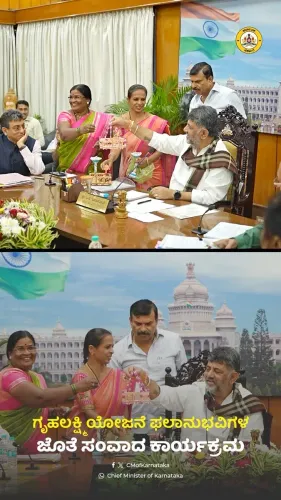
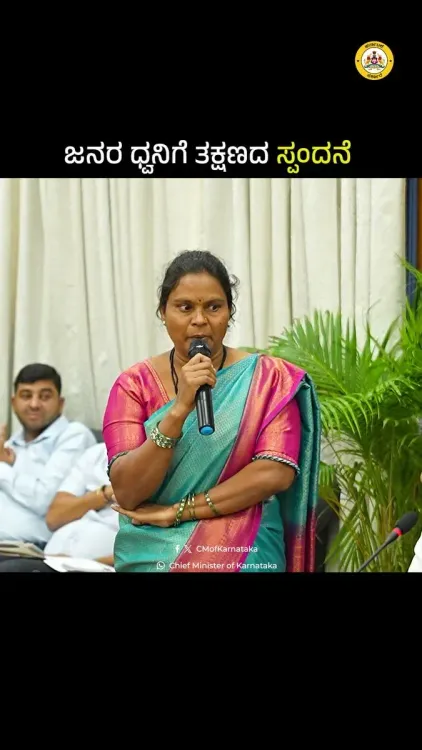
Karnataka CM DK Shivakumar, during a Gruha Lakshmi beneficiary dialogue at his Bengaluru residence, ordered an immediate bus service to Ambale village in Chamarajanagar after a woman beneficiary highlighted the connectivity hardship faced by villagers and students.
Key Takeaways
Karnataka CM DK Shivakumar directed officials to launch a bus service to Ambale village, Yelandur taluk, Chamarajanagar immediately.
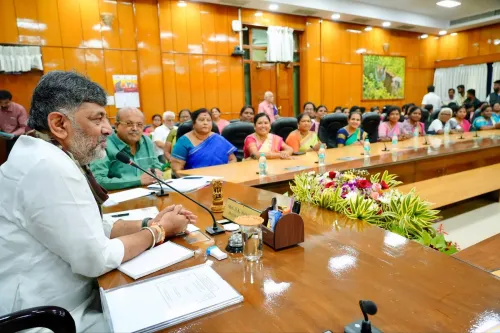
The directive followed a live grievance raised by a Gruha Lakshmi scheme beneficiary at a beneficiary interaction held at his official residence Krishna on 6 November 2026 .
The Gruha Lakshmi Yojane , launched in 2023 , provides Rs 2,000 per month to women heads of households and includes periodic beneficiary dialogue forums.
Chamarajanagar is Karnataka's southernmost district with significant rural and tribal populations, where public transport gaps affect access to education and healthcare.
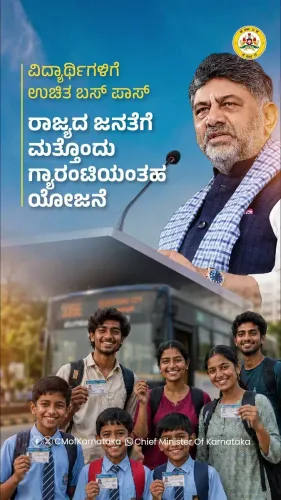
The new bus route will connect Chamarajanagar town directly to Ambale village , benefiting local residents and school students.
A single woman's plea at a welfare dialogue cut through bureaucratic timelines in minutes. During a beneficiary interaction at his official residence Krishna in Bengaluru on Friday, 6 November 2026, Karnataka Chief Minister DK Shivakumar heard a Gruha Lakshmi scheme beneficiary from Ambale village in Yelandur taluk, Chamarajanagar district, describe how the absence of any bus service was stranding villagers and schoolchildren daily — and ordered a fix on the spot.
The Chief Minister's Office confirmed that CM Shivakumar instructed officials immediately to launch a bus service connecting Chamarajanagar town directly to Ambale village. The post, shared in Kannada, quoted him directly: 'Pratiyo bbara novige spondisi, janara badukinalii sakaraatmaka badalaavane taruvadue naamma sarkaarada aashaya' — 'Responding to everyone's pain and bringing positive change to people's lives is the aspiration of our government.'
What the Gruha Lakshmi dialogue revealed about Ambale
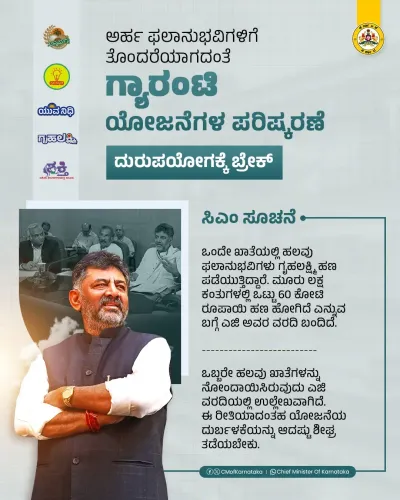
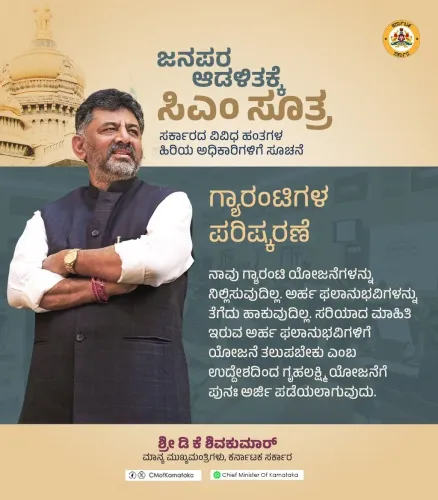
The forum that surfaced this gap was no ordinary public meeting. The Gruha Lakshmi Yojane, launched by the Karnataka government in 2023 as one of its five flagship welfare guarantees, provides a monthly financial transfer of Rs 2,000 to women heads of households across the state. Regular beneficiary interactions are built into the scheme's governance architecture — designed precisely to create a live feedback loop between the government and rural women who are otherwise far from power.
It was inside that loop that the Ambale woman's grievance landed. Ambale sits in Chamarajanagar, Karnataka's southernmost district bordering Tamil Nadu and Kerala — a region with a significant rural and tribal population where public transport gaps have historically limited access to education, healthcare, and markets. The lack of a direct bus meant students travelling to school and residents seeking medical care had to arrange private transport or walk significant distances.
From grievance to gazette: how fast the directive moved
What made the moment notable was the speed. The Chief Minister did not commission a study or refer the matter to a committee — he directed officials to act 'immediately' (kudaale), and the CMO's post confirmed the service would begin 'right away.' That sequence — beneficiary speaks, CM hears, official gets instruction, service launches — is the governance optic the Karnataka Congress administration has worked to project through its direct-dialogue model.
The broader pattern is deliberate. By routing these interactions through welfare scheme beneficiary forums rather than formal petition channels, the administration surfaces hyperlocal infrastructure deficits — a missing bus route, a broken road, an absent streetlight — that rarely reach district-level planning desks. Each directive that emerges becomes its own news cycle, reinforcing the message of a listening government.
For the students of Ambale who board the first bus from Chamarajanagar, the politics will not matter much. The ride will.
Point of View
The administration simultaneously delivers a hyperlocal fix and generates a governance narrative centred on responsiveness. The speed of the directive is as much a political signal as it is an administrative act — in a state where rural connectivity remains a live electoral issue, every 'immediately ordered' bus route reinforces the brand of a government that listens. The model's true test will be whether these spot decisions translate into sustained service or remain one-time gestures that fade before the next election cycle.
NationPress
6 Nov 2026
Frequently Asked Questions
Which village in Chamarajanagar is getting a new bus service?
Ambale village in Yelandur taluk, Chamarajanagar district is receiving a new direct bus service connecting it to Chamarajanagar town, ordered by CM DK Shivakumar on 6 November 2026 .
What is the Gruha Lakshmi yojane and how does it work?
The Gruha Lakshmi Yojane is a Karnataka government scheme launched in 2023 that provides Rs 2,000 per month to women heads of households as direct financial assistance. It is one of the state's five flagship welfare guarantees.
Why did Ambale village have no bus service?
The post does not specify the historical reason. A Gruha Lakshmi beneficiary from the village brought the gap to CM Shivakumar's attention during a beneficiary dialogue, noting that villagers and students were struggling without any bus connectivity.
What did CM DK Shivakumar say about responding to public grievances?
CM Shivakumar stated that 'responding to people's distress and finding solutions to their difficulties is not just the responsibility of governance — it is our duty,' and that bringing positive change to people's lives is the aspiration of his government.
Where was the Gruha Lakshmi beneficiary interaction held?
The interaction was held at CM DK Shivakumar's official residence Krishna in Bengaluru on 6 November 2026 .