CM Shivakumar Meets Kiran Mazumdar-Shaw-Led Panel on Bengaluru's Future
Synopsis
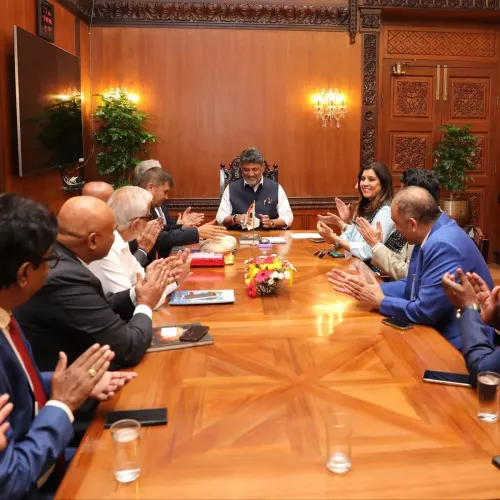
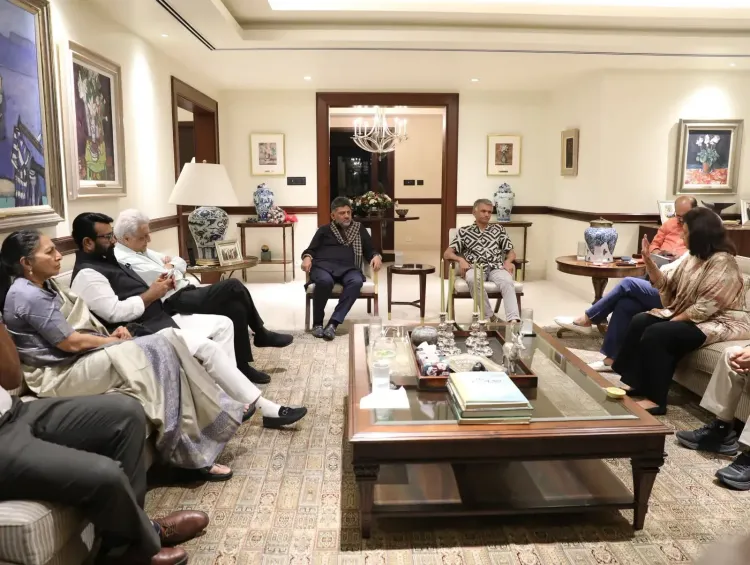
Chief Minister D.K. Shivakumar on 22 June 2026 met a distinguished expert group led by Biocon founder Dr. Kiran Mazumdar-Shaw to gather cross-sector insights on Bengaluru's future. Greater Bengaluru Development Minister Krishna Byre Gowda and BDA Chairman N.A. Haris were also present, signalling a structured push toward stakeholder-driven urban planning.
Key Takeaways
Shivakumar held a structured consultation with multi-sector leaders and experts on 22 June 2026 focused on Bengaluru's development.
Kiran Mazumdar-Shaw , Biocon founder and prominent civic advocate, led the expert group that shared insights and suggestions.
Greater Bengaluru Development Minister Krishna Byre Gowda and BDA Chairman N.A.
Haris were present, linking the meeting to statutory planning bodies.
The Chief Minister reaffirmed the government's commitment to 'working closely with all stakeholders to shape a vibrant and future-ready Bengaluru.' The Bangalore Development Authority , constituted in 1976 , is the statutory body through which outcomes of such consultations are typically operationalised.
Follow-up policy announcements on urban mobility, land use, or coordination mechanisms between BDA and BBMP are being watched.
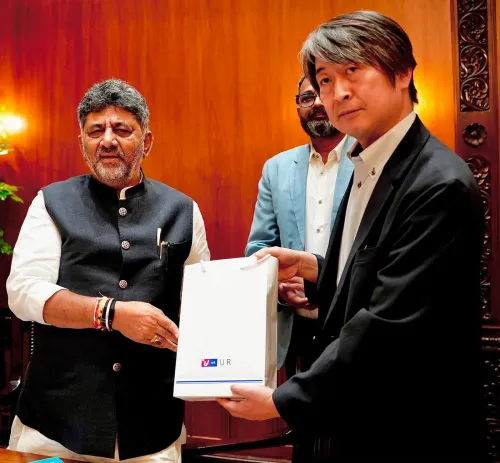
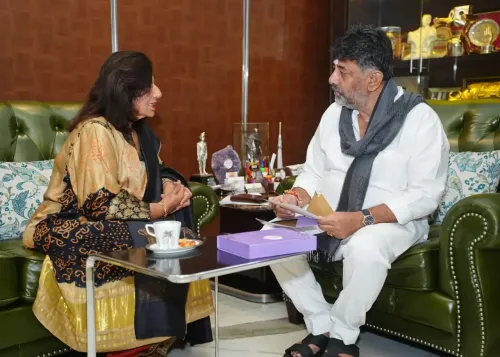
The Chief Minister's Office of Karnataka announced on Monday, 22 June 2026 that Chief Minister Shri D.K. Shivakumar held a structured interaction with a distinguished group of leaders and experts from diverse sectors, convened to share insights and suggestions for Bengaluru's long-term urban development. The session was led by Dr. Kiran Mazumdar-Shaw, founder of Biocon and a prominent civic voice on the city's economic and infrastructure challenges.
Context
The Chief Minister's Office stated that during the interaction, CM Shivakumar 'emphasised the Government's commitment to working closely with all stakeholders to shape a vibrant and future-ready Bengaluru.' Also present were Greater Bengaluru Development Minister Shri Krishna Byre Gowda, BDA Chairman Shri N.A. Haris, and senior government officials. The meeting reflects the Karnataka government's approach of drawing on private-sector and civil-society expertise alongside statutory planning processes.
Dr. Kiran Mazumdar-Shaw has long been a visible advocate for improving Bengaluru's infrastructure, mobility, and governance, frequently engaging with successive state administrations on the city's urban challenges. Her role in leading this expert group signals the meeting's focus on substantive, sector-spanning input rather than ceremonial consultation.
Policy Backdrop
The Bangalore Development Authority (BDA), constituted in 1976, remains the statutory body responsible for land-use planning and infrastructure development across the city. Karnataka governments have periodically convened industry-civic consultations — particularly during revisions of the Bengaluru Master Plan — to align statutory frameworks with ground-level economic realities. The presence of BDA Chairman N.A. Haris at Monday's meeting indicates that the outcomes could feed directly into the authority's planning processes.
Minister Krishna Byre Gowda, heading the Greater Bengaluru Development portfolio, plays a central coordinating role between the state government, the BDA, and the Bruhat Bengaluru Mahanagara Palike (BBMP). His attendance underlines that the consultation is tied to the broader administrative architecture governing the city, not just a standalone advisory exercise.
Stakeholders and Impact
Bengaluru, India's primary information-technology hub, has faced mounting pressures from rapid population growth, traffic congestion, inadequate water supply, and strained civic infrastructure. Residents, the tech industry, real-estate developers, and urban planners all have a direct stake in how the city's development priorities are set. Structured multi-sector consultations of this kind are intended to surface diverse perspectives before policy decisions are finalised.
The Karnataka government's emphasis on stakeholder collaboration aligns with national urban policy frameworks that encourage integrated planning for large metropolitan regions. Similar public-private consultations have been undertaken in other fast-growing Indian state capitals, suggesting a wider shift toward co-designed urban governance models.
What's Next
Observers will watch for follow-up announcements on revised development priorities, new coordination mechanisms between the BDA, state departments, and civic bodies, or updates to the Bengaluru Master Plan. The government has not yet detailed specific proposals emerging from the 22 June interaction. Any concrete policy outputs — whether on mobility, land use, or economic infrastructure — will test whether Monday's consultation translates into actionable urban reform.
Point of View
Particularly ahead of Master Plan revisions or major infrastructure cycles. The choice of Dr. Kiran Mazumdar-Shaw to lead the expert group is politically deliberate — her credibility with the tech industry and her long record of civic advocacy lend the exercise cross-partisan legitimacy. The simultaneous presence of Minister Krishna Byre Gowda and BDA Chairman N.A. Haris suggests the government intends to route any recommendations through existing statutory channels rather than create parallel advisory structures. Whether the interaction produces measurable policy shifts will depend on how quickly the BDA and BBMP translate the inputs into revised plans or coordination frameworks.
NationPress
22 Jun 2026
Frequently Asked Questions
Why did CM Shivakumar meet Kiran Mazumdar-Shaw and other experts?
CM D.K. Shivakumar convened the meeting on 22 June 2026 to receive insights and suggestions from a distinguished multi-sector expert group, led by Dr. Kiran Mazumdar-Shaw, on shaping Bengaluru's long-term urban future.
Who is Dr. Kiran Mazumdar-Shaw and why is she involved in Bengaluru's planning?
Dr. Kiran Mazumdar-Shaw is the founder of Biocon and a prominent civic leader who has long advocated for improvements in Bengaluru's infrastructure, mobility, and governance, making her a frequently consulted voice on the city's development.
What is the BDA and what role does it play in Bengaluru's development?
The Bangalore Development Authority (BDA), established in 1976, is the statutory body responsible for land-use planning and infrastructure development in Bengaluru; its chairman N.A. Haris attended the 22 June meeting.
What is the Greater Bengaluru Development Ministry?
The Greater Bengaluru Development portfolio, held by Minister Krishna Byre Gowda, coordinates urban planning and development across the wider Bengaluru metropolitan region, bridging the state government, BDA, and BBMP.
What decisions or announcements came out of the 22 June 2026 meeting?
The government has not yet detailed specific proposals from the meeting; observers are awaiting follow-up announcements on revised development priorities or new coordination mechanisms between the BDA, state departments, and civic bodies.