CM Siddaramaiah Asks ASHA Workers to End Strike, Promises Cabinet Fix
Synopsis
Karnataka Chief Minister D.K. Shivakumar personally appealed to striking ASHA workers on 21 November 2026, calling them 'sisters,' acknowledging their hardship, and promising a comprehensive Cabinet-level resolution to their demands — urging them to withdraw the agitation.
Key Takeaways
Shivakumar issued a personal public appeal to ASHA workers on 21 November 2026 via the Chief Minister's Office X account.
He acknowledged the workers' 'pain and hardship' and called them his sisters, framing the message as a plea from an elder brother rather than a government directive.
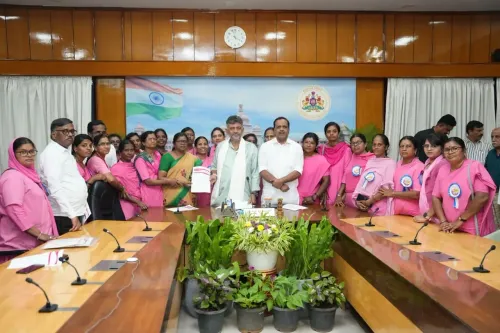
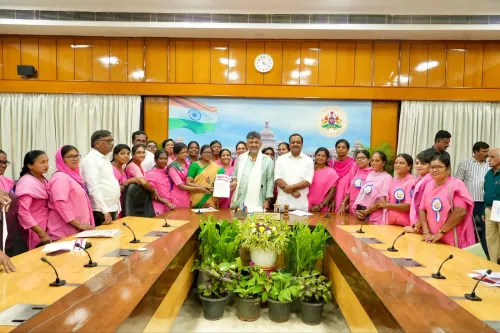
Shivakumar committed to a 'comprehensive and permanent resolution' to their demands through a Cabinet discussion .
He urged the workers to withdraw their ongoing agitation, pledging the government is 'committed to providing appropriate relief.' ASHA workers are honorary volunteers under the National Health Mission (2005) who have staged repeated protests across Indian states over pay, pension, and regularisation.
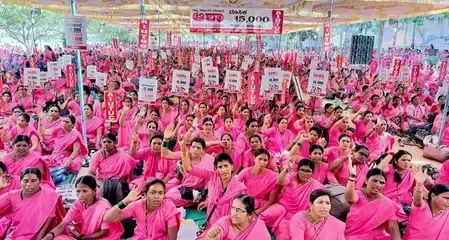
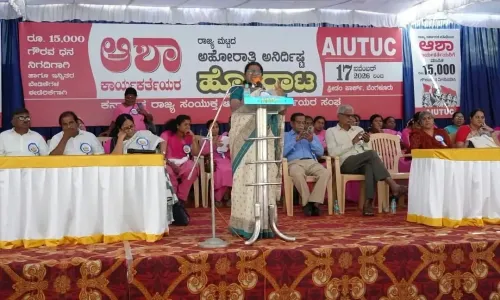
A strike that has kept thousands of Karnataka's frontline health volunteers away from rural doorsteps prompted Chief Minister D.K. Shivakumar to issue a direct, personal appeal on Saturday, 21 November 2026 — addressing the agitating ASHA workers not as a bureaucrat but, in his own words, as an elder brother pleading with his sisters to come home.
The post, shared by the Chief Minister's Office of Karnataka, is a translated appeal in Kannada that reads: 'ಆಶಾ ಸಹೋದರಿಯರಲ್ಲಿ ಸರ್ಕಾರದ ಪರವಾಗಿ ನನ್ನ ಕಳಕಳಿಯ ಮನವಿ' — 'My heartfelt appeal to ASHA sisters on behalf of the government.' Shivakumar acknowledges the 'pain and hardship' of the workers fighting day and night away from their families, and calls them 'not merely ASHA workers, but my sisters.'
What Shivakumar Has Promised
The Chief Minister's statement carries three concrete commitments: the government is 'actively deliberating' on a 'comprehensive and permanent resolution' to their demands; the matter will be taken up with the full Cabinet; and appropriate action will follow. He closes with a direct request — 'Please respond to my appeal and withdraw the agitation' — framing it as a personal plea from a sibling, not a government order.
Who ASHA Workers Are and Why They Strike
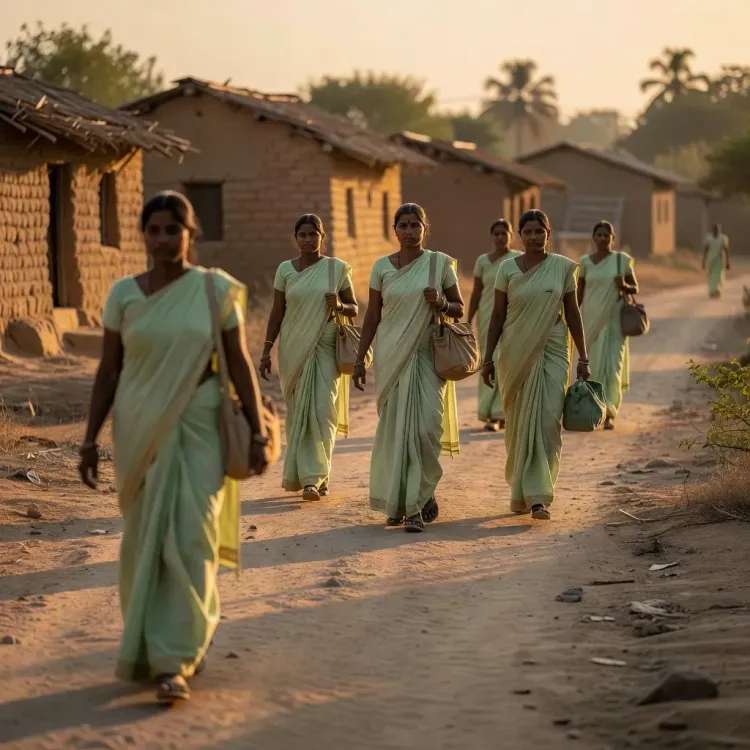
Accredited Social Health Activists (ASHA) are the last-mile health volunteers deployed under India's National Health Mission (NHM), launched in 2005. They are the women who knock on village doors to track pregnancies, immunise infants, and escort patients to primary health centres — often the only health interface a rural household has. Despite the scale of their responsibility, they are classified as honorary volunteers rather than salaried employees, earning performance-based incentives that worker unions across multiple states have long called inadequate.
Protests over higher incentives, pension entitlements, and regularisation of service are not new to Karnataka or to India. ASHA workers in several states have staged repeated strikes over the same structural fault line: the gap between the indispensable work they do and the contractual status that denies them the protections of a regular government employee.
The Cabinet Clock Is Now Ticking
By invoking a Cabinet discussion, Shivakumar has set a visible institutional clock — the agitating workers, their unions, and the public now have a named forum and a named process to watch. Whether the Cabinet delivers a wage revision, a pension framework, or a path to regularisation will determine whether the CM's fraternal appeal holds — or whether the protest returns, louder.
Karnataka's ASHA workforce is one of the largest in South India, embedded in a state that has repeatedly positioned itself as a healthcare-reform leader. How Shivakumar's government resolves this standoff could set a template — or a cautionary tale — for other states wrestling with the same NHM fault line.
Point of View
Sisters — rather than administrative authority, Shivakumar is deploying a culturally resonant political move designed to soften a confrontation while buying time for a Cabinet process. The promise of a 'comprehensive and permanent' solution signals an awareness that incremental incentive tweaks have failed before. Yet the credibility of the appeal will rest entirely on what the Cabinet produces — and how quickly. For the broader ASHA debate across India, Karnataka's resolution (or failure to resolve) will function as a live policy experiment on whether state governments can bridge the structural gap the NHM framework created in 2005.
NationPress
21 Nov 2026
Frequently Asked Questions
Why are ASHA workers in Karnataka on strike?
Karnataka's ASHA workers are protesting to demand higher incentives, pension benefits, and regularisation of their service. As honorary volunteers under the National Health Mission rather than salaried employees, they have long argued their compensation does not reflect the essential health services they deliver in rural communities.
What did CM D.K. Shivakumar promise ASHA workers?
Chief Minister D.K. Shivakumar promised that the Karnataka government is deliberating on a 'comprehensive and permanent resolution' to ASHA workers' demands, that the matter will be discussed with the full Cabinet, and that appropriate action will follow. He also urged the workers to withdraw their agitation.
Who are ASHA workers and what do they do?
Accredited Social Health Activists (ASHA) are community-level health volunteers deployed under India's National Health Mission since 2005. They provide doorstep health services in rural areas — tracking pregnancies, supporting immunisation drives, and escorting patients to health centres — and are classified as honorary volunteers rather than regular government employees.
What is the National Health Mission's role in ASHA worker pay?
The National Health Mission (NHM), launched in 2005, funds and governs the ASHA cadre across Indian states. Under the NHM framework, ASHA workers receive performance-based incentives rather than a fixed salary, which is the central grievance behind protests in Karnataka and multiple other states.
What happens next with ASHA workers' demands in Karnataka?
CM Shivakumar has indicated the Karnataka Cabinet will discuss the demands and take appropriate action. The key watch points are whether the Cabinet announces a wage revision, a pension scheme, or a regularisation pathway — and the timeline within which any decision is made.