ASHA workers' protest in Bengaluru enters Day 3; Karnataka Health Minister calls on Centre for funds
Synopsis
Thousands of ASHA workers have been sleeping in the open at Bengaluru's Freedom Park for three nights, demanding their monthly pay be raised from ₹8,000 to ₹15,000 — but the state and Centre are pointing fingers at each other over who should foot the bill, leaving 18-year veterans of India's primary healthcare backbone in the cold, literally and politically.
Key Takeaways
Thousands of ASHA workers have been protesting at Freedom Park, Bengaluru since 17 November 2026 , demanding a monthly honorarium of ₹15,000 .
Workers currently receive a combined ₹8,000 per month — ₹5,000 from Karnataka, ₹2,000 from the Centre, and ₹1,000 as incentive.
Karnataka Health Minister U.T.
Khader said ASHA workers fall under the Centre's National Health Mission and appealed to the Centre to release additional funds.
Karnataka State Women's Commission Chairperson Nagalakshmi Choudhary visited the protest site and promised to relay demands to Chief Minister Siddaramaiah.
The BJP criticised the Congress-led state government on X, alleging workers were being left without basic facilities at the protest venue.
Workers threatened to lay siege to Vidhana Soudha if no official order is issued meeting their demands.
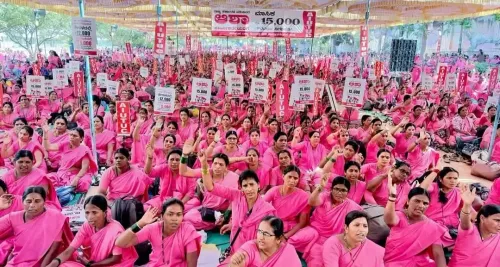
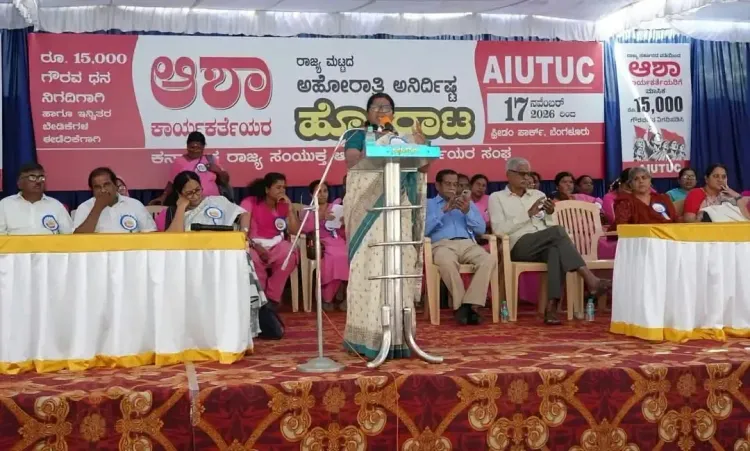
Thousands of Accredited Social Health Activists (ASHA) workers continued their indefinite day-and-night sit-in at Freedom Park, Bengaluru for a third consecutive day on Thursday, 19 November 2026, demanding a monthly honorarium of ₹15,000. The agitation, which began on 17 November, has drawn workers from multiple districts across Karnataka, with participants vowing to hold their ground until the state government issues a formal order meeting their demands.
What the Health Minister Said
Karnataka Minister for Health and Family Welfare U.T. Khader, speaking to reporters at Vidhana Soudha on Thursday, clarified that ASHA workers fall under the Centre's National Health Mission (NHM) and urged the central government to release additional funds to increase their honorarium. He appealed to health ministers of all states to collectively press the Centre on the matter.
'The state government has already agreed that whatever increase the Centre announces in the honorarium of ASHA workers, the state will also contribute its share. This has also become a policy. However, the Centre has not provided any additional grants,' Khader said.
He noted that workers currently receive ₹5,000 from the state, ₹2,000 from the Centre, and ₹1,000 as an incentive — totalling ₹8,000 per month. Those undertaking additional duties are eligible for further incentives, he added. Khader acknowledged the workers' contribution and said they deserved a remuneration increase.
Who Is Protesting and What They Want
The protest is organised by the Karnataka Rajya Samyuktha ASHA Karyakarteyara Sangha, backed by the All India United Trade Union Centre (AIUTUC). Dressed in pink sarees and holding placards, thousands of women braved cold nights at the protest venue, many having travelled from distant districts, leaving their children and families behind.
The workers allege they have served the state for nearly 18 years yet struggle to manage households on a monthly payment of ₹5,000 from the state. Beyond the honorarium hike to ₹15,000, their demands include the immediate release of pending arrears, timely payment by the 10th of every month, subsidies under the Asha Nidhi scheme, an additional subsidy of ₹5,000 for workers who have completed National Institute of Open Schooling (NIOS) training, retirement benefits, and three months' honorarium as financial assistance for those who fall critically ill.
The workers also demanded withdrawal of additional work assigned through the Samasta App and alleged that mobile phones required to carry out their duties had not been supplied despite data plans being provided by the state. They expressed frustration over non-fulfilment of earlier assurances reportedly made by former Chief Minister Siddaramaiah, and alleged that payments were frequently delayed — sometimes released only once every three months.
Women's Commission Visits, Protesters Hold Firm
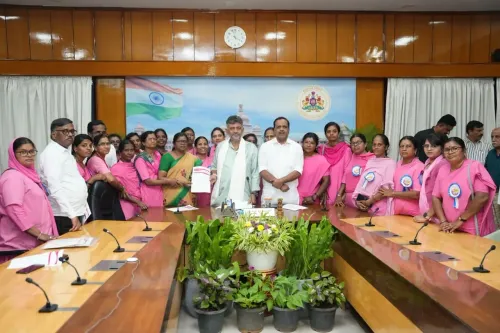
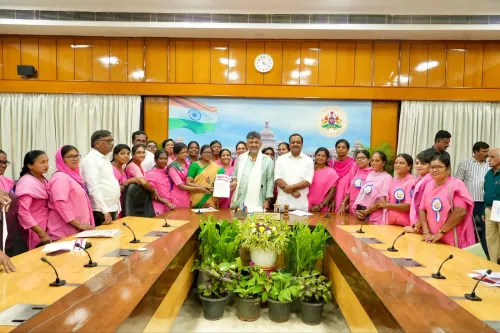
Karnataka State Women's Commission Chairperson Nagalakshmi Choudhary visited the protest site at Freedom Park on Thursday, interacted with the workers, and heard their grievances. She assured protesters that all demands would be brought to the notice of Chief Minister Siddaramaiah and that the Women's Commission would make sincere efforts to ensure their fulfilment. The workers, however, remained firm on continuing the agitation until an official order is issued.
'Our tears will not make any difference to the state government. We have been protesting in the open, braving the cold and without basic facilities. Unless the state government issues an official order fixing our honorarium at ₹15,000 and fulfils our other demands, we will not step back,' the protesters said.
Workers warned they would intensify the agitation and lay siege to Vidhana Soudha if the government failed to respond.
BJP Weighs In
The Karnataka unit of the Bharatiya Janata Party (BJP) criticised the state government over the continuing protest. In a post on social media platform X, the BJP alleged that ASHA workers were being forced to protest on the streets with young children in the cold without even basic toilet facilities, while the Congress-led state government remained unresponsive. The party also questioned the absence of women's representation in the state Cabinet and asked whether the concerns of working women would reach the government.
What Happens Next
With the state government pointing to the Centre and the Centre yet to respond on additional NHM funding, the ASHA workers find themselves caught in an inter-governmental deadlock. The Women's Commission's intervention adds a layer of institutional pressure, but workers have made clear that symbolic visits alone will not end the stalemate. All eyes now turn to whether Chief Minister Siddaramaiah or the Centre makes a concrete move before the agitation escalates further.
Point of View
000 a month. The Women's Commission visit is a pressure valve, not a solution. What is missing is a binding pay framework that specifies who pays, how much, and by when — independent of which party controls which government. Until that exists, every monsoon and every winter will bring another protest at Freedom Park.
NationPress
19 Nov 2026
Frequently Asked Questions
Why are ASHA workers protesting in Bengaluru?
Thousands of ASHA workers have been staging an indefinite sit-in at Freedom Park, Bengaluru since 17 November 2026, demanding a monthly honorarium of ₹15,000 — nearly double their current combined payment of ₹8,000. They also allege frequent payment delays, lack of retirement benefits, and non-fulfilment of earlier government assurances.
What is the current monthly payment for ASHA workers in Karnataka?
ASHA workers in Karnataka currently receive ₹5,000 from the state government, ₹2,000 from the Centre under the National Health Mission, and ₹1,000 as an incentive, totalling ₹8,000 per month. Additional incentives are available for workers who take on extra duties.
What has the Karnataka government said about the protests?
Karnataka Health Minister U.T. Khader said ASHA workers are recruited under the Centre's National Health Mission and appealed to the Centre to release additional funds for a honorarium increase. He said the state has already committed to matching any central hike but noted the Centre has not provided additional grants.
Who else has responded to the ASHA workers' demands?
Karnataka State Women's Commission Chairperson Nagalakshmi Choudhary visited the protest site and assured workers she would bring their demands to Chief Minister Siddaramaiah's attention. The BJP also criticised the Congress-led state government on X, alleging the workers were being left without basic facilities at the protest venue.
What are the other demands raised by the ASHA workers besides the pay hike?
Beyond the honorarium increase to ₹15,000, the workers demand immediate release of pending arrears, timely payment by the 10th of every month, subsidies under the Asha Nidhi scheme, an additional ₹5,000 subsidy for NIOS-trained workers, retirement benefits, and three months' honorarium as financial assistance for critically ill workers. They have also sought withdrawal of additional work assigned through the Samasta App.