PM Modi Chairs Social Justice Summit on StartUps, Nasha Mukt Bharat
Synopsis
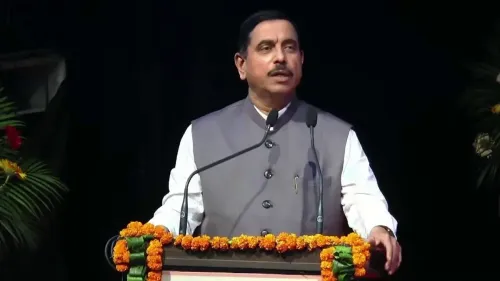
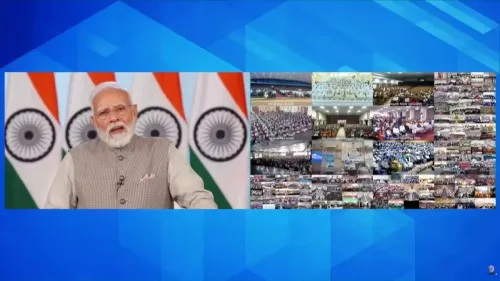
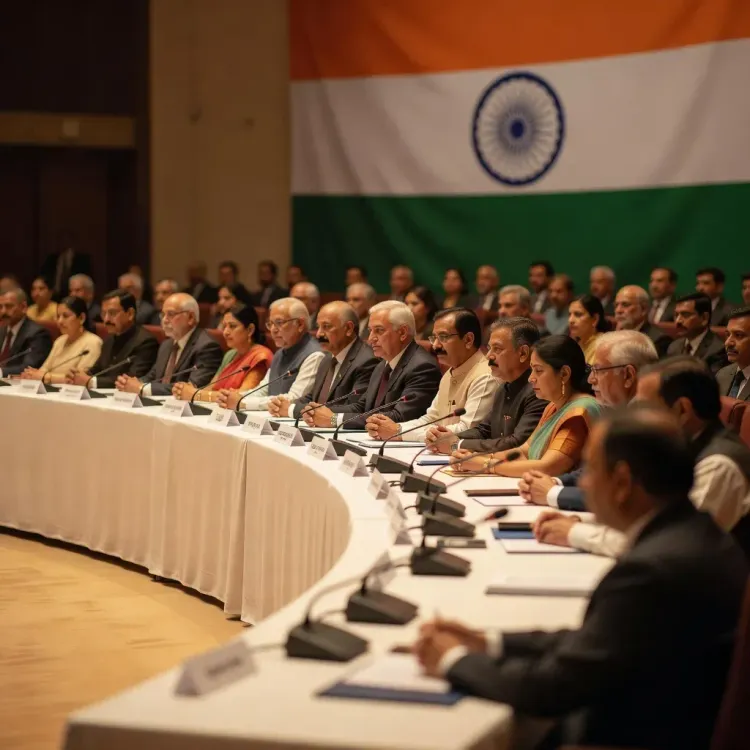
Prime Minister Narendra Modi chaired the valedictory session of the Departmental Summit on Social Justice and Empowerment on 19 November 2026, spotlighting Jan Bhagidari in welfare schemes, startup-driven affordable assistive technologies, and a whole-of-society approach to achieving a drug-free India.
Key Takeaways
PM Modi chaired the valedictory session of the Departmental Summit on Social Justice and Empowerment on 19 November 2026 .
Three focus areas were highlighted: Jan Bhagidari in social schemes, startup-built affordable assistive technologies, and a whole-of-society push for Nasha Mukt Bharat .
The Nasha Mukt Bharat Abhiyan was originally launched in August 2020 by the Ministry of Social Justice and Empowerment as a community-led anti-drug campaign.
The summit was convened by the Department of Social Justice and Empowerment , which handles welfare for SCs, STs, OBCs, and persons with disabilities.
Encouraging startups to build affordable assistive devices signals alignment between disability welfare and the broader Startup India ecosystem.
The Jan Bhagidari model mirrors the community-ownership approach deployed under the Swachh Bharat Mission since 2014 .
Three pillars — citizen participation, affordable technology, and a drug-free society — defined the closing session of a high-level government conclave on Thursday, 19 November 2026, as Prime Minister Narendra Modi chaired the valedictory session of the Departmental Summit on Social Justice and Empowerment, signalling a sharper push to bring India's marginalised communities into the mainstream through both community action and startup innovation.
Three Priorities That Framed the Day's Closing Session
Modi outlined three focus areas from the summit's conclusion: expanding Jan Bhagidari — public co-ownership — in social welfare schemes; mobilising startups to build affordable assistive technologies for persons with disabilities; and deepening the whole-of-society effort behind a Nasha Mukt Bharat, or drug-free India. The framing is deliberate. Each pillar shifts the government's role from sole provider to enabler, drawing in citizens, entrepreneurs, and communities as active agents rather than passive beneficiaries.
The summit was convened by the Department of Social Justice and Empowerment, the central ministry that oversees welfare architecture for Scheduled Castes, Scheduled Tribes, Other Backward Classes, persons with disabilities, and substance-abuse prevention programmes. Its annual convenings typically set implementation priorities for field units across states.
Jan Bhagidari: From Swachh Bharat to Social Schemes
The Jan Bhagidari model is not new to this government. It was road-tested at scale under the Swachh Bharat Mission from 2014 onwards, where community ownership — rather than top-down enforcement — was credited with driving behaviour change in sanitation. Applying that same logic to social-justice delivery suggests the administration believes citizen accountability can accelerate outcomes in welfare programmes that have historically struggled with last-mile reach.
The emphasis on Jan Bhagidari (public participation) also carries a political sub-text: it distributes credit and responsibility simultaneously, making communities stakeholders in success rather than critics of shortfall.
StartUps and the Assistive Technology Gap
India's disability ecosystem has long been under-served by both government procurement and private investment. By explicitly naming startups as a channel for affordable assistive devices, the summit aligns with the broader Startup India framework while targeting a segment — wheelchairs, hearing aids, communication tools, prosthetics — where imported products remain prohibitively expensive for lower-income households. Watchers of the space will now look for procurement incentives, public-funded pilot programmes, or dedicated challenge grants to convert the stated intent into contracts.
Nasha Mukt Bharat's Community Turn
The Nasha Mukt Bharat Abhiyan, launched in August 2020, has been the Ministry of Social Justice's flagship anti-drug drive — running awareness campaigns at the district level and activating local de-addiction committees. The 'whole-of-society' language from Thursday's session suggests the next phase will lean harder on community institutions, schools, and civil-society groups rather than solely on government de-addiction centres. District-level progress reports and new startup-driven de-addiction pilots are the near-term indicators to track.
Taken together, the three priorities sketch a governance philosophy: the state sets the architecture; citizens, startups, and communities do the heavy lifting inside it. Whether the summit's closing words translate into funded mandates will become clear in the weeks ahead — but the direction, at the highest table, is unambiguous.
Point of View
Startup-led assistive tech, and community-owned de-addiction — reflects the BJP government's consistent strategy of positioning the state as an enabler rather than a sole provider in welfare delivery, a model first codified under Swachh Bharat. By pulling startups into the assistive-technology space, the administration is attempting to marry two political flagship narratives: inclusion and entrepreneurship. The Nasha Mukt Bharat 'whole-of-society' language signals a potential gear-change in the five-year-old campaign, pushing responsibility down to civil society and local institutions. The real test will be whether Thursday's directional statements are backed by budgetary allocations or policy instruments in the near term.
NationPress
19 Nov 2026
Frequently Asked Questions
What was the Departmental Summit on Social Justice and Empowerment about?
The summit was an internal government conclave convened by the Department of Social Justice and Empowerment to set implementation priorities for welfare schemes covering Scheduled Castes, Scheduled Tribes, OBCs, persons with disabilities, and anti-drug programmes. PM Modi chaired its valedictory session on 19 November 2026.
What is Jan Bhagidari in government schemes?
Jan Bhagidari means public participation or citizen co-ownership in government programmes. The model was prominently used in the Swachh Bharat Mission from 2014 onwards and is now being emphasised in social justice and empowerment schemes.
What is the Nasha Mukt Bharat Abhiyan?
Nasha Mukt Bharat Abhiyan is a national anti-drug campaign launched in August 2020 by the Ministry of Social Justice and Empowerment. It promotes community-led de-addiction drives and awareness programmes at the district level across India.
How does the government plan to involve startups in disability welfare?
The summit flagged encouraging startups to develop affordable assistive technologies for persons with disabilities — such as wheelchairs, hearing aids, and communication devices — as a key focus area, though specific procurement or funding mechanisms were not detailed at the session.
What does 'whole-of-society approach' for Nasha Mukt Bharat mean?
A whole-of-society approach means involving not just government de-addiction centres but also schools, civil-society groups, community institutions, and local bodies in driving awareness and rehabilitation, distributing responsibility across all segments of society rather than relying solely on state machinery.