CM Siddaramaiah hails Kanakadasa on Jayanti
Synopsis
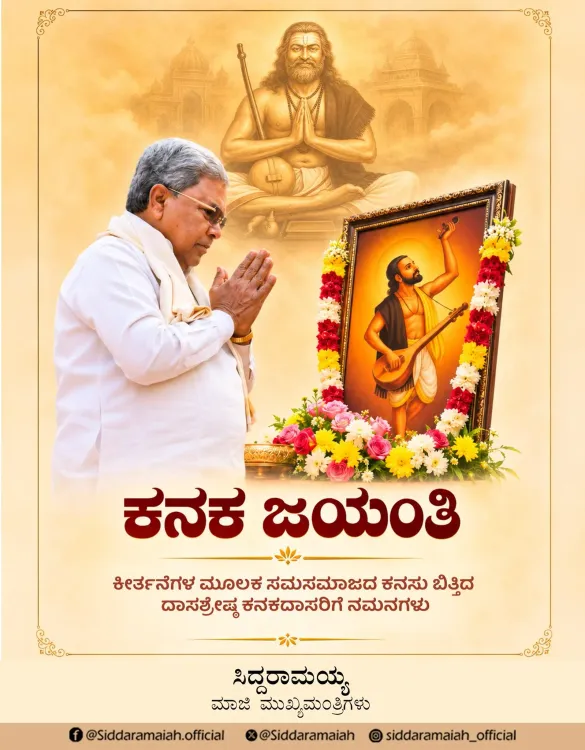
Karnataka Chief Minister Siddaramaiah marked Kanakadasa Jayanti on 27 November 2026 by honouring the 16th-century saint-poet as a social reformer who opposed caste, untouchability and superstition, and by urging a humane society built on equality rather than lineage.
Key Takeaways
Karnataka Chief Minister Siddaramaiah posted a Kanakadasa Jayanti tribute on Friday, 27 November 2026 .
He described Kanakadasa as a 16th-century saint-poet and social reformer, not only a Bhakti keertana writer.
The message said people should be honoured for humanity and character, not caste or lineage.
Siddaramaiah asked the public to resolve to end caste discrimination, untouchability and superstition.
Karnataka CMs routinely use Bhakti-era Jayantis, including those of Basavanna, to stress social equality.
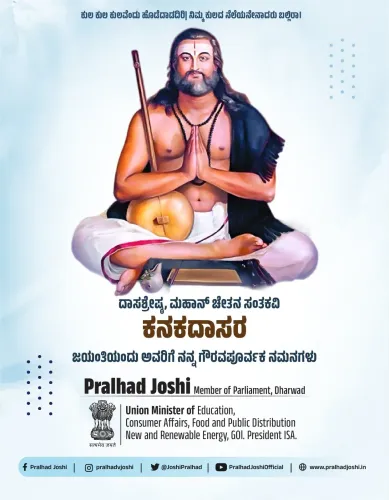
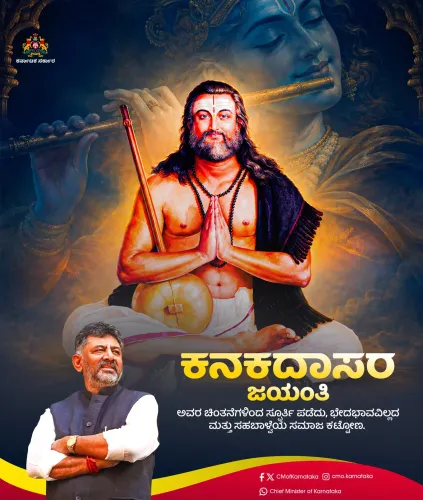
Karnataka Chief Minister Siddaramaiah on Friday, 27 November 2026, used Kanakadasa Jayanti to recast the 16th-century Kannada saint-poet as a living brief for social equality, not a figure confined to temple walls. In a public message from Karnataka, he offered devout salutations to the keertana master and called him a great social reformer who fought caste, untouchability and superstition through literature.
Writing in Kannada, the Chief Minister said Kanakadasa carried the ideals of devotion, equality and social justice into the public mind through his keertanas. He was not merely a poet of the Bhakti path, Siddaramaiah argued, but a reformer who continuously raised his voice against the caste system, untouchability, superstition and social inequalities.
The core line was uncompromising. A person must be honoured on the basis of humanity and character, not measured by caste or lineage. Those thoughts, he said, remain relevant even today.
Kanakadasa's keertanas against caste hierarchy
Kanakadasa is remembered as a 16th-century Kannada saint-poet whose devotional compositions also cut against caste hierarchy and untouchability. Karnataka chief ministers routinely mark the birth anniversaries of Bhakti-era reformers to tie historical literature to present-day social harmony. The Congress-led government has kept that practice in step with commemorations of figures such as Basavanna and Ambedkar.
The Jayanti statement sits in that lineage. It treats keertana not as museum piety but as a political vocabulary of equality, aimed at communities still living with discrimination.
A public resolve for a humane society
Siddaramaiah closed with a collective pledge: to realise Kanakadasa's ideals and the dream of an equal society by building a humane order free from caste discrimination, untouchability and superstition. The appeal was not limited to the administration. It asked everyone to take the vow.
On Kanakadasa Jayanti, a 16th-century saint-poet is being asked to set the state's moral clock again. The test is whether the resolve outlasts the day's homage.
Point of View
Untouchability and superstition at the centre, he folds a 16th-century saint-poet into the same commemorative arc the state already uses for Basavanna and Ambedkar. The political signal is continuity: historical devotion as a mandate for present-day equality, not a retreat into ritual. The question that follows is whether the Jayanti rhetoric is matched by visible work against discrimination, or remains a seasonal salute.
NationPress
27 Nov 2026
Frequently Asked Questions
When did Siddaramaiah post his Kanakadasa Jayanti message?
Karnataka Chief Minister Siddaramaiah posted the tribute on Friday, 27 November 2026, on the occasion of Kanakadasa Jayanti.
What did Siddaramaiah say about Kanakadasa?
He said Kanakadasa was not only a Bhakti poet but a great social reformer who opposed caste, untouchability, superstition and inequality, and that a person should be respected for humanity and character, not caste or lineage.
Why do Karnataka leaders mark Kanakadasa Jayanti?
Karnataka chief ministers routinely issue tributes on the birth anniversaries of Bhakti-era reformers to underscore equality and social harmony, a practice the Congress-led government has continued alongside commemorations of Basavanna and Ambedkar.
What pledge did Siddaramaiah seek on Kanakadasa Jayanti?
He asked everyone to resolve to build a humane society free from caste discrimination, untouchability and superstition, so that Kanakadasa's ideals and the dream of an equal society become reality.