CM Siddaramaiah Greets Karnataka on Vijayadashami
Synopsis
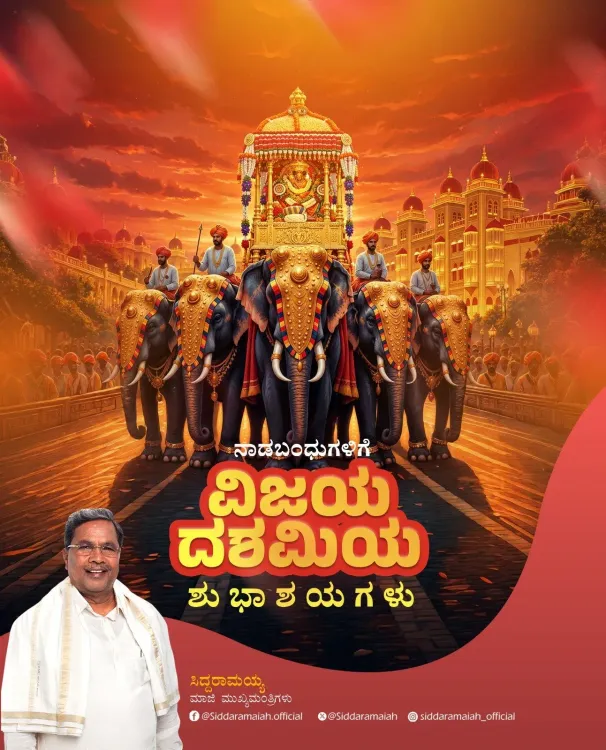
Karnataka Chief Minister Siddaramaiah marked Vijayadashami 2026 with greetings in Kannada, invoking Goddess Chamundeshwari's blessings and calling on the festival's spirit to inspire victory over hatred, inequality, and injustice in society.
Key Takeaways
Karnataka CM Siddaramaiah posted Vijayadashami 2026 greetings in Kannada on 21 October 2026 .
He framed the festival as inspiration to defeat hatred, inequality, and injustice in society.
He invoked the blessings of Goddess Chamundeshwari , the presiding deity of Chamundi Hills, Mysore.
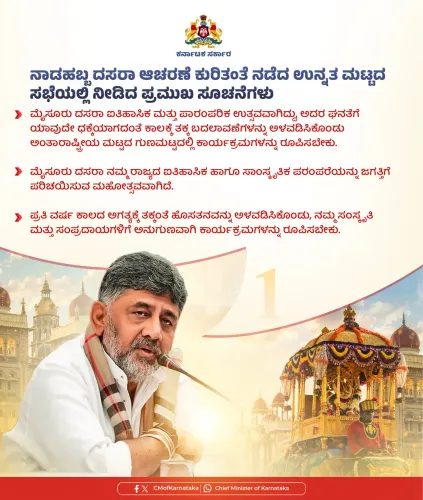
Dasara (Vijayadashami) is Karnataka's 'Nada Habba' (state festival), with the Mysore Dasara tradition rooted in the Wodeyar royal dynasty.
The Chief Minister addressed citizens as naaḍabandhu — people of the land — wishing them happiness, peace, and prosperity.
As Karnataka pauses to mark Vijayadashami 2026, Karnataka Chief Minister Siddaramaiah has extended warm festival greetings to the people of the state, framing the occasion not merely as a religious observance but as a living call to fight hatred, inequality, and injustice.
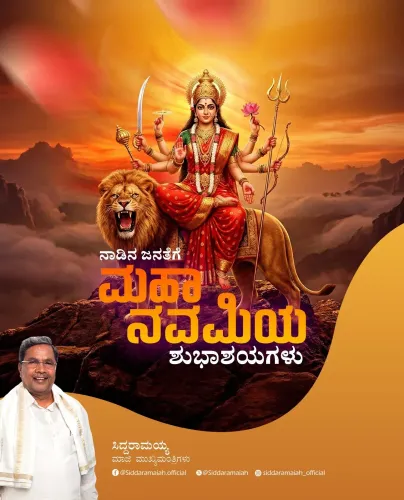
Writing in Kannada on Wednesday, 21 October 2026, the Chief Minister prayed that the festival — a symbol of triumph — inspire society's resolve for good to prevail. 'ವಿಜಯದ ಸಂಕೇತವಾದ ವಿಜಯ ದಶಮಿಯು ಸಮಾಜದಲ್ಲಿನ ದ್ವೇಷ, ಅಸಮಾನತೆ ಮತ್ತು ಅನ್ಯಾಯಗಳ ವಿರುದ್ಧ ಒಳಿತು ಗೆಲ್ಲುವ ಸಂಕಲ್ಪಕ್ಕೆ ಪ್ರೇರಣೆಯಾಗಲಿ' — 'May Vijayadashami, the symbol of victory, inspire the resolve for good to triumph over hatred, inequality, and injustice in society.' He invoked the blessings of Goddess Chamundeshwari upon all, and wished naaḍabandhu — the people of the land — happiness, peace, and prosperity.
Dasara's deep roots in Karnataka's identity
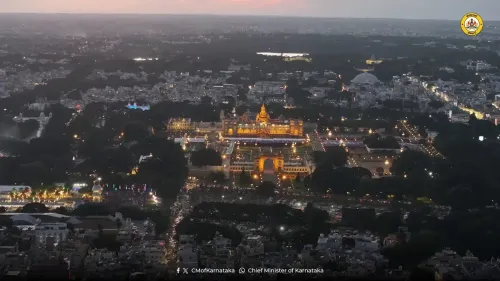
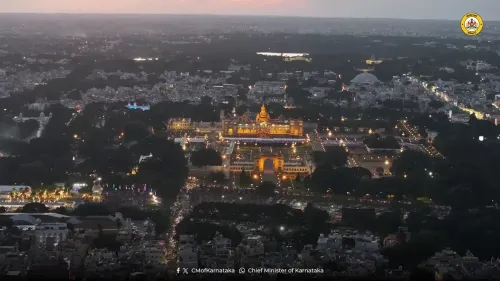
Vijayadashami, widely celebrated across India as Dasara, carries an especially powerful resonance in Karnataka. The Mysore Dasara festival, rooted in centuries of royal tradition from the Mysore Wodeyar dynasty, is among the grandest state-sponsored cultural spectacles in the country — drawing hundreds of thousands of visitors to the illuminated Mysore Palace each year and earning the designation of a 'Nada Habba' (state festival).
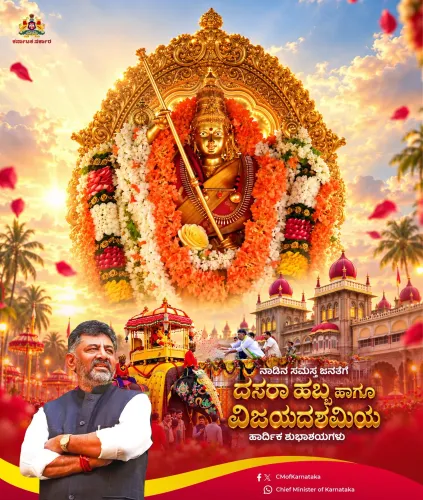
Goddess Chamundeshwari, the presiding deity of Chamundi Hills overlooking Mysore city, sits at the spiritual heart of the celebrations. The Chief Minister's specific invocation of her blessings underlines that deep local devotional thread woven into Karnataka's Dasara identity.
A political leader framing a festival as a social message
Siddaramaiah's greeting does something more than offer seasonal pleasantries. By explicitly naming hatred, inequality, and injustice as the enemies to be conquered — rather than the mythological demon Mahishasura alone — he casts Vijayadashami's symbolism into a present-day social register. It is a rhetorical move consistent with his public positioning around equity and social justice. The kicker is unmistakable: the festival's meaning, in this framing, is not confined to temples and tableaux. It belongs to everyday civic life.
Point of View
Inequality, and injustice as the evils to be vanquished mirrors his Congress government's equity-forward political identity in Karnataka. Indian chief ministers routinely use major festivals as soft-power moments to connect with constituents, but this greeting does double duty: it anchors the CM to Karnataka's most iconic cultural tradition while inserting a social-justice subtext into a devotional occasion. With Mysore Dasara being a nationally watched spectacle, any statement from the state's top leader carries added symbolic weight beyond a routine seasonal post.
NationPress
21 Oct 2026
Frequently Asked Questions
What did Karnataka CM Siddaramaiah say on Vijayadashami 2026?
CM Siddaramaiah posted greetings in Kannada, expressing hope that Vijayadashami inspires society to fight hatred, inequality, and injustice, and invoking the blessings of Goddess Chamundeshwari on all citizens.
Why is Vijayadashami special in Karnataka?
Vijayadashami is Karnataka's 'Nada Habba' (state festival). The Mysore Dasara celebration, rooted in the Wodeyar royal dynasty's traditions, is one of India's grandest cultural festivals centred on the illuminated Mysore Palace and Goddess Chamundeshwari.
Who is Goddess Chamundeshwari?
Goddess Chamundeshwari is the presiding deity of Chamundi Hills overlooking Mysore city, and the spiritual centrepiece of Karnataka's Dasara celebrations.
What does Vijayadashami symbolise?
Vijayadashami symbolises the victory of good over evil, commemorating mythological narratives including the slaying of the demon Mahishasura. In CM Siddaramaiah's framing, it also symbolises society's ongoing fight against hatred and injustice.
When is Vijayadashami 2026?
Vijayadashami in 2026 falls on Wednesday, 21 October 2026 , the date on which CM Siddaramaiah posted his greetings.