CM Siddaramaiah Pays Tribute to Nehru on Children's Day
Synopsis
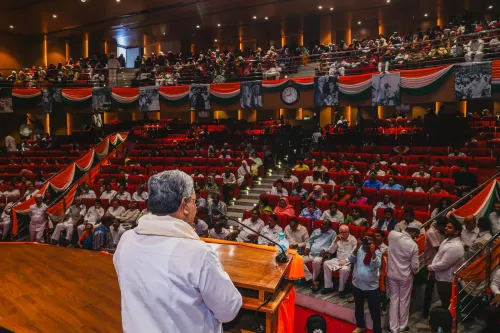
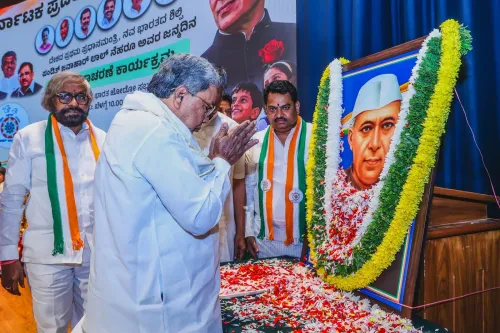
Karnataka Chief Minister Siddaramaiah paid homage to Pandit Jawaharlal Nehru on his birth anniversary on 14 November 2026, calling him a model for every administrator and urging the state's children to read and follow his secular, democratic vision.
Key Takeaways
Karnataka CM Siddaramaiah paid tribute to Pandit Jawaharlal Nehru on his birth anniversary, 14 November 2026 .
He described Nehru as the architect of an 'independent, self-respecting, self-reliant and secular India.' Siddaramaiah called Nehru 'a true secularist and democrat' and 'a model for every administrator in the country.' Children's Day is observed on 14 November since 1954 to honour Nehru's focus on child welfare and education.
He urged Karnataka's children to read Nehru and walk the path he charted.
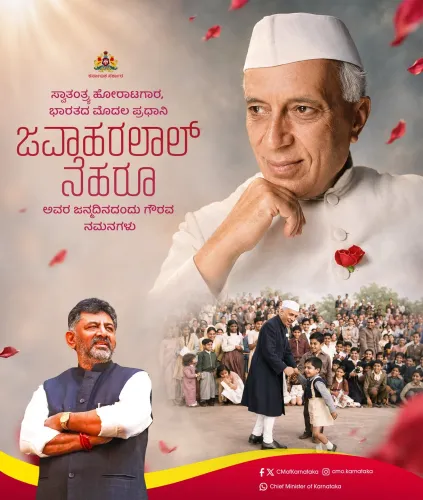
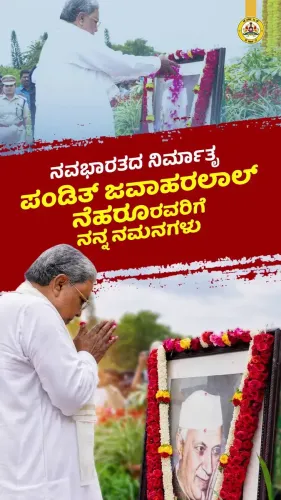
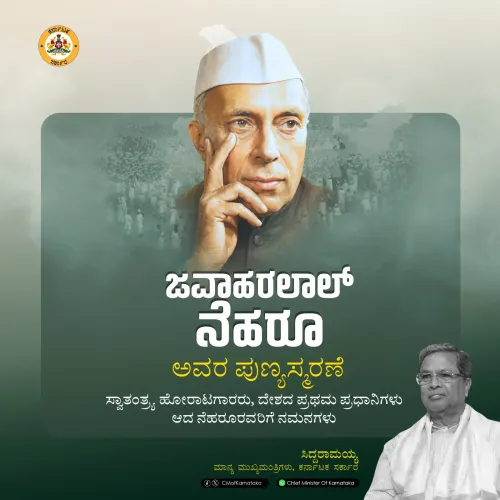
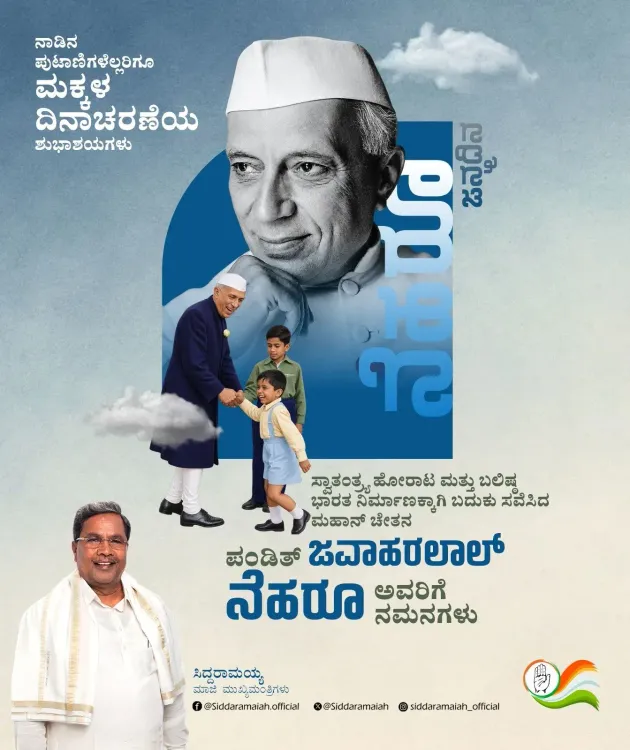
On the birth anniversary of Pandit Jawaharlal Nehru — India's first Prime Minister and enduring symbol of the republic's founding ideals — Karnataka Chief Minister Siddaramaiah on Saturday, 14 November 2026 offered tribute and extended Children's Day greetings to the children of the state, calling on them to read Nehru and walk the path he charted.
Writing in Kannada, Siddaramaiah described Nehru as a freedom fighter and 'the pride of us all' — ನಮ್ಮೆಲ್ಲರ ಹೆಮ್ಮೆಯ ನಾಯಕ ['the leader we are all proud of'] — who laid a firm foundation for 'an independent, self-respecting, self-reliant and secular India' through progressive thinking, vision, and social concern. 'Modern India stands on that very foundation,' he wrote.
Nehru's legacy on secularism and democracy
Siddaramaiah called Nehru 'a true secularist and democrat' who remains a model for every administrator in the country. The post echoes a core argument that Congress leaders make each year on 14 November: that Nehru's articulation of secular and democratic principles — most visibly in the Constituent Assembly debates leading to the Constitution of 1950 — form the bedrock on which contemporary governance must still rest.
That framing carries unmistakable political weight. Tributes to Nehru from Congress chief ministers are not merely ceremonial; they arrive each year against an active national debate about secularism, the role of the state, and the character of the republic — a debate in which the party's founders are invoked as the clearest reference points.
Children's Day and Nehru's bond with young India
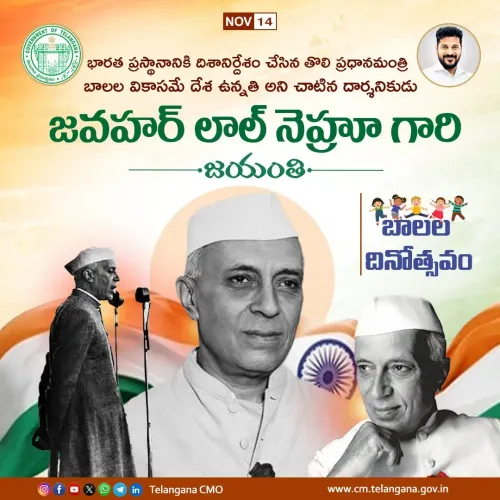
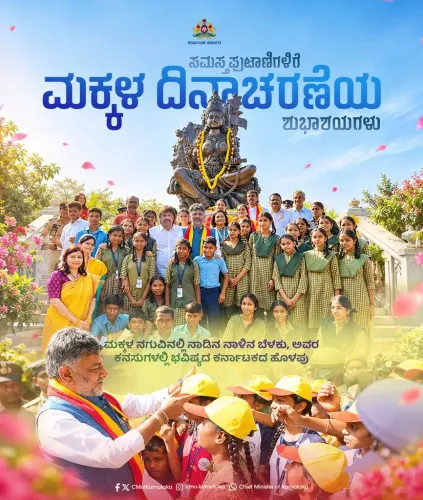
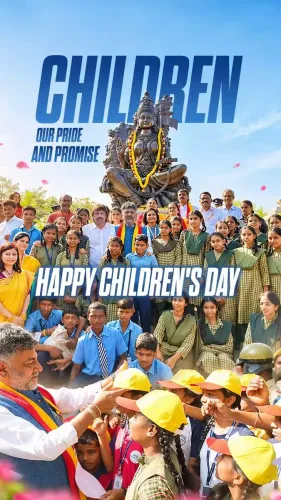
Children's Day has been observed on 14 November since 1954, institutionalised to honour Nehru's well-documented affection for children and his conviction that the nation's future lived in its young. Siddaramaiah leaned into that tradition directly, telling the children of Karnataka: 'I hope you all read and understand Nehru and walk in his footsteps.'
It is a quietly ambitious ask — not just a ceremonial greeting, but an invitation to engage with the ideas of a man who shaped modern India's constitutional imagination.
Point of View
Not merely a party ritual — each one reasserts secular democracy as a living commitment rather than a historical footnote. Siddaramaiah's choice to couple the tribute with a direct appeal to Karnataka's children signals a generational-outreach dimension: plant Nehru's ideas in the next cohort of voters. In the current political climate, invoking Nehru as 'a model for every administrator' is also an implicit measure against which the party invites the public to judge all incumbents. The statement is ceremonial in form but unmistakably substantive in intent.
NationPress
14 Nov 2026
Frequently Asked Questions
Why is Children's Day celebrated on 14 November in India?
Children's Day is celebrated on 14 November — the birth anniversary of Pandit Jawaharlal Nehru — to honour his deep affection for children and his belief that nurturing the young was central to the nation's future. The observance was institutionalised from 1954 onwards.
What did CM Siddaramaiah say about Nehru on 14 November 2026?
Karnataka CM Siddaramaiah called Nehru 'the pride of us all' and credited him with laying the foundation of a secular, self-reliant India. He described Nehru as a model for every administrator and urged the state's children to read and follow his path.
Who was Pandit Jawaharlal Nehru?
Pandit Jawaharlal Nehru was India's first Prime Minister, serving from 1947 to 1964 . A key leader of the independence movement, he championed parliamentary democracy, secularism, and non-alignment, and played a central role in drafting the constitutional framework of the republic.
Why do Congress leaders pay tribute to Nehru every year on 14 November?
Indian National Congress leaders issue annual tributes to Nehru on his birth anniversary to reaffirm the party's foundational commitment to secularism and democracy — values Nehru most visibly embodied — particularly in the context of ongoing national debates about those principles.
What is the significance of Nehru's birth anniversary for Karnataka?
In Karnataka , governed by the Congress party, 14 November is marked with state-level Children's Day programmes alongside tributes to Nehru. CM Siddaramaiah's post reflects both the ceremonial tradition and the party's broader political messaging around Nehru's secular democratic legacy.