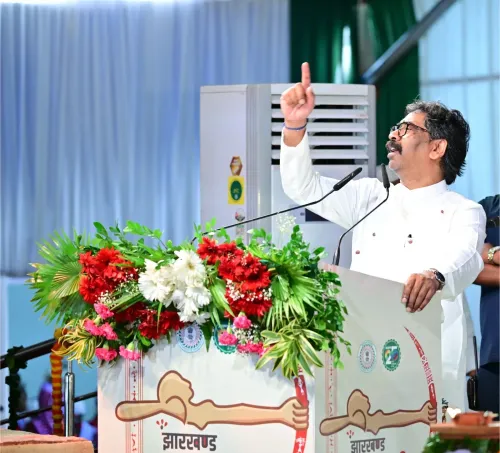
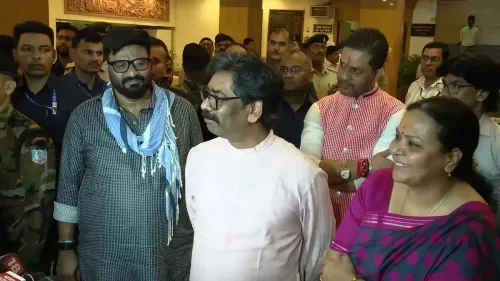
CM Hemant Soren Addresses Media at Jharkhand Mantralaya
Synopsis
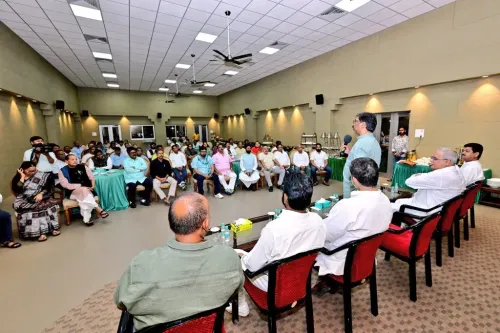
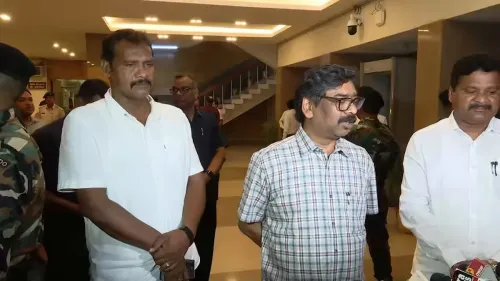
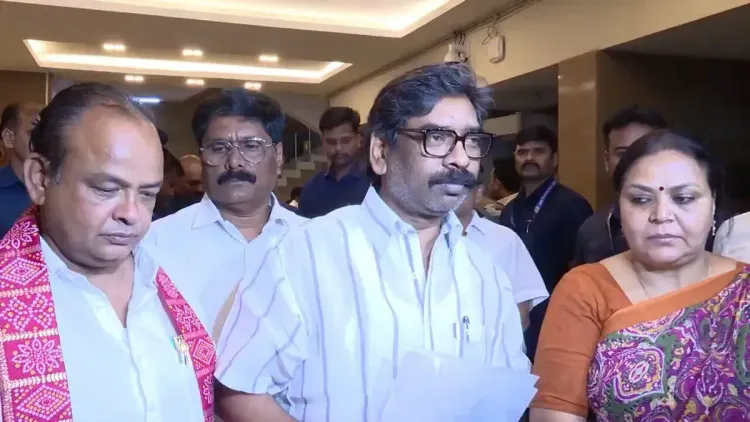
Jharkhand Chief Minister Hemant Soren addressed media personnel at the Jharkhand Mantralaya in Ranchi on 27 May 2026. The interaction, shared on X, reflects the JMM-led government's ongoing practice of direct press engagement on governance and policy matters from the state's administrative headquarters.
Key Takeaways
Jharkhand Chief Minister Hemant Soren held a media interaction at the Jharkhand Mantralaya in Ranchi on 27 May 2026 .
The interaction was shared on Soren's official X account, addressed to 'media bandhuo' (media colleagues).
Soren has led Jharkhand since December 2019 as head of the JMM -led alliance government.
Secretariat-level media briefings in Jharkhand have historically covered tribal welfare, mining royalties, and industrial policy.
The specific announcements or topics from this interaction are yet to be detailed through official government channels.
Jharkhand Chief Minister Hemant Soren met with members of the press at the Jharkhand Mantralaya (ministry complex) in Ranchi on Wednesday, 27 May 2026, in a media interaction that is part of his administration's regular engagement with journalists on governance matters.
Context
Soren shared a post on X referencing a conversation with 'media bandhuo' ('media colleagues') at the Jharkhand Mantralaya complex, signalling a direct press briefing at the seat of the state government. Such interactions at the secretariat are a standard channel through which the chief minister communicates policy updates and administrative decisions to the public.
The Jharkhand Mantralaya in Ranchi serves as the nerve centre of the state's executive functioning, housing key ministries and the Chief Minister's Office. Media briefings held there carry official weight and are typically attended by the state press corps.
Policy Backdrop
Hemant Soren has led the state since December 2019, when the Jharkhand Mukti Morcha (JMM)-led alliance won the state assembly elections. His tenure has been marked by a focus on tribal welfare, mining royalty negotiations, and flagship social schemes targeting Jharkhand's predominantly rural and tribal population.
State chief ministers in India regularly use secretariat-level press interactions to provide updates on scheme implementation, budget utilisation, and administrative priorities. In Jharkhand, such briefings have historically touched on issues ranging from the Sarna religion code demand to industrial development and forest rights for tribal communities.
Stakeholders and Impact
The primary stakeholders of any Mantralaya press briefing are Jharkhand's approximately 3.8 crore residents, who rely on such communications for updates on government programmes. Journalists and media organisations based in Ranchi serve as the conduit between the administration and the wider public.
The JMM, as the ruling party, uses these interactions to set the political narrative around governance performance, particularly on issues of tribal rights, mineral-revenue sharing with the Centre, and welfare delivery. Opposition parties and civil society groups in the state also closely monitor such briefings for any policy signals.
What's Next
Any specific announcements made during the interaction — whether on state scheme allocations, administrative reshuffles, or policy positions — are expected to be followed up through official government orders or legislative action. Observers will watch for statements related to ongoing negotiations over mining royalties and the implementation of tribal welfare programmes ahead of the next state budget cycle.
The Jharkhand government's communication pattern suggests that Mantralaya media interactions often precede or accompany significant policy rollouts, making the full transcript of Soren's remarks on 27 May 2026 a document of administrative interest.
Point of View
Whose tenure has navigated legal and political headwinds. Choosing the Mantralaya as the venue, rather than a party office, underscores an institutional framing of the communication. For the JMM, consistent media access at the seat of government reinforces its governance credentials ahead of any future electoral cycle. The broader pattern signals that Soren is actively managing the state's public narrative on policy delivery.
NationPress
20 Sept 2026
Frequently Asked Questions
What did Hemant Soren say at the Jharkhand Mantralaya media interaction on 27 May 2026?
The specific topics discussed have not been detailed in the post itself. Soren shared on X that he held a conversation with media colleagues at the Jharkhand Mantralaya complex; the full content of the briefing is expected to be covered through official follow-up communications.
Where is the Jharkhand Mantralaya located?
The Jharkhand Mantralaya (ministry complex) is located in Ranchi, the capital of Jharkhand, and serves as the primary administrative headquarters of the state government.
Who is Hemant Soren?
Hemant Soren is the Chief Minister of Jharkhand and the executive president of the Jharkhand Mukti Morcha (JMM). He was first sworn in as Chief Minister in December 2019 following the JMM-led alliance's victory in state assembly elections.
What is the Jharkhand Mukti Morcha?
The Jharkhand Mukti Morcha (JMM) is a regional political party based in Jharkhand, primarily focused on tribal rights, statehood issues, and the welfare of the state's significant tribal and mineral-rich communities.
Why do Jharkhand chief ministers hold media briefings at the Mantralaya?
Mantralaya-based press interactions are a standard practice for state chief ministers in India to communicate governance updates, policy decisions, and scheme progress directly to the public through the press corps.