CM Sukhu addresses medicos at Jol Sappad, eyes AIIMS-level care for HP
Synopsis
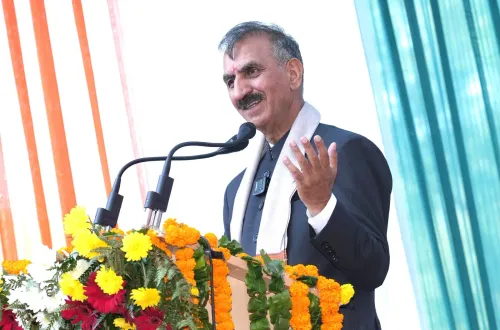
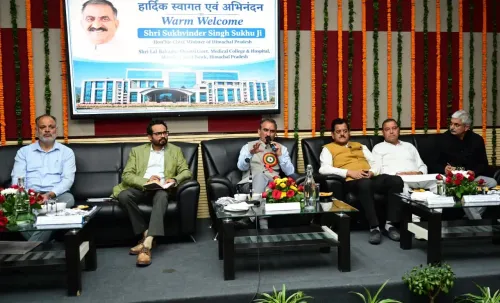
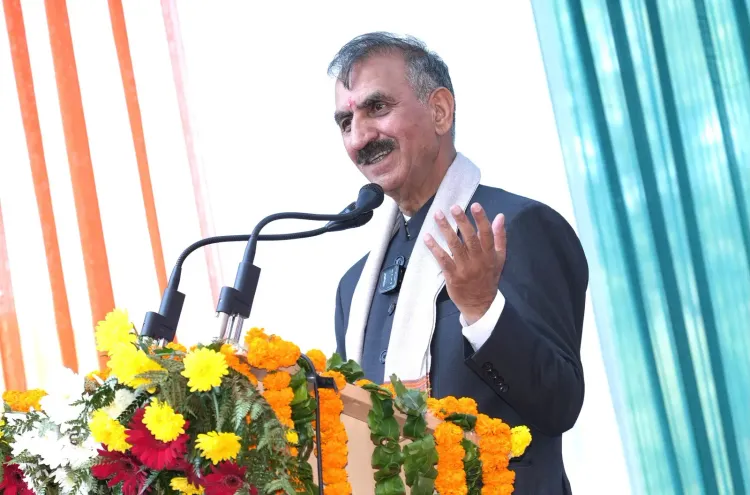
Himachal Pradesh CM Sukhvinder Singh Sukhu addressed medical students at Dr. Radhakrishnan Medical College, Jol Sappad, pledging AIIMS-standard healthcare facilities for the state and urging future doctors to serve with compassion and dedication.
Key Takeaways
CM Sukhu addressed students at Dr.
Radhakrishnan Medical College and Hospital, Jol Sappad on 27 October 2026 .
He cited 'remarkable improvements' in medical and health education over the past four decades .
The state government is working to develop AIIMS-like facilities in Himachal Pradesh, benchmarked against Delhi AIIMS .
Sukhu emphasised that modern resources are essential to fully utilise students' talent.
India has been expanding AIIMS-pattern institutions under the Pradhan Mantri Swasthya Suraksha Yojana since 2014 , including in underserved hill regions.
Progress on actual construction and budget allocation for AIIMS-comparable projects in Himachal will be closely watched.
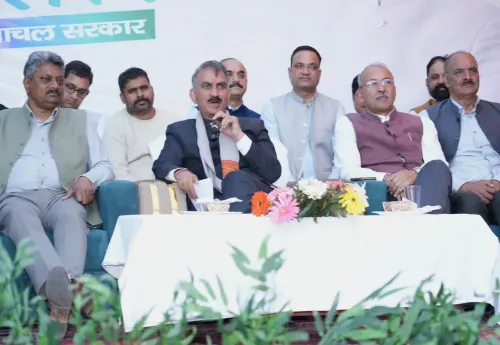
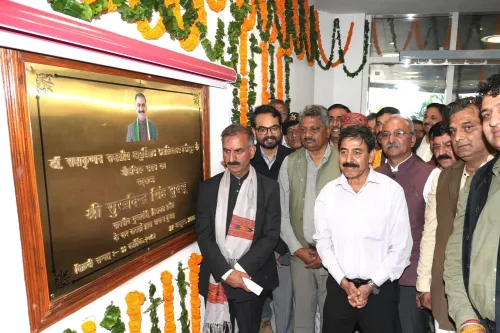
At a packed auditorium in the hills of Himachal Pradesh, Chief Minister Sukhvinder Singh Sukhu turned to the next generation of doctors on Tuesday, 27 October 2026, and made a promise: the state would not let talent outpace infrastructure. Addressing students at Dr. Radhakrishnan Medical College and Hospital, Jol Sappad, Sukhu laid out an ambitious vision — facilities in Himachal built to the standard of Delhi's All India Institute of Medical Sciences (AIIMS).
What the CM told future doctors at Jol Sappad
Speaking in Hindi, Sukhu told the gathered students: 'Aaj aap vidyarthi hain, kal samaj ke swasthya ki zimmedari aapke kandhon par hogi' — 'Today you are students; tomorrow the health of society will rest on your shoulders.' The message was direct: the state would provide modern tools, but dedication and compassion in medicine must come from within.
He pointed to what he described as 'remarkable improvements' in medical and health education over the past four decades, arguing that students' talent can only be fully realised when matched with contemporary resources. The framing was deliberate — this was not just a convocation pep-talk, but a policy signal.
The AIIMS benchmark and what it means for Himachal
The centrepiece of Sukhu's address was the state government's stated intent to develop AIIMS-like facilities in Himachal Pradesh. Delhi's AIIMS remains the gold standard in Indian public healthcare — advanced diagnostics, super-speciality care, and a research backbone that most state institutions cannot match. Closing that gap in a mountainous, low-density state is a genuine logistical challenge.
India has steadily expanded its network of AIIMS-pattern institutions under the Pradhan Mantri Swasthya Suraksha Yojana since 2014, with several new campuses established in underserved regions. Hill states like Himachal Pradesh have historically struggled to retain specialist doctors and build tertiary infrastructure, making such benchmarks both aspirational and politically loaded. For students at Jol Sappad, the promise means potential research exposure and clinical training that would otherwise require migration to metros.
A long road: Himachal's health education arc
Himachal Pradesh has expanded its medical college footprint over the past two decades, adding government seats and partnering with central schemes to upgrade district-level hospitals. Dr. Radhakrishnan Medical College and Hospital is part of that expanding network, positioned to serve the Kangra-region catchment and reduce the burden on Chandigarh and Delhi facilities that routinely absorb Himachali patients.
Sukhu's broader pitch — that the state is investing in medical education with the urgency it deserves — also carries a political subtext. Health infrastructure is a visible deliverable in state politics, and a government that can point to new colleges and upgraded facilities enters budget season with a credible record. How far actual construction and equipment procurement have progressed on AIIMS-comparable projects remains a key question for the months ahead.
Point of View
And the Congress government will need to show budgetary follow-through to separate promise from performance. The speech also signals a generational pitch: by directly addressing medical students, Sukhu is cultivating a constituency that will judge his tenure not on optics but on whether labs, equipment, and faculty actually materialise. With the Pradhan Mantri Swasthya Suraksha Yojana providing a central funding scaffold, the state-centre dynamic on health infrastructure will be the real story to track.
NationPress
27 Oct 2026
Frequently Asked Questions
What did CM Sukhu say at Dr. Radhakrishnan Medical College Jol Sappad?
CM Sukhu addressed medical students at Dr. Radhakrishnan Medical College and Hospital, Jol Sappad, promising AIIMS-level healthcare facilities in Himachal Pradesh and urging future doctors to serve society with compassion and dedication.
Is Himachal Pradesh getting an AIIMS?
CM Sukhu has stated that the state government is working to establish AIIMS-like facilities in Himachal Pradesh, benchmarked against Delhi AIIMS, though specific project timelines and construction details have not been officially verified.
Where is Dr. Radhakrishnan Medical College located?
Dr. Radhakrishnan Medical College and Hospital is located at Jol Sappad in Himachal Pradesh, and serves as a key medical education institution in the state.
What is the Pradhan Mantri Swasthya Suraksha Yojana?
The Pradhan Mantri Swasthya Suraksha Yojana is a central government scheme launched in 2014 to expand AIIMS-type institutions and upgrade medical colleges across India, with a focus on underserved regions including hill states.
Who is Sukhvinder Singh Sukhu?
Sukhvinder Singh Sukhu is the Chief Minister of Himachal Pradesh and a leader of the Indian National Congress, in office since December 2022.