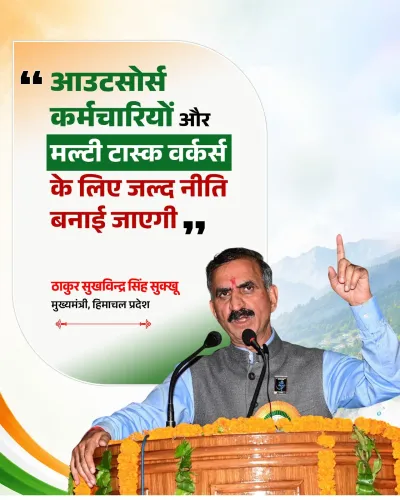
CM Sukhu announces 4,000 Jal Shakti jobs, extends doctors' retirement
Synopsis
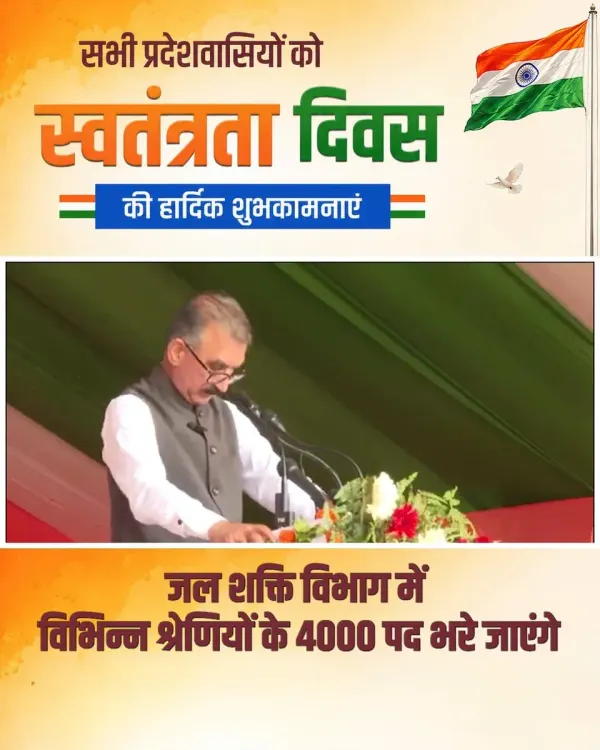
On Independence Day 2026, Himachal Pradesh CM Sukhvinder Singh Sukhu announced 4,000 new posts in the Jal Shakti Department and extended the retirement age of all state government doctors under the Directorate of Health Services and Medical Education until 31 March 2027.
Key Takeaways
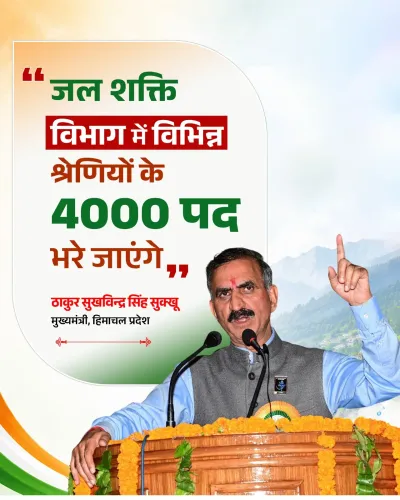
4,000 posts will be filled in the Himachal Pradesh Jal Shakti Department , one of the state's largest single-department recruitment drives.
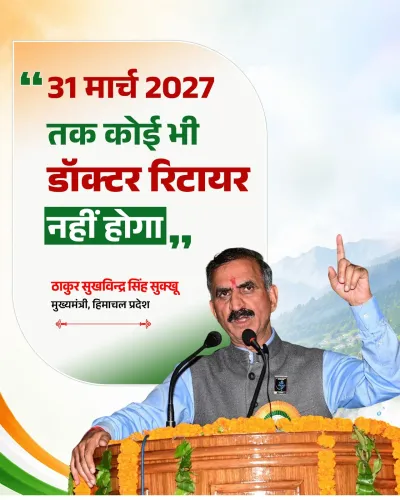
All doctors under the Directorate of Health Services and Medical Education will have their retirement extended to 31 March 2027 .
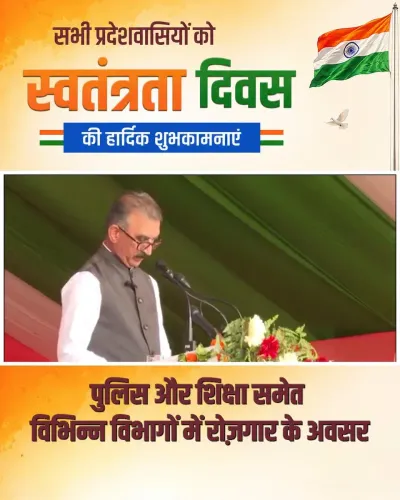
The announcements were made on Independence Day, 15 August 2026 by Chief Minister Sukhvinder Singh Sukhu .
The retirement extension is a bridge measure to address the healthcare workforce shortage in Himachal Pradesh's hilly and remote regions.
Formal recruitment notifications with eligibility criteria and timelines are awaited from the state government.
Two decisions landed on Independence Day, 15 August 2026 that will directly reshape lives across Himachal Pradesh: Chief Minister Sukhvinder Singh Sukhu announced 4,000 new recruitments in the state's Jal Shakti Department and extended the retirement age of all government doctors under the Directorate of Health Services and Medical Education until 31 March 2027.
4,000 posts in Jal Shakti — what it means for job seekers
The Himachal Pradesh Jal Shakti Department oversees the state's water supply, irrigation, and related infrastructure — a lifeline in a mountainous state where terrain makes service delivery a persistent challenge. A recruitment drive of 4,000 posts is among the larger single-department hiring announcements in recent state history, offering a significant opening for the thousands of young job aspirants who have been waiting for government vacancies. Official notifications detailing eligibility, timelines, and the selection process are expected to follow.
Doctors stay on until March 2027 — a calculated retention move
The second announcement targets a quieter but equally pressing crisis: Himachal Pradesh, like many hill states, faces a chronic shortage of experienced medical professionals willing to serve in remote postings. By extending the retirement age of all doctors working under the Directorate of Health Services and Medical Education through 31 March 2027, the Sukhu government buys time — keeping seasoned hands in public hospitals while longer-term recruitment and training pipelines catch up. Several Indian states have used similar extensions as a bridge measure, and Himachal's move fits that established pattern.
Both announcements came on Independence Day, a date governments routinely choose to amplify welfare-facing decisions. The pairing — jobs for aspirants, continuity for doctors — signals a dual focus on employment generation and healthcare stability ahead of what could be a politically charged period for the Congress-led state government.
The real test will be in the follow-through: whether recruitment notifications are issued swiftly, the selection process is transparent, and the health extension translates into measurable improvement in rural healthcare access across the state's difficult terrain.
Point of View
And time both for maximum visibility on a national holiday. For the Congress government in Shimla, the Jal Shakti recruitment addresses a persistent demand from job aspirants in a state with limited private-sector absorption. The doctor retention order is the more structurally significant move — it acknowledges that Himachal Pradesh cannot rapidly replace experienced rural health workers and opts for continuity over a clean break. Both decisions will be judged not on the announcement but on execution speed and transparency.
NationPress
15 Aug 2026
Frequently Asked Questions
How many jobs are being created in Himachal Pradesh Jal Shakti Department?
4,000 posts will be filled in the Himachal Pradesh Jal Shakti Department , as announced by Chief Minister Sukhvinder Singh Sukhu on 15 August 2026 . Detailed notifications on eligibility and the selection process are expected to follow.
Why has Himachal Pradesh extended the retirement age of government doctors?
The state government extended the retirement of all doctors under the Directorate of Health Services and Medical Education until 31 March 2027 to retain experienced medical staff and address the healthcare workforce shortage, particularly in remote and hilly areas of the state.
Until when is the doctor retirement extension valid in Himachal Pradesh?
The retirement age extension for government doctors under the Directorate of Health Services and Medical Education is valid until 31 March 2027 .
Who announced the Jal Shakti recruitment and doctor retirement extension in Himachal Pradesh?
Chief Minister Sukhvinder Singh Sukhu made both announcements on Independence Day, 15 August 2026 , via a post on X.
What does the Himachal Pradesh Jal Shakti Department do?
The Jal Shakti Department is responsible for water supply, irrigation, and related infrastructure across Himachal Pradesh , playing a critical role in a state where mountainous terrain makes service delivery challenging.