CM Dhami: Women Lead via 30% Job, 33% Co-op Quotas
Synopsis
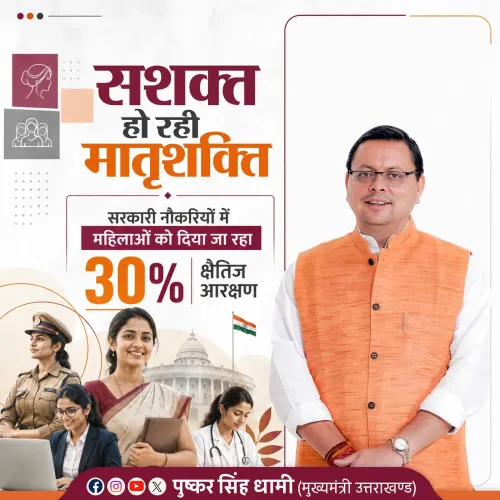
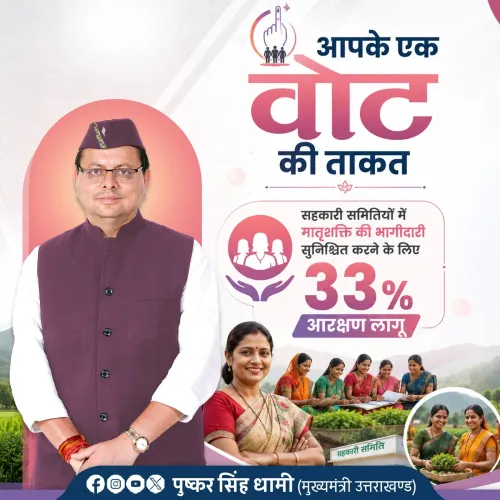
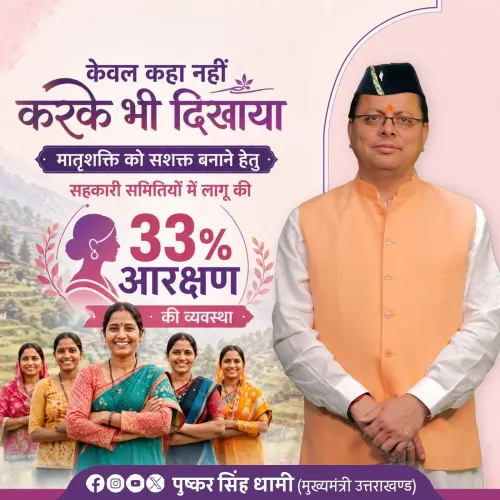
On Independence Day 2026, Uttarakhand CM Pushkar Singh Dhami highlighted two affirmative-action measures — 30% horizontal reservation in government jobs and 33% in cooperative societies — as proof of the state's commitment to women's self-reliance and leadership.
Key Takeaways
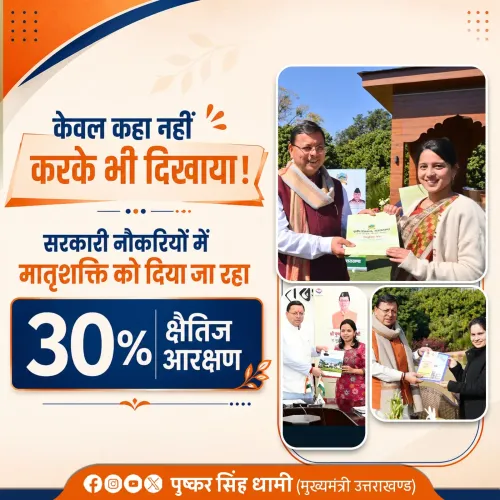
Uttarakhand provides 30% horizontal reservation for women in state government job recruitment.
33% reservation is mandated for women in cooperative societies in the state.
CM Pushkar Singh Dhami announced this on Independence Day, 15 August 2026 , framing it as a milestone for women's self-reliance.
Horizontal reservation cuts across general and reserved categories, protecting women's share even in high-competition recruitment.
The cooperative quota targets a sector where women provide most of the labour but have historically held limited governance power in hill states.
Actual recruitment and board-composition data will determine whether the quotas translate into measurable change on the ground.
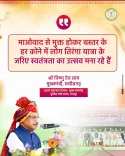
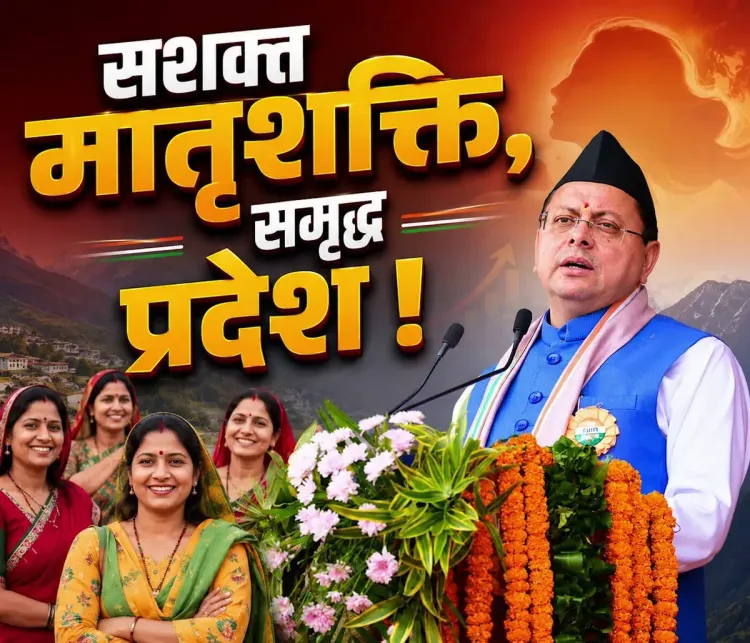
On Independence Day, 15 August 2026, Uttarakhand Chief Minister Pushkar Singh Dhami declared that women in the state are no longer waiting at the margins — they are stepping into leadership, backed by hard policy: 30% horizontal reservation in government jobs and 33% reservation in cooperative societies.
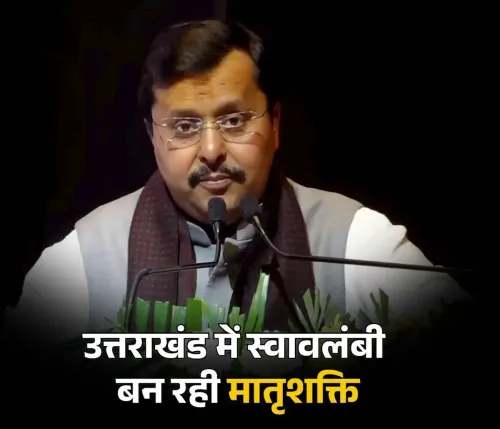
Posting in Hindi, CM Dhami wrote: 'हमारी सरकार की दृढ़ प्रतिबद्धता के परिणामस्वरूप आज मातृशक्ति आत्मनिर्भर बनने के साथ नेतृत्व की नई भूमिका निभा रही है' — ('As a result of our government's firm commitment, today women — matrishakti — are becoming self-reliant and taking on new roles of leadership'). The timing, on India's 80th Independence Day, was deliberate: framing women's economic agency as a freedom-era milestone.
What the two quotas actually do
Horizontal reservation works differently from vertical (caste-based) reservation — it cuts across existing categories, ensuring women within each reserved and general category get a guaranteed share of seats. In Uttarakhand's case, the 30% horizontal quota in state government recruitment means women are protected from being crowded out even when overall competition is fierce. The 33% reservation in cooperative societies targets leadership boards and membership rolls in the rural credit, dairy, and agricultural co-op ecosystem — sectors where women do much of the work but have historically held few formal seats.
Where Uttarakhand sits in India's reservation landscape
Gender-based horizontal reservations in state jobs are not unique to Uttarakhand — states including Bihar, Jharkhand, and Himachal Pradesh have adopted similar frameworks — but the combination of a job quota alongside a cooperative-society quota reflects a two-track approach: one for formal public employment, one for the rural self-help economy. The cooperative angle matters in a hill state where agriculture and dairy co-ops are a primary livelihood network and women form the backbone of that labour without proportional governance power.
The 'Atmanirbhar Nari' frame on Independence Day
The choice of atmanirbhar (self-reliant) language directly echoes the Centre's flagship Atmanirbhar Bharat vocabulary, anchoring a state policy announcement within a national narrative. For the BJP-led Uttarakhand government, spotlighting these quotas on 15 August serves a dual purpose: it signals policy delivery to women voters — a key demographic in state elections — and positions CM Dhami as an executor, not just an advocate, of women's empowerment. Whether recruitment data and cooperative board compositions have shifted in practice will be the real test of the policy's reach.
The numbers are set. The question now is how many women's names they put on the rolls.
Point of View
The state is attempting to address both urban job-market access and rural governance gaps simultaneously — a more layered approach than single-track reservations. The use of 'atmanirbhar' language ties state policy tightly to the Centre's brand, useful for a BJP government seeking to demonstrate alignment with national priorities. The real political and policy test, however, will come when independent data on actual recruitment outcomes and cooperative board compositions is available.
NationPress
15 Aug 2026
Frequently Asked Questions
What is the 30% horizontal reservation for women in Uttarakhand government jobs?
Uttarakhand provides a 30% horizontal reservation for women across categories in state government recruitment, meaning women are guaranteed a fixed share of seats within each existing reservation category as well as the general category, preventing them from being displaced by overall competition.
What does 33% reservation in cooperative societies mean for women in Uttarakhand?
The 33% reservation in cooperative societies ensures women hold at least one-third of seats in cooperative bodies — such as agricultural, dairy, and rural credit cooperatives — covering both membership and leadership positions.
What is horizontal reservation and how is it different from vertical reservation?
Horizontal reservation applies across all vertical categories (SC, ST, OBC, General), guaranteeing a share for a specific group — such as women — within each category. Vertical reservation, by contrast, creates separate overall quotas for specific communities.
Why did CM Dhami announce women's reservation policies on Independence Day?
Announcing on Independence Day — a high-visibility national occasion — allowed CM Dhami to frame state-level affirmative action as part of the broader national narrative of women's empowerment and self-reliance, maximising political and symbolic impact.
Do other Indian states have similar women's reservation in government jobs?
Yes, several states including Bihar, Jharkhand, and Himachal Pradesh have adopted gender-based horizontal reservation in public employment, making such policies a cross-party trend in Indian state governance, though the specific percentages and scope vary.